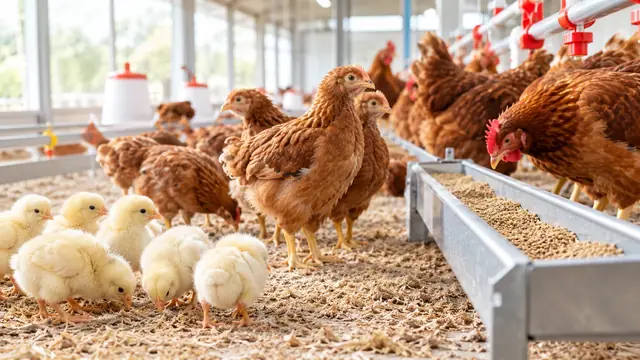

Chickens and turkeys in the same yard is a familiar sight — and it’s exactly what most often wipes out a turkey flock. A chicken can carry the blackhead parasite for years without showing anything, while for a turkey the encounter is often fatal.
What the disease is
Blackhead is caused by a protozoan, Histomonas meleagridis. It attacks the caeca and the liver. The name is misleading: a dark, bluish head appears far from always, so don’t wait for that sign.
How it spreads
The parasite lives inside the eggs of the caecal worm Heterakis, which lives in chickens. Worm eggs pass in droppings into the soil and survive there for years. Earthworms collect them. A turkey eats an earthworm or pecks the soil — and is infected. Within a flock, the disease then spreads directly through droppings as well.
A range that chickens used is dangerous for turkeys for several years, even after the chickens are gone.
Signs
- sulfur-yellow watery droppings — the most typical sign;
- dullness, drooping wings, ruffled feathers;
- the bird stops eating but keeps drinking;
- deaths start 1–2 weeks after infection and rise quickly.
Young birds of 3 to 12 weeks are hit most often, but adults can fall ill too. Post-mortem shows thickened caeca with cheesy cores and round lesions on the liver. Post-mortem and diagnosis are for a vet: other diseases can look similar.
Why it’s hard to treat
Drugs that used to work well against blackhead are banned for food-producing birds in many countries. What may be used where you are is decided by a vet, and only a vet. Self-treating with “what someone suggested” is risky for the flock and for the people who eat the meat: approved drugs have a withdrawal period.
Prevention
- Keep them apart. Separate houses and ranges for chickens and turkeys. Don’t let turkeys onto ground chickens have used in recent years.
- Deworm the chickens. Fewer Heterakis worms means less parasite in the soil. See deworming poultry.
- Keep the range dry. Wet ground holds more earthworms, and parasite eggs live longer.
- Separate boots and tools for the turkey house.
- Isolate fast. At the first yellow droppings, separate sick birds and call the vet.
The general rules that protect against this and other diseases are in small farm biosecurity.
Record the outbreak
If you’ve had blackhead, log an inspection with the diagnosis for that house in EggPulse. A year later, when you place a new flock, the record will remind you where turkeys must not go.