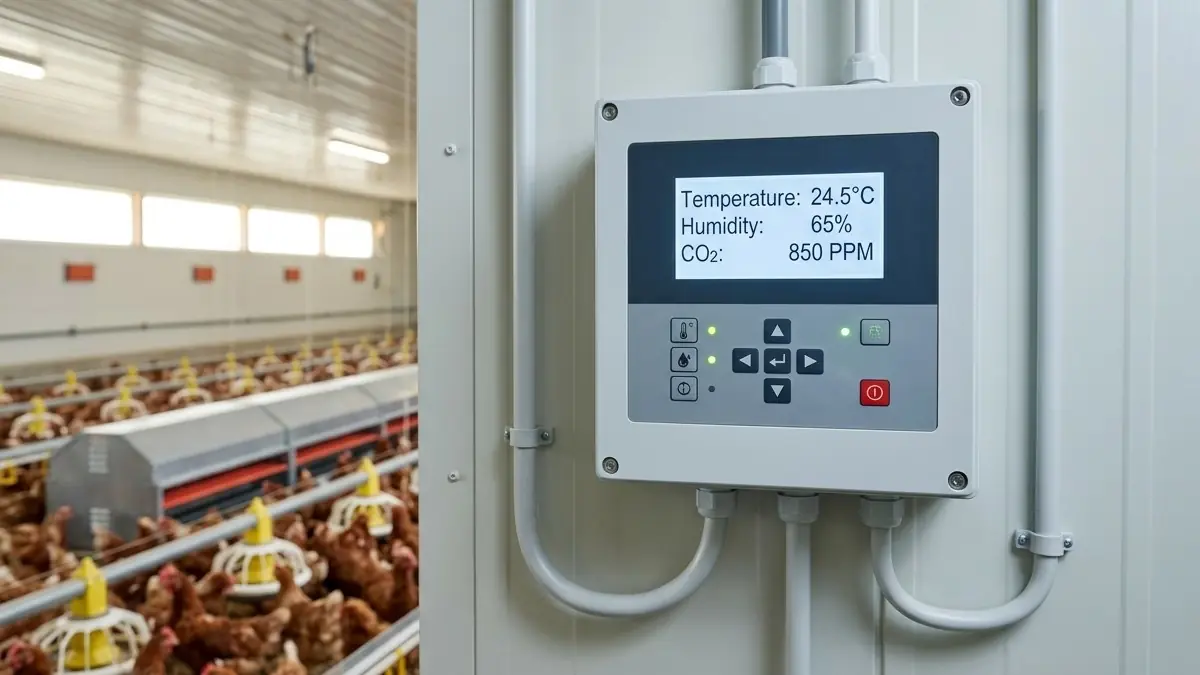

The thermometer reads 34 °C, the hens sit with beaks open and wings held out, the feeders are full. By evening there are a dozen fewer eggs, and in the morning the nests have shell-less eggs. The feed is the same as a week ago, but the hens simply don’t eat it. In the heat, the main job isn’t cooling the birds at any cost. It’s making sure they get what they need in the hours they’re willing to eat.
Why birds eat less
Digesting feed produces heat. In hot weather a bird already struggles to shed heat, so it instinctively eats less. Above 23–24 °C, a layer eats about 1.5% less feed for every degree. Above 27 °C her appetite drops sharply. She gets exactly that much less protein, calcium and energy.
A panting hen breathes fast with her beak open and loses carbon dioxide. Her blood becomes less acidic, and less calcium goes to the shell. Hence thin and soft shells and cracked eggs in hot weeks, even when the feed has enough calcium.
Feed in the cool hours
- Layers: main feedings early in the morning and in the evening once the heat breaks. Don’t take the feed away, but don’t top it up at midday. The evening feed matters most: the shell forms at night.
- Broilers: in severe heat, pull feed 3–4 hours before the peak. Return it once the heat breaks: birds usually go about 6 hours without feed. A broiler with a full gut produces more heat and is more likely to die of heat stroke. Water stays unrestricted.
- Turkeys and ducks: same principle — feed in the cool hours, shade and water at noon.
Make the feed denser
If birds eat less, every gram has to carry more. So for the hot season:
- raise the share of protein, amino acids and calcium: the hen eats less but still gets her grams;
- supply part of the energy as oil or fat instead of grain: fat makes less heat as it’s digested;
- give calcium in coarse particles and in the evening (on oyster shell and limestone);
- pellets instead of mash: birds spend less time and effort eating.
Don’t add grain “to fill them up” in the heat: it dilutes protein and calcium, and starch is exactly what heats them up.
Water matters more than feed
In the heat birds drink 1.5–2 times as much as at 20 °C (on water consumption). A hen without water at 35 °C dies within hours; without feed she gets through a day just fine.
- cool water, 15–25 °C: a hose and tank in the sun deliver “tea” birds won’t drink;
- more drinkers, so there’s no queue;
- flush lines more often: warm water is a breeding ground for bacteria.
What to add to the water
| Additive | Why |
|---|---|
| Electrolytes (potassium, sodium) | Replace what’s lost through panting and watery droppings |
| Vitamin C | Birds make their own, but not enough under stress |
| Sodium bicarbonate (replacing part of the salt in feed) | Restores blood acid balance, helps the shell |
Doses per the product label or your vet’s advice. Too much salt and bicarbonate backfire — wet litter and strain on the kidneys.
After the heat
Appetite comes back within a few days, laying within one or two weeks. But broilers hit by heat just before slaughter never make up what they lost. Cooling the house and signs of overheating are covered in the heat stress article.
Heat in numbers
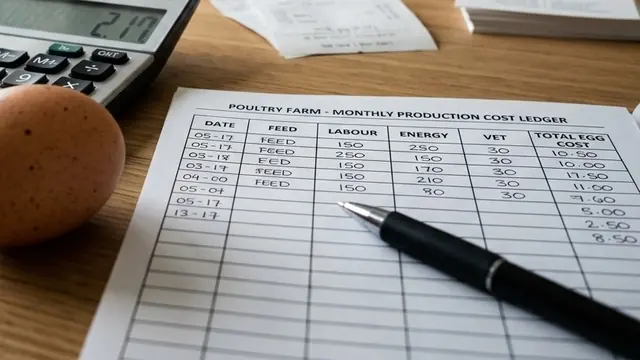
In EggPulse feed, water and eggs are logged by day, and the house temperature sits in the climate section. Compare the hot days with feed use and laying. You’ll see at what temperature your flock starts losing ground and what each heat wave cost you.