
Birds handle cold better than heat. They have no sweat glands, and the only way to shed heat is to pant and hold their wings out. When that isn’t enough, one hot day can kill more broilers than the rest of the cycle put together. Layers die less often in the heat, but they pay in eggs and shell quality.
When stress begins
| House temperature | What happens |
|---|---|
| Up to 25 °C (77 °F) | Comfortable for adult birds |
| 25–30 °C (77–86 °F) | Birds eat less and start breathing faster |
| 30–35 °C (86–95 °F) | Panting, wings held out, laying drops, shells thinner |
| Above 35 °C (95 °F) | Risk of mass mortality, especially in heavy broilers |
Humidity makes heat more dangerous: in humid air panting cools less. 32 °C at 40% humidity is easier to bear than 30 °C at 80%.
Signs of overheating
- rapid open-beak breathing;
- wings held away from the body, birds lying pressed to the floor or walls;
- much more water drunk, less feed eaten;
- watery droppings;
- listlessness, unsteady walking — this is already the dangerous stage.
If it’s hot today
- Water. Cool and plenty of it. Add drinkers, flush the lines so water in the pipes doesn’t warm up. Electrolytes per the label can help.
- Air movement. Fans at full. Air flowing over the birds cools better than just open windows.
- Feed in the cool hours. Digestion produces heat. Broilers often have feed removed for a few hours at the hottest time; layers get more early in the morning and in the evening.
- Leave the birds alone. No catching, weighing, transport or vaccination in the heat.
- Fewer birds per square meter. If you can, thin out the flock or open a shaded run.
Preparing for summer
- The roof. Insulating or whitewashing it lowers the inside temperature by several degrees.
- Ventilation sized for the hottest day, not the average one. More in house climate.
- Evaporative cooling (pads, foggers) works well in a dry climate and is nearly useless at high humidity.
- Shade on the run and trees on the sunny side of the house.
- Stocking. Summer broiler flocks are placed at lower density.
After the heat
Laying and shell quality recover in 1–2 weeks. If eggs are still thin, see thin and soft eggshells, and for winter problems — the cold.
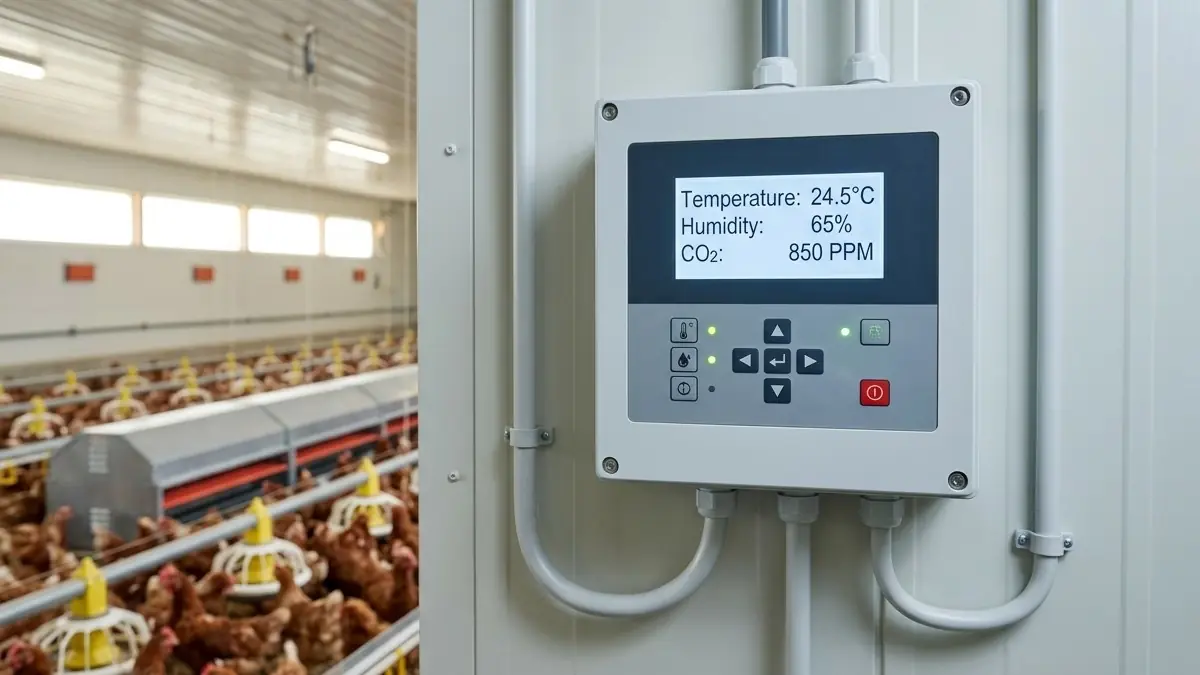
Heat in numbers
Log house temperature and water use in EggPulse. When water shoots up and feed goes down, you see it at once — and you see at what temperature your flock starts losing eggs or weight.