
Birds can’t complain about stuffy air. They just grow worse and lay less, and you only see it in the results: the feed is eaten, but there is less weight gain or fewer eggs. So house climate is worth watching not by “feel” but by a few simple numbers, every day.
Below are general guidelines. For your cross and your house, the exact values are in the breeder’s management guide, and that is what you should follow first.
Temperature
| Birds | Guideline |
|---|---|
| Broilers, week 1 | about 32–34 °C (90–93 °F) under the brooder |
| Broilers, after that | lower by roughly 2–3 °C a week to 20–22 °C |
| Layers (adult) | comfortable at about 18–24 °C (64–75 °F) |
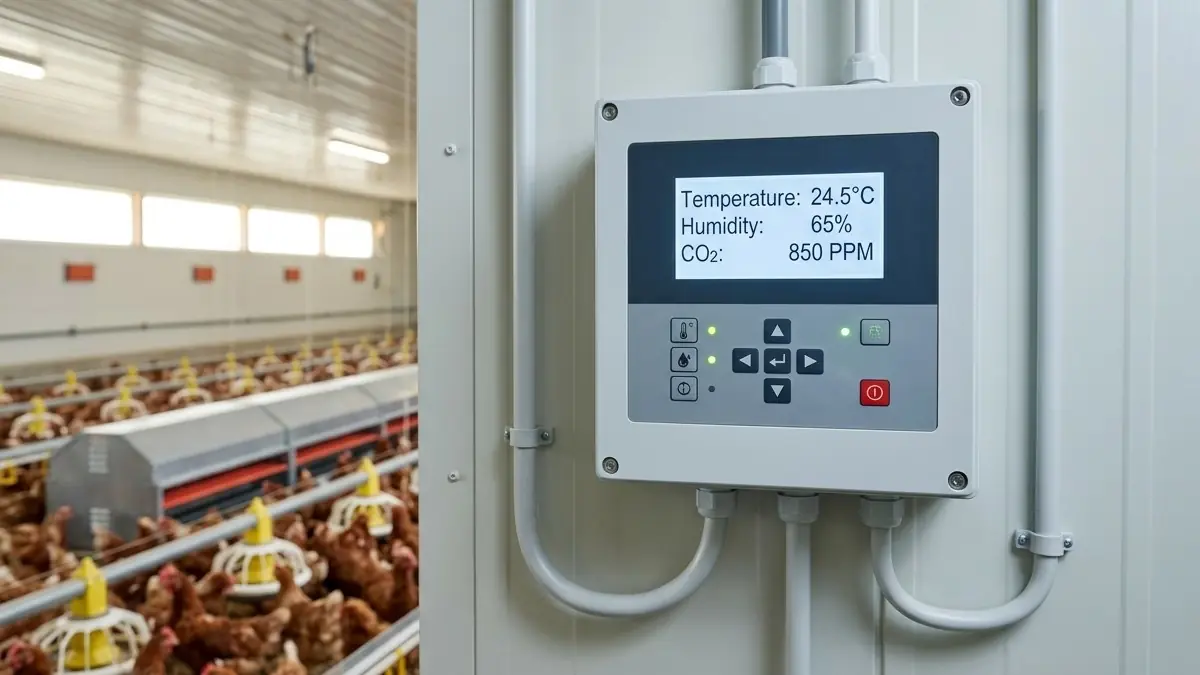
The thermometer by the door won’t tell you the truth. Measure at bird level and in several places: by the walls, in the center, near the ventilation. A difference of a few degrees across a house is common.
Humidity
Comfortable is about 50–70%. Too dry means dust and breathing problems. Too damp means wet litter, ammonia and sore feet. The best “sensor” you have is in your hand: squeeze a handful of litter. If it clumps together, it’s time to ventilate.
CO₂ and ammonia
- CO₂ — aim for no more than 2,500–3,000 ppm. A rise means there isn’t enough fresh air.
- Ammonia — preferably no more than 20 ppm. If you can smell it at the door, the level is probably already above normal.
The best indicator is the birds themselves
You can check the instruments against behavior:
- Chicks huddle in a pile under the heat — they are cold.
- Birds press against the walls with beaks open and wings spread — it is hot.
- Spread evenly through the house — the temperature is right.
How not to miss a problem
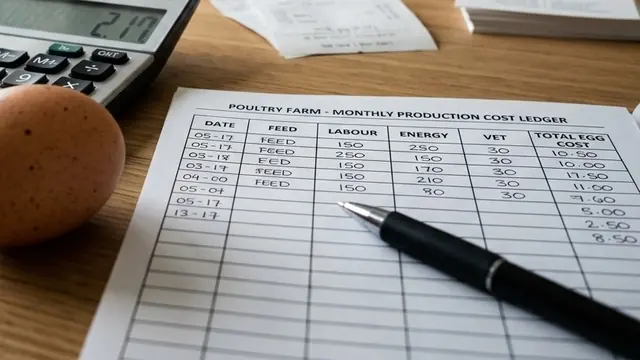
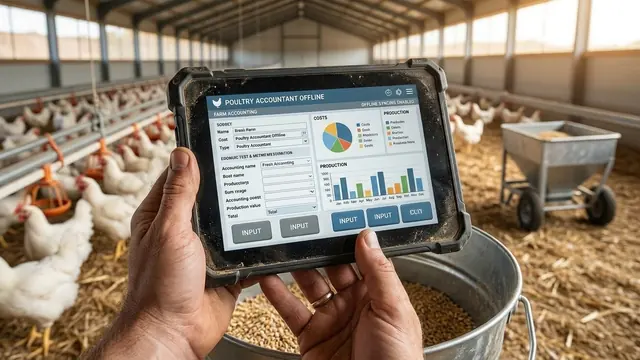
Take readings morning and evening, at the same times, and write them down. A sharp difference between today and yesterday is more visible than any average. EggPulse has a climate log per house for this: enter the values right in the house, and the chart shows when the departure from normal began.