
There is one question every farm owner wants answered: am I actually earning anything? The answer hides in a single number — the cost of one egg. Compare it with your selling price and it is clear at once: you are in the black, at zero or in the red.
The cost formula
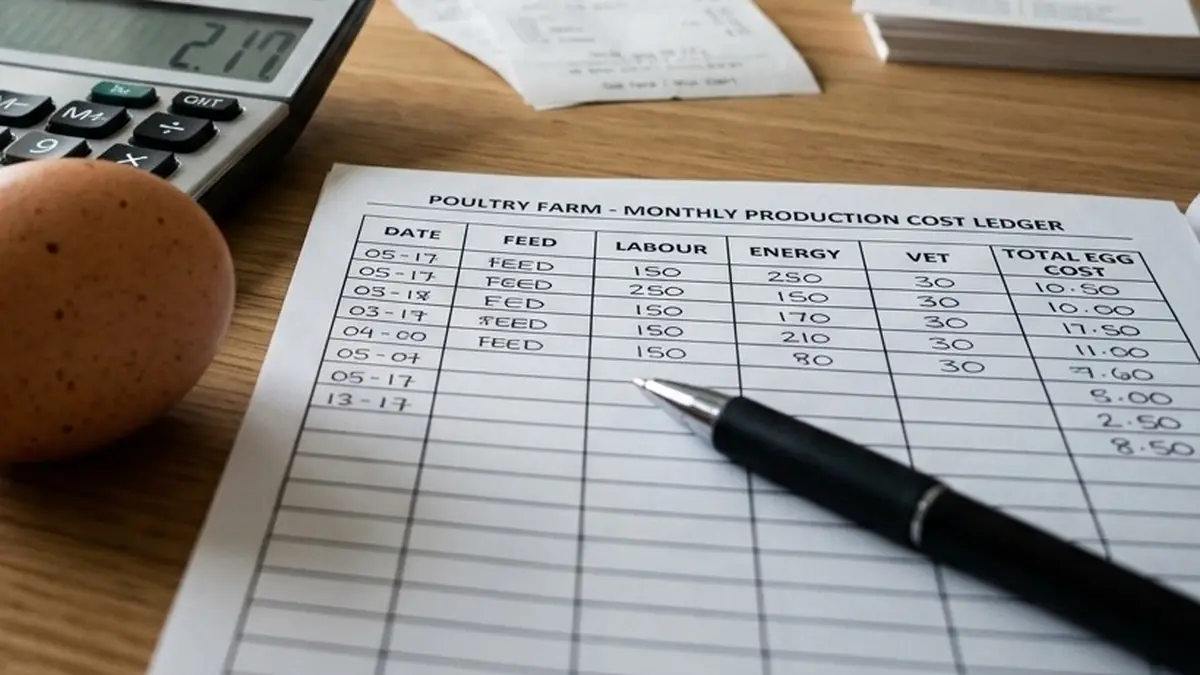
Cost per egg = all expenses for the period ÷ number of eggs for the period
The main mistake here is counting only feed. It really is the biggest expense (usually more than half), but not the only one, and the rest is easy to underestimate.
What counts as expenses
- Feed — by actual use, losses included.
- Veterinary — vaccines, medicines, vitamins.
- Energy and water — heating, lighting, ventilation, water supply.
- Labor — employee wages, and your own time if you work on the farm yourself.
- Depreciation — equipment, cages, buildings: their price divided by their service life.
- Other — litter, egg trays, transport, taxes, repairs.
Example for a month
| Item | Amount, USD |
|---|---|
| Feed | 1,200 |
| Veterinary | 120 |
| Energy and water | 180 |
| Labor | 300 |
| Depreciation and other | 200 |
| Total | 2,000 |
You got 30,000 eggs in the month, so one egg cost 2,000 ÷ 30,000 ≈ 0.067 USD. Sell above that and you earn; sell below it and you work at a loss.
What moves the result most
- Egg production. Same expenses, more eggs — each one is cheaper.
- Feed conversion. Less feed per egg is the main lever.
- Mortality. Every lost hen means eggs you didn’t get and feed already spent on her.
- Selling price. The gap between wholesale and direct sales is sometimes bigger than all your savings on feed.
And which costs get forgotten most often, and why “in the black” can be an illusion, is in the article on hidden costs.
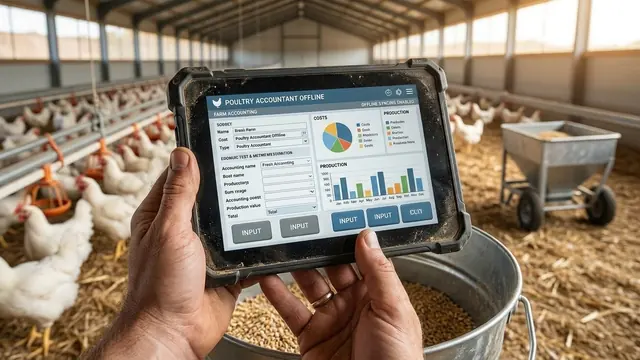
Finance without spreadsheets
In EggPulse, expenses and income are entered by date and category, and profit, revenue and expenses for a period are gathered on one screen. You don’t have to recalculate the cost by hand every month.