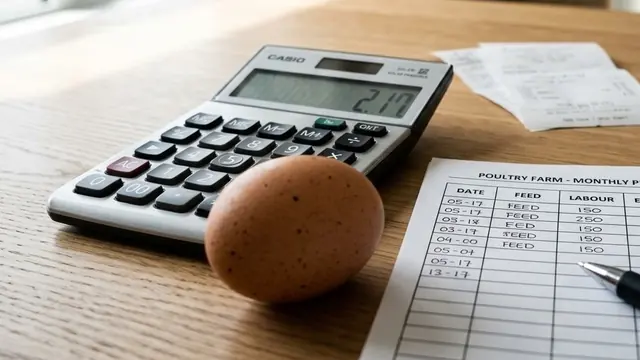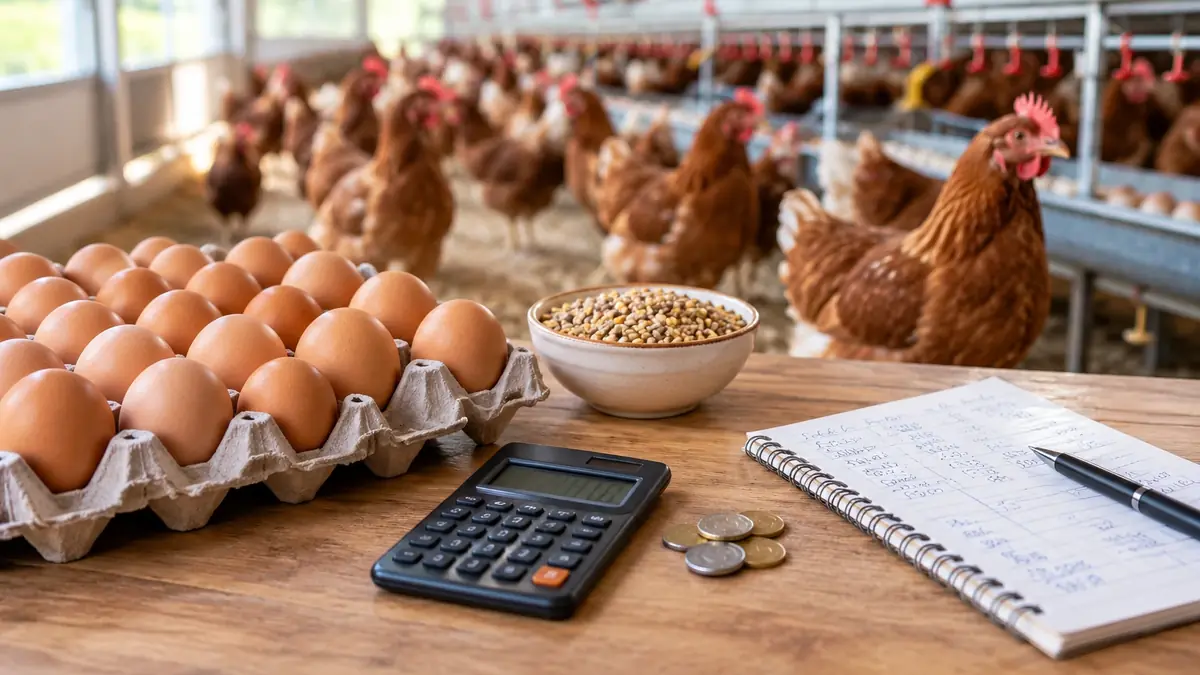

You bought feed, paid for electricity — it seems everything is counted. But farmers who count only the “store receipts” often find that the real cost of an egg is much higher. The difference hides in costs that never arrive as a separate bill.
Cost per egg = all expenses for the period ÷ eggs for the period. We covered what goes into it in the profitability article. Here is what usually does not make it in.
1. Rearing the pullet
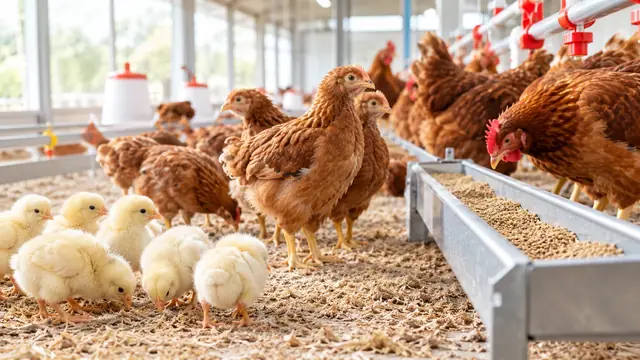
A hen costs money before the first egg: for 4–5 months you feed and house her and there are no eggs. Example: a pullet cost 6 USD, lays about 280 eggs in a year, and is then sold for meat at 1.5 USD. That puts (6 − 1.5) ÷ 280 ≈ 0.016 USD per egg on the bird itself, or 0.16 USD per ten eggs.
2. Mortality
A hen that dies has already eaten her share of the feed and will not bring any eggs. 8% mortality a year means 8 birds out of 100 whose cost and feed fall on the rest. The higher the mortality, the more expensive the egg from each survivor.
3. Freeloaders and late culling
Every flock has hens that eat but barely lay. If 10 out of 100 lay half the norm, they eat feed that could be working for productive birds. Culling them in time lowers the cost.
4. Breakage, losses and eggs “not for sale”
Cracked, dirty and too-small eggs go to the family or the bin, but their cost stayed in your expenses. Count eggs actually sold, not eggs collected. A 3–5% difference is already noticeable.
5. Your own labor
If you work on the farm yourself and expenses show zero wages, the figure looks too good. Put in at least a notional rate, or you will not know whether the farm pays for itself once you have to hire a helper.
How it changes the price of ten eggs
| What is counted | Cost of 10 eggs, USD |
|---|---|
| Feed and electricity only | 0.50 |
| + pullet depreciation | 0.66 |
| + mortality and culling | 0.72 |
| + breakage and losses | 0.75 |
| + your own labor | 0.90 |
The numbers are illustrative, but the direction is right: the honest cost is 80% above the “receipt” cost. If you sell ten eggs for 0.70, on paper you are in the black and in fact in the red.
What to do about it
- Record mortality and culling in a log, not from memory.
- Write down how many eggs were sold, not just collected.
- Recalculate the cost every quarter, not once a year.
Not losing track of costs
In EggPulse expenses, sales, mortality and eggs are kept in one app, and the profit for a period is visible on one screen. Then the hidden costs stop being hidden.