
Every chicken vaccination program includes three diseases that farmers hardly know, because with good prevention they never show up: Newcastle disease, Marek’s disease and Gumboro. All three are viral, none can be treated, and only timely vaccination protects against them.
A vet makes the diagnosis, often only from post-mortem and lab tests. The signs below are a reason to call a specialist, not grounds for self-treatment.
Newcastle disease
A viral disease dangerous to chickens, turkeys, quail and many other birds. Virulent strains kill most of a flock within days. In many countries a suspicion must be reported to the veterinary authority, just like avian influenza.
- rattling, coughing, nasal discharge;
- green watery diarrhea;
- nervous signs: twisted neck, circling, paralysis;
- a sharp drop in laying, shell-less or misshapen eggs.
Birds are vaccinated with live vaccines (eye drop, water, spray) and inactivated ones (injection), often several times in their life. Layers, which live long, need boosters.
Marek’s disease
A herpes-type virus that causes tumors of the nerves and internal organs. It usually strikes chickens at 6–30 weeks.
- paralysis: one leg stretched forward, the other back;
- a drooping wing, a twisted neck;
- a grey, “faded” eye with an irregular pupil;
- wasting and deaths at the age when the flock should be coming into lay.
The virus lives in feather dander and persists in house dust for months. Protection is vaccination of day-old chicks at the hatchery, or even in the egg. Immunity takes time to form, so for two weeks after vaccination chicks are kept apart from adult birds in a clean house. When buying day-olds, ask whether they are vaccinated against Marek’s: vaccinating later is nearly useless.
Gumboro
Infectious bursal disease attacks the bursa of Fabricius — the organ responsible for immunity in young birds. It most often hits chicks at 3–6 weeks.
- sudden depression, ruffled feathers;
- white watery diarrhea, vent pecking;
- deaths over a few days, then a quick settling down.
The most insidious part is the aftermath. Recovered birds respond poorly to other vaccines and catch everything going. The virus is very hardy and lives in a house for years. The vaccination age depends on the chicks’ maternal antibodies, so the vet sets it, sometimes from a blood test.
Why a vaccination didn’t work
- The vaccine was stored warm or mixed with chlorinated water.
- Birds didn’t get their dose: too few drinkers, not drunk within 1–2 hours, water left in the sun.
- Sick or weakened birds were vaccinated.
- A past Gumboro infection suppressed immunity.
- The dates slipped: “vaccinated a week late, when there was time.”
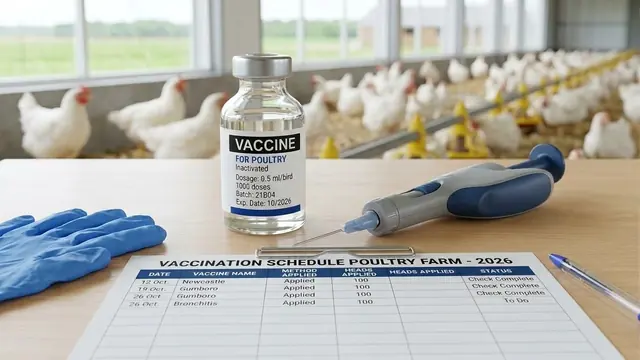
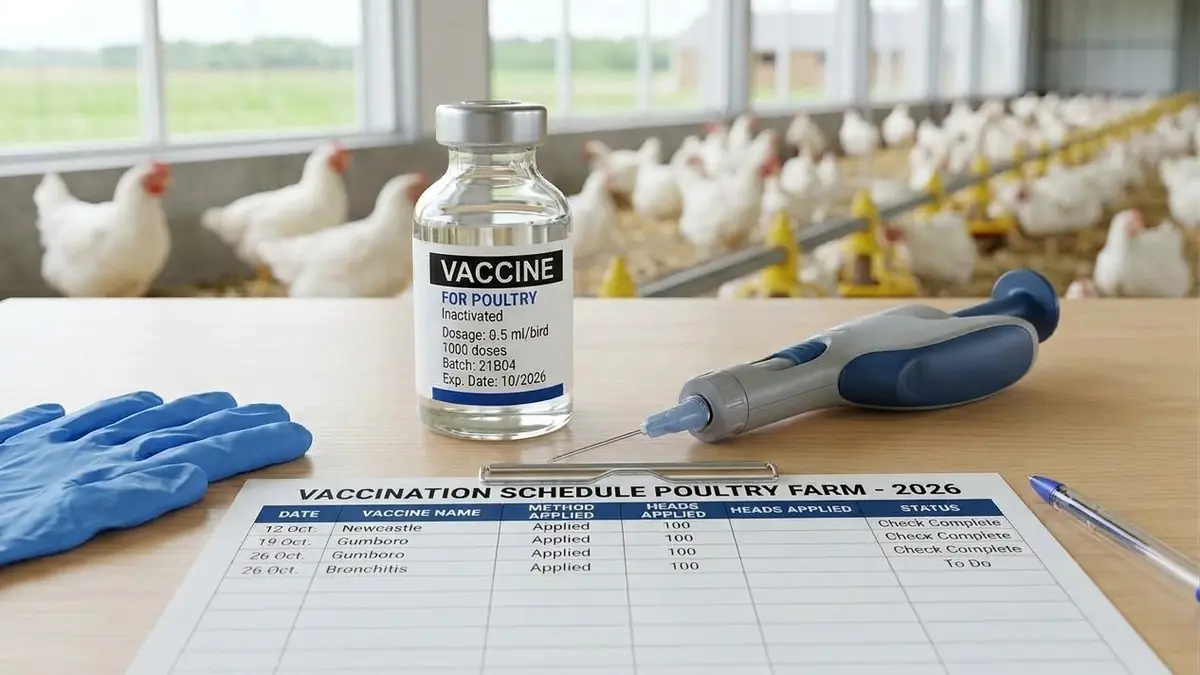
How not to miss dates is covered in the vaccination schedule.
Vaccinations for every flock
In EggPulse each flock has its own vaccination plan with reminders, and each record keeps the vaccine, batch and method. If disease does arrive, you’ll have something to show the vet.