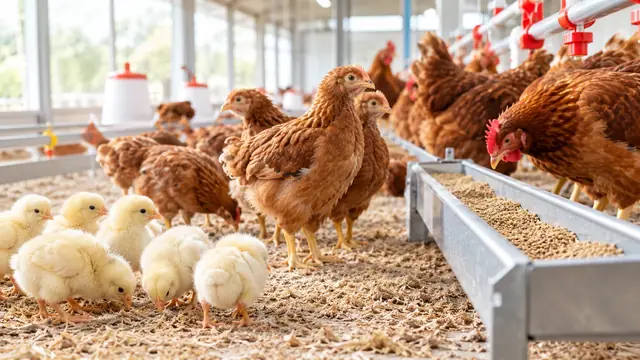

In the evening you hear it in the house: someone sneezing, someone rattling. It could be dust after a litter change, or the start of a disease that stays with the flock for good. You can’t tell by ear, but there are signs that show how serious it is and what to check first.
Air first
Ammonia and dust irritate the airways on their own and open the door to infections. If the house smells sharp and stings your eyes, start with ventilation and litter (on house climate). Often the sneezing then stops by itself.
Mycoplasmosis
The most common chronic respiratory disease of chickens and turkeys. It’s caused by mycoplasmas, above all Mycoplasma gallisepticum.
- sneezing, rattling, nasal discharge, foamy eyes;
- in turkeys — swollen sinuses below the eyes;
- a slow course: the disease drags on for weeks;
- layers give fewer eggs, broilers grow worse.
The key feature: birds stay carriers for life and pass mycoplasma to their offspring through the egg. Stress, cold, ammonia and overcrowding turn quiet carriage into an outbreak. The related Mycoplasma synoviae also attacks joints: birds go lame, and layers can produce eggs with a rough, thin shell at the pointed end.
An antibiotic relieves the signs but doesn’t make the flock mycoplasma-free. Treatment and the drug are the vet’s decision, with the withdrawal period in mind. For the long run, buying birds and hatching eggs from mycoplasma-free sources is more reliable, and in some regions birds are vaccinated.
What it gets confused with
| Disease | What sets it apart |
|---|---|
| Infectious bronchitis | Sweeps the whole flock fast; layers produce misshapen eggs with watery whites |
| Newcastle disease | Rattling plus nervous signs and green diarrhea (more) |
| Infectious laryngotracheitis | Coughing with neck stretched, bloody mucus on feathers and walls |
| Infectious coryza | Swollen face and wattles, foul-smelling nasal discharge |
| Aspergillosis | Heavy breathing without sneezing, mostly in young birds on moldy litter |
| Avian influenza | Sudden deaths, swollen head, bluish skin (what to do) |
When to call the vet at once
- signs in many birds within 1–2 days;
- deaths alongside the rattling;
- bloody mucus, swollen heads, nervous signs;
- laying down by more than 10 points.
An accurate diagnosis needs post-mortem and lab tests: these diseases can’t be reliably told apart by signs alone.
Prevention
- Buy birds from reliable farms and keep newcomers in quarantine.
- Don’t mix birds of different ages and origins.
- Keep ammonia and dust under control, avoid drafts.
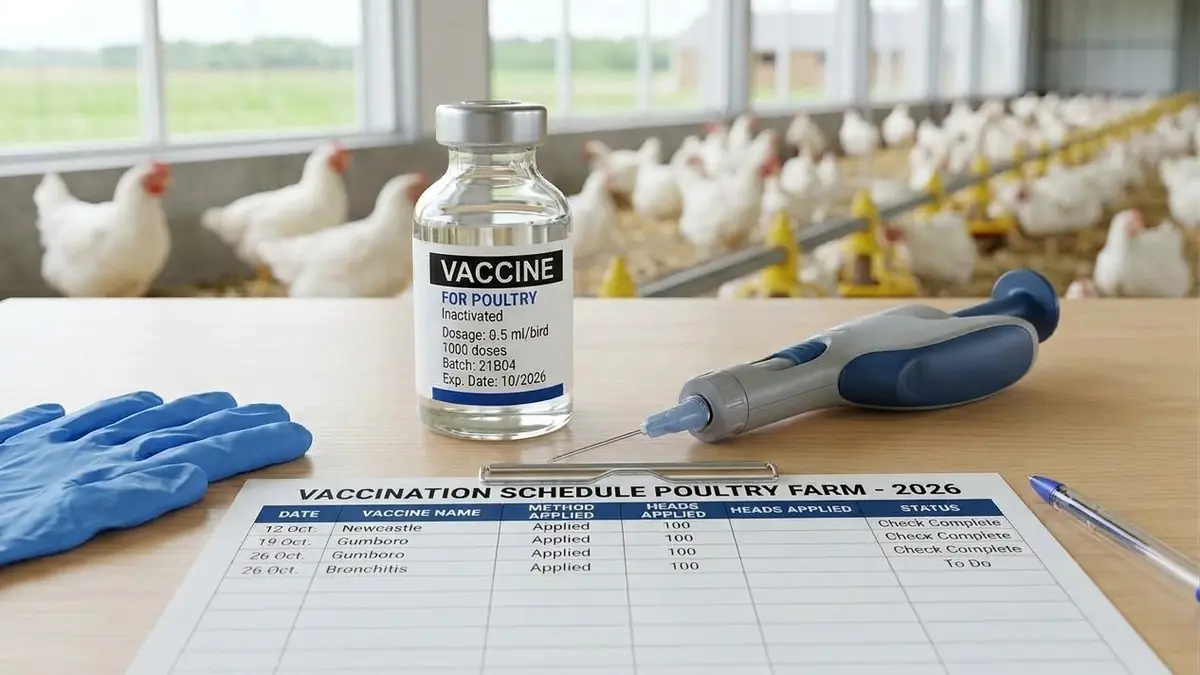
- Vaccinate per your vet’s program against bronchitis, Newcastle and other diseases in your region.
Records for the vet
In EggPulse inspections, mortality, vaccinations and lab tests are stored for each house. A diagnosis is easier when the vet can see when the rattling began, what happened with water and feed, and which vaccines were given.