
Highly pathogenic avian influenza is one of the few diseases where hours count. It affects every species of domestic poultry, can kill most of a flock within days, and when it’s confirmed on a farm the whole flock is usually culled. So the key is to keep it off the farm, and not to be late reporting it if it gets in.
Signs
- sudden mass deaths, sometimes with no earlier signs;
- a sharp drop in feed and water intake (on water use) and in laying;
- swollen head, bluish comb, wattles and legs;
- labored breathing, nasal discharge, coughing;
- loss of coordination, twisted neck, convulsions.
Ducks and geese can carry the virus with almost no signs and infect chickens and turkeys. No sick ducks doesn’t mean no virus.
If you suspect avian influenza
- Report it immediately to the state veterinary authority. In many countries it’s a legal duty of the owner, with penalties for delay.
- Don’t move birds, eggs, meat, feed, litter or manure off the farm.
- Don’t sell anything until the vets say you may.
- Don’t open up dead birds yourself. Bag the carcasses and wait for the specialists.
- Restrict access: no outsiders; wear separate clothes and boots yourself.
- Protect yourself: gloves, a mask, handwashing. Avian influenza rarely infects people, but it can.
If there’s an outbreak nearby
- keep birds indoors with no outdoor access — often a legal requirement during the risk period;
- block wild birds’ access to feed, water and the house;
- don’t buy or introduce new birds;
- tighten footbaths and limit visits (on biosecurity);
- stay away from other farms, bird markets and waterfowl hunting grounds.
When the risk is higher
Outbreaks most often coincide with seasonal migration of wild waterfowl — spring and autumn. In those months, covered runs and no open water that attracts wild ducks matter most.
Vaccination
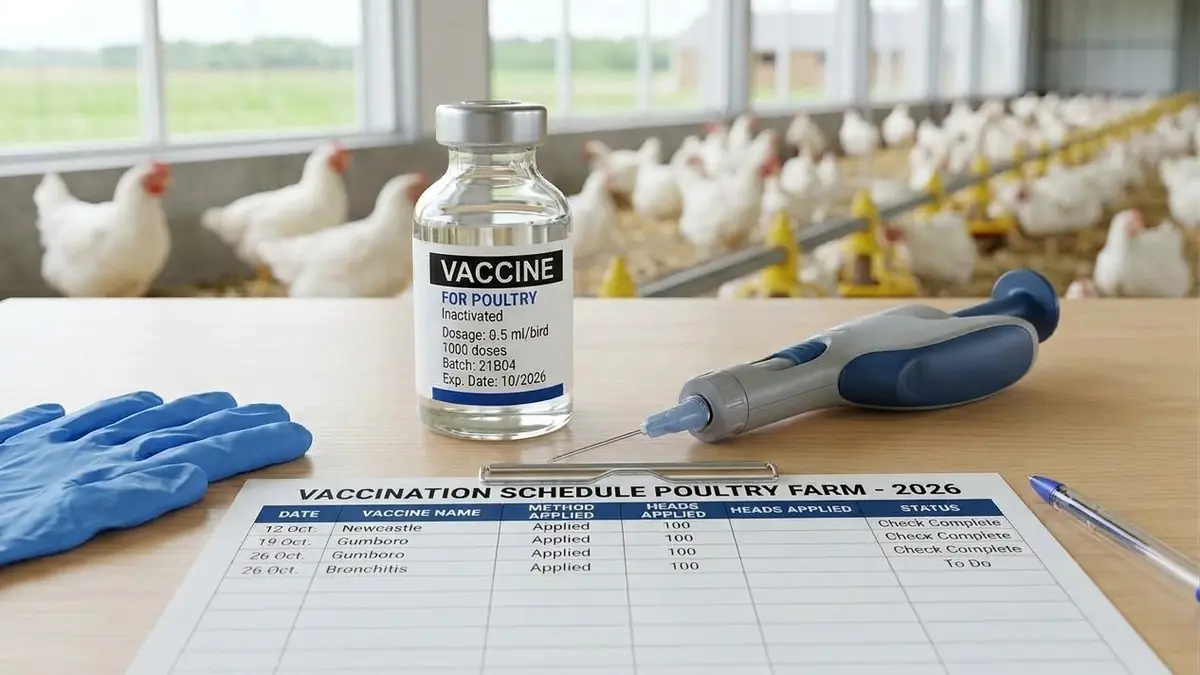
In many countries, vaccination against avian influenza is carried out only by decision of the state veterinary service, and in some it isn’t permitted at all. You can’t vaccinate against it on your own. The general vaccination schedule is in our vaccination article.
After an outbreak
Restocking is only possible with the veterinary authority’s permission: disinfection, an empty period, sometimes follow-up testing. If the flock was culled by official order, many countries pay the owner compensation, and claiming it requires records of flock size and production.
Records that will come in handy
In EggPulse flock size, mortality, water and feed are recorded for every house. A sharp drop is visible on the first day, and for an inspection or a compensation claim the flock’s history is right at hand.