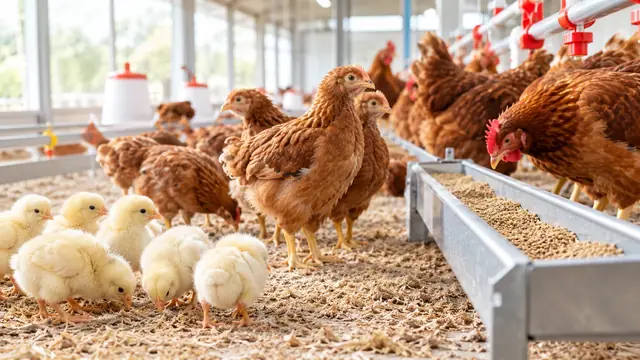

Coccidia live in almost every house where birds are kept on litter. You can’t get rid of them completely, and you don’t need to: birds that meet them a little at a time build immunity. Trouble starts when there are too many parasites — and that is almost always about conditions, not bad luck.
What the disease is
Coccidiosis is caused by protozoa of the genus Eimeria. They multiply in the gut wall and destroy it, so the bird absorbs feed poorly and loses blood and water. Each bird species has its own Eimeria: chicken species don’t infect turkeys or ducks, and vice versa. So moving turkey poults into a former chicken house is safer, as far as coccidiosis goes, than it seems — though it doesn’t protect against other diseases.
How it develops
Oocysts — the parasite’s eggs — pass out in droppings. In warm, damp litter they mature within 1–2 days and become infective. Birds peck them up with the litter, and the cycle repeats. Oocysts survive in a house for months and resist most ordinary disinfectants.
Wet litter is an incubator for coccidia. Where it’s damp by the drinkers, that’s where the outbreak starts.
Signs
- diarrhea, often with blood or mucus, orange or brown spots in droppings;
- birds hunched, sitting with drooping wings, eating poorly;
- weight falling behind and worse feed conversion;
- mortality, most often in broilers and young birds at 3–6 weeks.
The most expensive form is the hidden one. Birds look almost healthy, but the gut is damaged and feed conversion worsens by tenths. Across a broiler flock that’s hundreds of kilograms of feed.
Prevention
| Method | For whom | What matters |
|---|---|---|
| Coccidiostats in feed | Mostly broilers | Starter feed “with coccidiostat”; observe the withdrawal before slaughter |
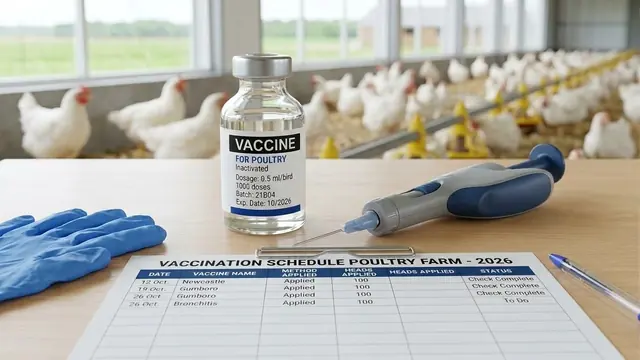
| Vaccine | Pullets, layers, breeders | Never with coccidiostat feed: it kills the vaccine |
| Dry litter | Everyone | Works with any program and costs nothing |
The choice depends on the species and how long the birds will live. Agree it with your vet, and check the feed composition on the label.
Litter and drinkers
- Remove wet patches by drinkers daily and top up with dry material (on bedding).
- Check for leaking nipples and drinkers set too low.
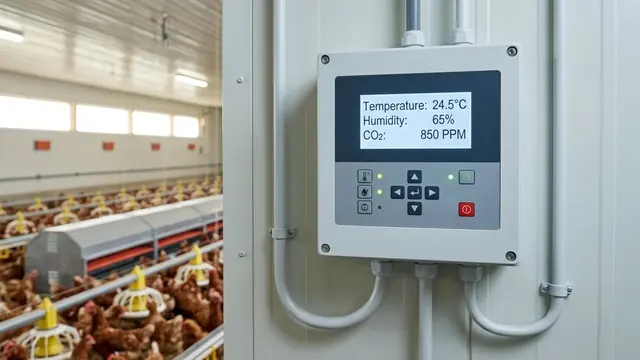
- Watch ventilation: humid air keeps litter from drying.
- Don’t overstock: more birds per square meter means more droppings and moisture.
If an outbreak has started
Treatment goes through the water with anticoccidial drugs. Which drug and for how many days is the vet’s call: programs differ for broilers, layers and waterfowl, and many products have a withdrawal period for meat and eggs. Replace wet litter at the same time, or birds will reinfect.
Visible before blood in the droppings
Hidden coccidiosis shows in the numbers first: water and feed intake drop, weight falls behind, conversion worsens. In EggPulse these figures for each house sit side by side, and the dip is visible days before obvious signs. The treatment is logged there too, with its withdrawal period.