
Salmonella is a case where a bird disease is not just a coop problem. An infected hen can look perfectly healthy while shedding the bacteria in droppings and sometimes in the egg, and from there it reaches the customer’s table. That is why prevention matters far more than treatment.
How salmonella reaches a farm
- With chicks and hatching eggs. Chicks from an unverified source can be carriers from day one.
- With feed and water. Damp, moldy or openly stored feed is a perfect medium. Water from open ponds is a risk too.
- With rodents and wild birds. Mice and rats carry the bacteria and spread it through the whole house.
- On boots, clothes and tools. The most common route on small farms: you walk through someone else’s yard and then go in to your own hens.
What it looks like
In adult hens the disease often runs unnoticed: the bird just eats and lays a little less. In chicks it is harder: listlessness, chicks huddling together, loose droppings, deaths in the first weeks. You cannot diagnose it by eye — you need a veterinary lab test. If young stock mortality is above normal, see when to call the vet.
What works in practice
- Buy chicks from reliable suppliers and ask for veterinary documents for the batch.
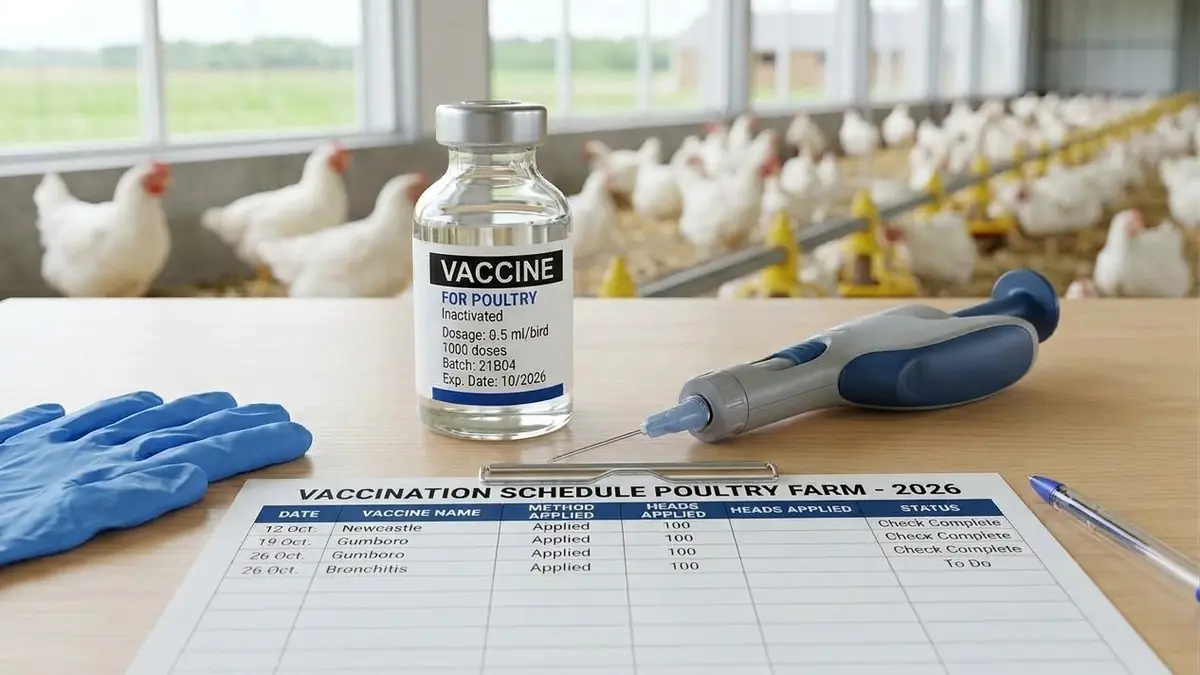
- Vaccinate on the schedule your vet sets. The schedule depends on the region and type of farm; we covered how to keep it in the vaccination schedule article.
- Close the house to rodents and wild birds: mesh on windows and vents, no gaps in the floor, feed in closed containers.
- Watch feed and water. Keep feed dry, never top up with leftovers, wash drinkers regularly.
- Set a sanitation routine: dedicated boots for the house, hand washing, clean tools. Keep sick and new birds apart.
- Clean and disinfect between flocks, and change litter before it gets damp.
Collect eggs often, don’t wash dirty ones in cold water, and store them cool. If salmonella is confirmed in your flock, eggs may be sold only as directed by the veterinary service.
A log that saves you
When disease is suspected, the vet’s first questions are: which vaccines and when, where the birds came from, when the drop began. If the answers are in a log and not in your memory, the diagnosis is faster and more accurate.
Vaccinations in the app
In EggPulse, vaccinations are recorded per house and reminders arrive in advance. Mortality and inspections sit next to them, so the whole flock history is in one place.