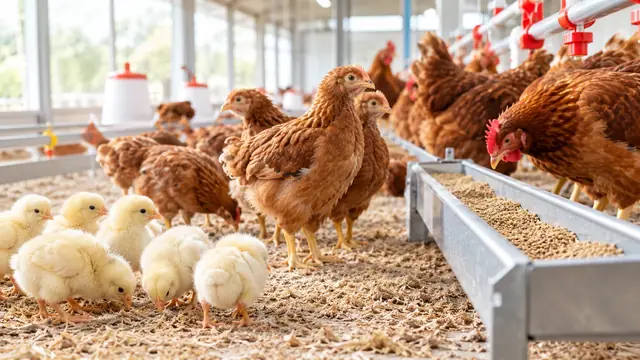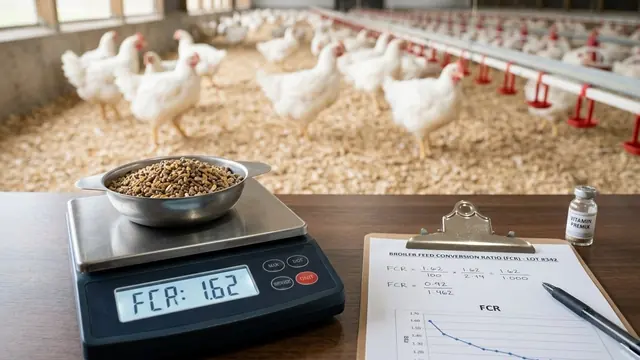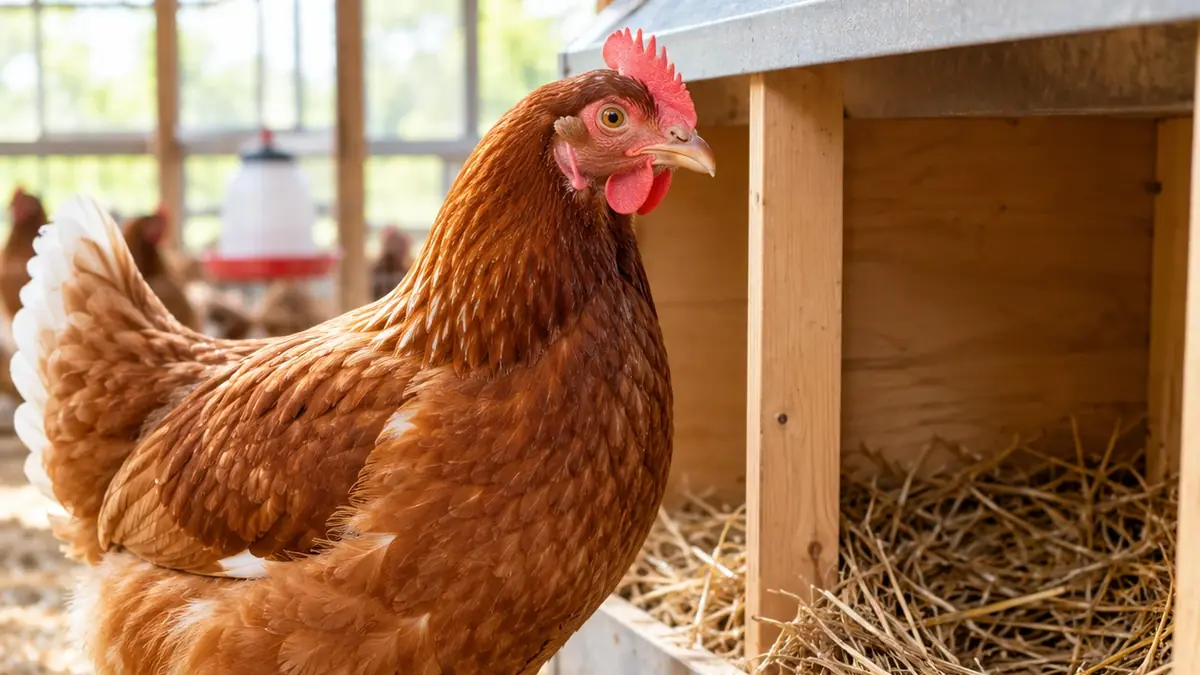

Every farm reaches the moment when a hen sits puffed up and egg numbers drop. Most often a few familiar causes are behind it: viral disease, internal and external parasites, bacterial infection. Treating them is harder and costlier than preventing them.
This article helps you spot a problem early but doesn’t replace a vet. Diagnosis and medication are for the vet to decide.
Fowl pox
A viral disease that comes in two forms. Skin form: nodules and scabs on the comb, wattles and around the eyes. Wet (diphtheritic) form: membranes and coatings in the mouth and throat, labored breathing, poor appetite. The virus is spread by mosquitoes and other biting insects, so outbreaks are more common in the warm season.
There is no specific cure: birds are given supportive care and bacterial complications are prevented. The main protection is vaccination. Write the schedule down in advance — we covered how to do it separately.
Internal parasites
Worms and coccidia take feed from the bird and weaken it. Signs: weight loss with a normal appetite, loose droppings (sometimes bloody in young birds), a pale comb, fewer eggs. Coccidiosis is especially dangerous for chicks, which is why clean litter and dry drinkers matter in the first weeks of life.
External parasites
- Feather lice and mites. The bird scratches, feathers look ragged and chewed.
- Red poultry mite. Lives in cracks of roosts and nest boxes and attacks birds at night. Signs: restlessness at night, pale comb, drop in laying. Check the roost in the evening: mites are visible on the wood.
- Scaly leg mite affects the skin of the legs: scales lift and the legs become lumpy.
Illness or molt
In autumn hens shed feathers and laying drops — that’s normal. Illness shows as listlessness, loss of appetite, loose droppings, difficult breathing, coatings and sores on the comb and in the mouth. If in doubt, open the breakdown of why hens stop laying.
Prevention that pays off
- Quarantine new birds for 2–4 weeks, away from the flock.
- Wash and disinfect the house, roosts and nest boxes, and change litter.
- Give hens sand or ash for dust bathing — it helps them fight lice themselves.
- Ventilate without drafts so the house isn’t damp (on climate).
- Treat for worms and parasites on a vet’s schedule, not “just in case.”
- Vaccinate and keep a log.
What to record
In EggPulse you can log vaccinations, mortality and inspections for every house. If mortality or a drop in laying starts right after new birds arrive, the cause is found faster.