
Broilers are fast-maturing birds: they reach market weight in roughly six to eight weeks. That means you can fit two batches into one summer. But speed forgives few mistakes: cold in the first days, poor feed or crowding bring deaths and underweight birds.
Week-by-week plan
| Age | What to do |
|---|---|
| Before the chicks arrive | Wash, dry and warm the house or brooder, set out drinkers and feeders |
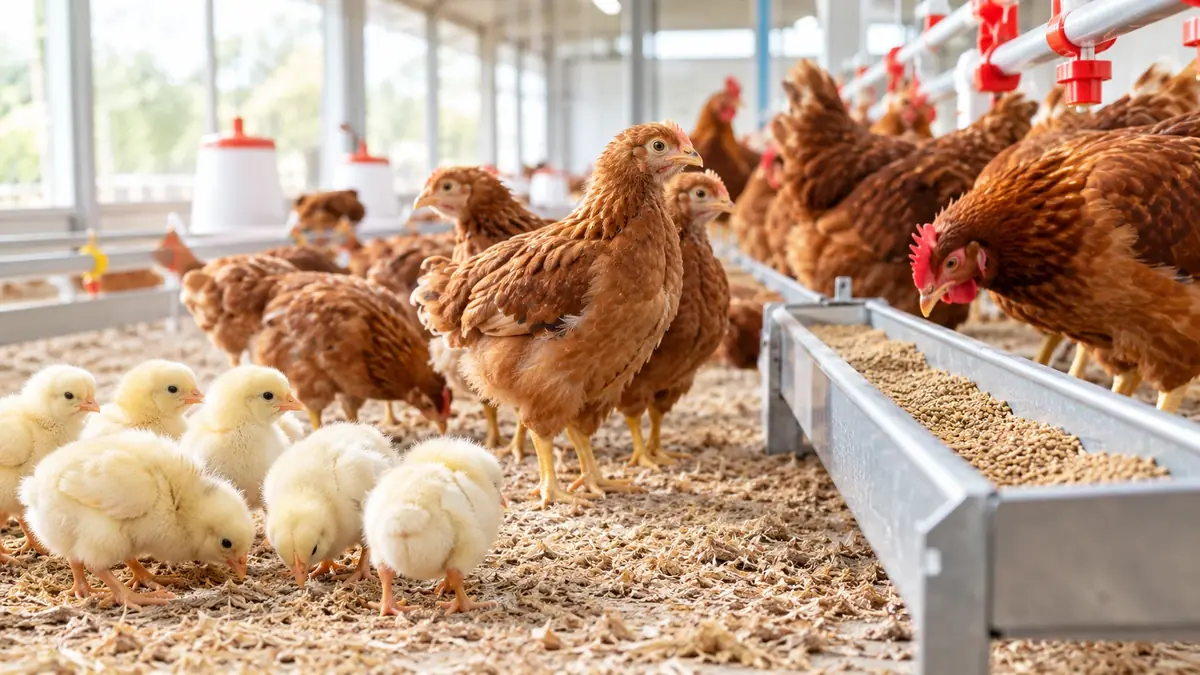
| Days 1–7 | Warm, about 32–34 °C under the heater, constant access to water and starter feed |
| Weeks 2–4 | Lower the temperature 2–3 degrees a week, switch to grower feed, watch the litter |
| Weeks 5–6 | Finisher feed, outdoor time if weather allows, check weighings |
| Weeks 6–8 | Market weight, prepare for slaughter |
The numbers are guidelines: exact settings depend on the cross and your supplier’s advice. The first two weeks are covered in raising chicks.
Where to begin
- Choose a cross from a reliable supplier and take the veterinary documents.
- Size the batch to your floor area: usually no more than 10–12 birds per square meter.
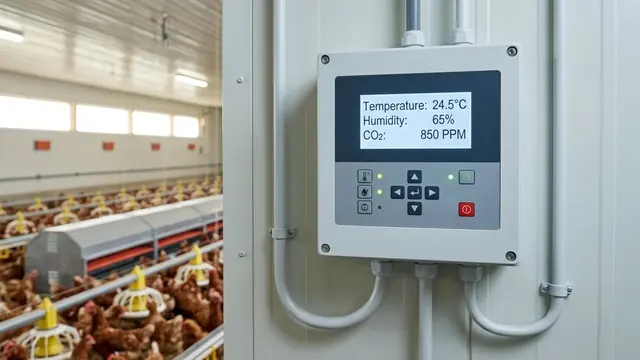
- Prepare the house in advance: clean, dry, no drafts, good ventilation.
- Buy feed for all three phases: starter, grower, finisher.
Feed and water
Broilers need a dedicated high-protein feed. Give it by phase and keep it from getting damp. Water must be clean and always available. Feed per kilogram of gain is the conversion ratio; see broiler feed conversion for how to calculate it.
What to monitor
- Weight. Weigh a sample of birds weekly and compare with the cross’s table.
- Mortality. Record it daily. What counts as normal is in poultry mortality.
- Litter. Replace damp litter right away: dampness leads to foot and lung problems.
- Health. Vaccinate and treat preventively on your vet’s schedule.
When to slaughter
Slaughter on time, by the cross’s table. Keeping birds longer uses more feed while gain slows, so conversion gets worse. Before slaughter, always observe the withdrawal period after medicines and vaccines, as stated in the product’s instructions.
Is it worth it
Add up costs: chicks, feed, heating, vaccines, losses. Divide by kilograms of meat. We covered how to work out returns in poultry farm profitability.
The batch in the app
In EggPulse, feed, mortality and costs are recorded per house in one place, so you can work out the batch result right after slaughter.