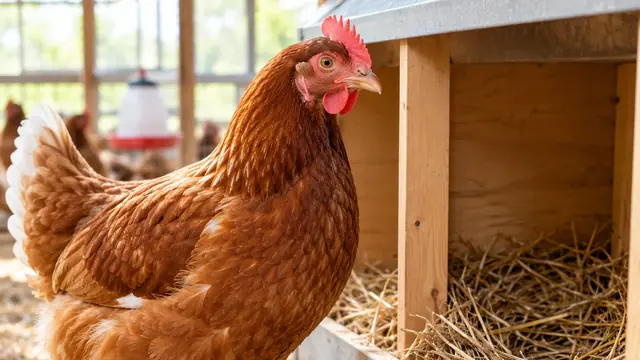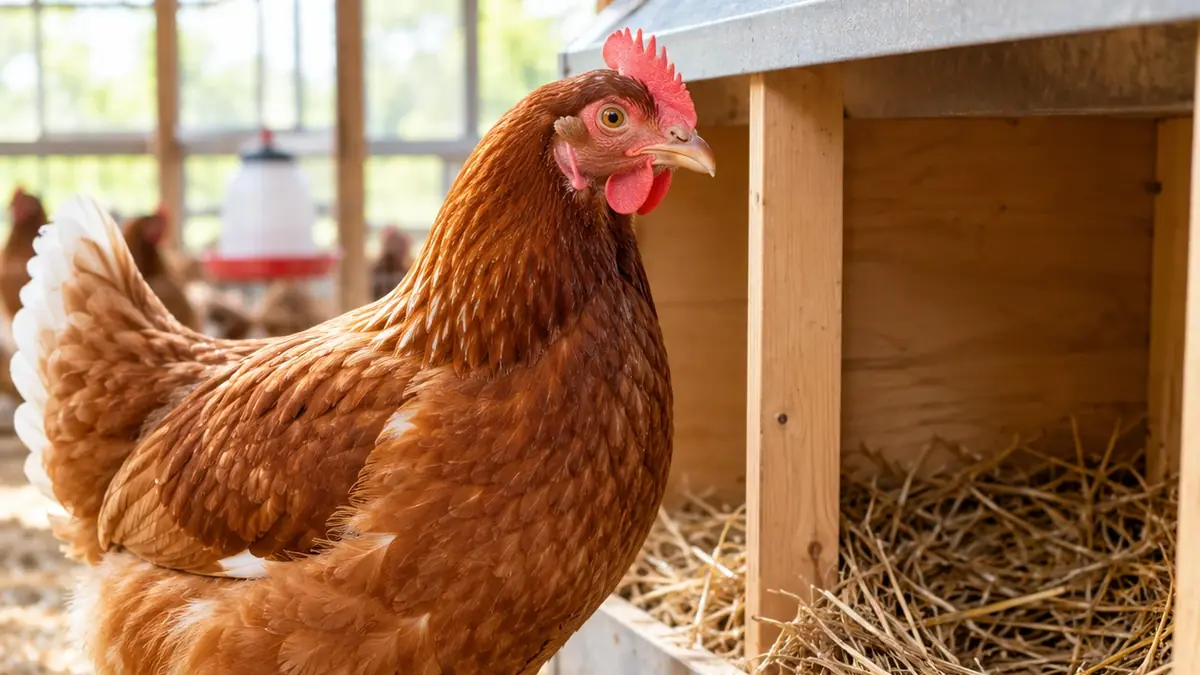

Buying a hen is easy; buying a good layer is a skill. The seller wants to show the bird at its best, but looks still tell you a lot about age and health. Here is what to check.
Age
Peak laying falls in the first year to year and a half, then declines gradually. Buying an “old lady” means few eggs. Age is hard to judge by eye, so ask for the hatch date and look for signs: a young hen has a smooth, bright comb and smooth legs; an older one has a coarser comb and rough legs.
Signs of health
| What to check | Good | Worrying |
|---|---|---|
| Comb and wattles | Red, firm | Pale, bluish, with scabs or nodules |
| Eyes | Bright, clean | Watery, cloudy, swollen |
| Nostrils, beak | Clean and dry | Discharge, whistling breath |
| Plumage | Smooth, clean around the vent | Ruffled, droppings on feathers |
| Legs | Straight, smooth scales | Raised scales, wounds |
| Behavior | Active, interested in feed | Puffed up, sitting apart |
Signs a hen is laying
- Large, bright comb.
- Two to three fingers fit between the pelvic bones and about four between the keel and the pelvic bones; the abdomen is soft, not fatty.
- In a laying hen the vent is large, moist and pinkish; in a non-laying one it is dry and small.
These are guidelines, not guarantees: the best evidence is laying history, so ask the seller for it.
What to ask the seller
- Age and breed.
- Vaccinations and documents.
- How many eggs she lays now.
- What she was fed. A sudden feed change causes a drop.
- Whether the bird has been ill, and whether there were outbreaks on the farm.
After purchase
Keep new birds apart for two to four weeks so you don’t bring infection into the flock (on diseases). Move them to new feed gradually. If hens you bought as layers don’t lay, see the breakdown of causes: often it’s a change of surroundings and stress.
Eggs from day one
In EggPulse you can record eggs per house straight away and track laying percentage — here is how. You will quickly see whether the purchase was a mistake.