
Formic, propionic, lactic, citric — a list that sounds like school chemistry now sits in nearly every modern feed. Acids work in the bag, in the drinker and inside the bird. They're cheap, well understood and rarely controversial — as long as you know where they help and where they get in the way.
Three places an acid works
- In the feed. Propionic and formic acids keep feed from going moldy and reduce the Salmonella and E. coli in it. That's why mills add them.
- In the water. Acidified water suits bacteria less, and there's less slime in the drinker lines.
- In the gut. In the crop and stomach, acids help keep conditions acidic — a barrier against bacteria that came in with the feed.
Which acids and why
| Acid | Strongest at |
|---|---|
| Formic | Salmonella and E. coli in feed and crop |
| Propionic | Mold in feed and grain |
| Lactic, citric, fumaric | Milder; more often in water and young-bird feed |
| Benzoic, sorbic | Preservatives that also work further down the gut |
| Medium-chain fatty acids (caprylic, capric, lauric) | Strong against Gram-positive bacteria, including clostridia |
Blends are the norm: one acid covers the weak spots of another. Some acids come as salts (formates, propionates) — not corrosive and easier to handle. Many products are coated so they reach the intestine instead of dissolving in the crop.
Butyrate is a story of its own
Butyric acid (butyrate) is the main fuel for the cells lining the gut. Bacteria in the ceca make it themselves from fiber, and in feed it's added as coated sodium butyrate or as mono- and tributyrin. Butyrate strengthens the gut wall and helps the villi recover after coccidiosis, stress or a feed change. It's especially valued in broiler starter feeds and in antibiotic-free programs.
Raw butyric acid smells strongly of rancid butter, so feeds only use it in "packaged" form. If a product makes the whole store smell, the coating is probably damaged.
How to acidify water
Aim for a water pH of about 4–5. Lower isn't better: birds start drinking less, and that's worse than bacteria in the line.
- Measure your water's pH. Hard, alkaline water needs more acid than soft water.
- Start at the low dose on the label and check pH a day later at the end of the line, not at the tank.
- Watch water use. If it drops by more than 5–10%, reduce the dose.
- Check metal nipple parts and tanks more often: acid corrodes them.
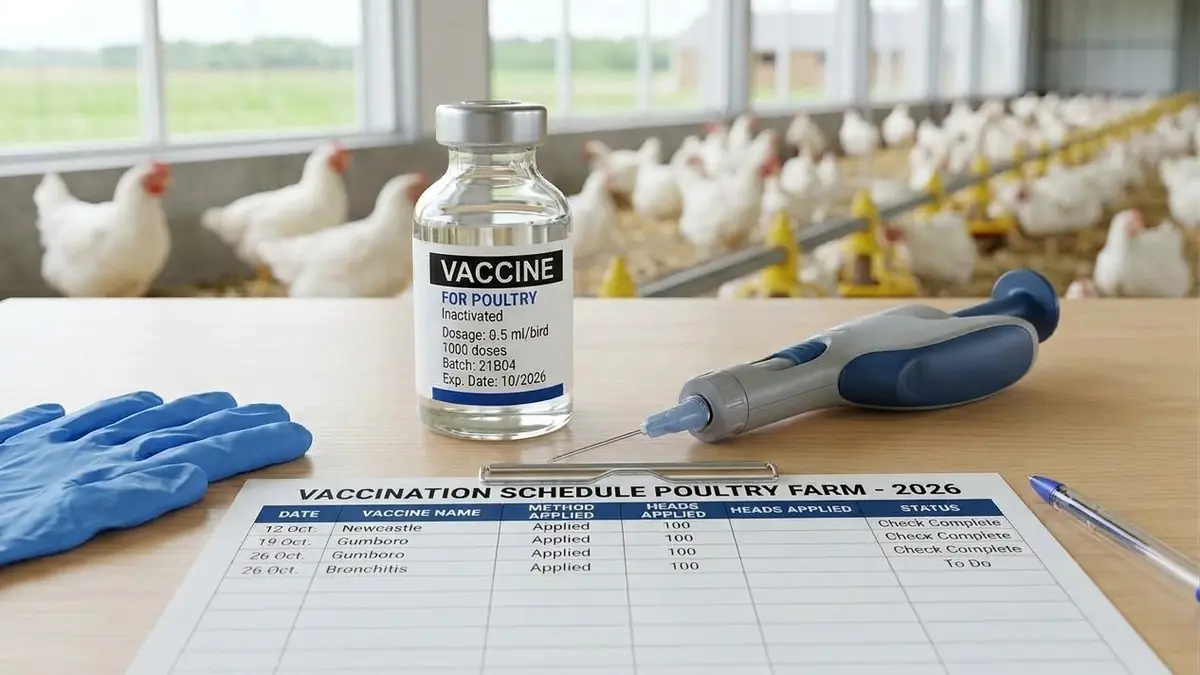
Remove the acidifier from the water 1–2 days before a live vaccine is given in the water, on vaccination day and the day after: the vaccine virus dies in acid. The same goes for some medicines — tetracyclines and sulfonamides, for example, dissolve or work less well in acidified water. Don't mix chlorine and acidifier in one tank unless the manufacturer says you can.
What good poultry water looks like is covered in poultry drinking water quality.
Against Salmonella
For layers, acidifiers are one of the main tools against Salmonella, alongside vaccination, hygiene and rodent control. Feed with formic acid brings Salmonella into the house less often, and an acidic crop makes it harder for it to take hold. Acid isn't a complete answer, but it lowers the risk noticeably (Salmonella prevention in laying hens).
What not to expect
- Acid won't rescue feed that's already moldy: the mold toxins stay (mold and mycotoxins).
- It doesn't replace cleaning and disinfecting drinker lines between flocks.
- In feed with a lot of limestone (layer feed), part of the acid is neutralized — which is why coated forms are used in layer feed.
Acidifiers in your records
In EggPulse, an acidifier goes into the additives section with its dose and expiry date. The water log shows daily consumption, so if birds start drinking less after you begin acidifying, you see it the next day — before egg numbers drop.