
A small oil press costs about as much as a used tractor, often less. A farmer who grows sunflower or flax can press their own oil: oil for sale, cake for the hens. It's convenient, but cake from a small press has its own character. It isn't like the meal from a crushing plant, and it can't be counted the same way.
Cake and meal are not the same
- Meal is what's left after the oil is extracted with solvent at a plant. It carries 1–3% fat and more protein.
- Cake is what's left after pressing. It carries 8–15% fat, sometimes more from a mini press. Less protein than meal from the same seed, but more energy.
So mini-press sunflower cake can't go into a recipe "one for one" in place of sunflower meal: less protein and lysine, more fat and energy.
What each cake offers
| Cake | Protein, % | Fat, % | Limitation | Typical in ration |
|---|---|---|---|---|
| Sunflower | 28–35 | 8–14 | High fiber (especially with hulls), low lysine | up to 10–15% |
| Rapeseed | 28–33 | 8–14 | Glucosinolates; fishy egg taint in some brown hybrids | up to 5–10% |
| Flax (linseed) | 30–35 | 8–12 | Mucilage (sticky droppings), some cyanogens | up to 5–10% |
| Camelina | 33–38 | 10–14 | Glucosinolates | up to 5–10% |
| Hemp | 30–35 | 8–12 | High fiber; rules on hemp materials | up to 10% |
| Soy (from extruded beans) | 38–42 | 6–8 | Heat-treated beans only — raw ones carry trypsin inhibitors | like soybean meal, adjusted |
These are averages: everything depends on the seed and how the press is set. Send your first batch of cake for a protein and fat test — it's cheap and saves a lot of guesswork.
The bonus of flax and camelina: omega-3
Flax and camelina oils are rich in alpha-linolenic acid (omega-3). The oil left in the cake passes into the yolk, and the egg ends up richer in omega-3. That's a reason to sell it at a premium (omega-3 eggs).
The big problem: rancidity
Cake is high in fat, and that fat oxidizes in air. Rancid cake tastes bitter, birds eat less of it, vitamins in the feed are destroyed, and broilers can develop leg and liver problems.
- Press cake in batches for 2–4 weeks, no more.
- Store it cool and shaded, in bags, not in an open heap.
- Bitter cake that smells "of paint" shouldn't go to birds.
- For longer storage, a feed antioxidant is added.
Will the press pay?
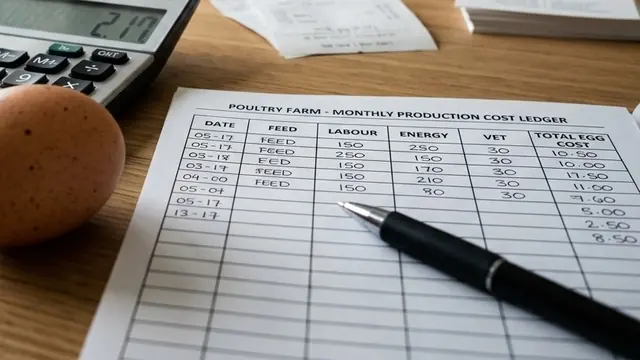
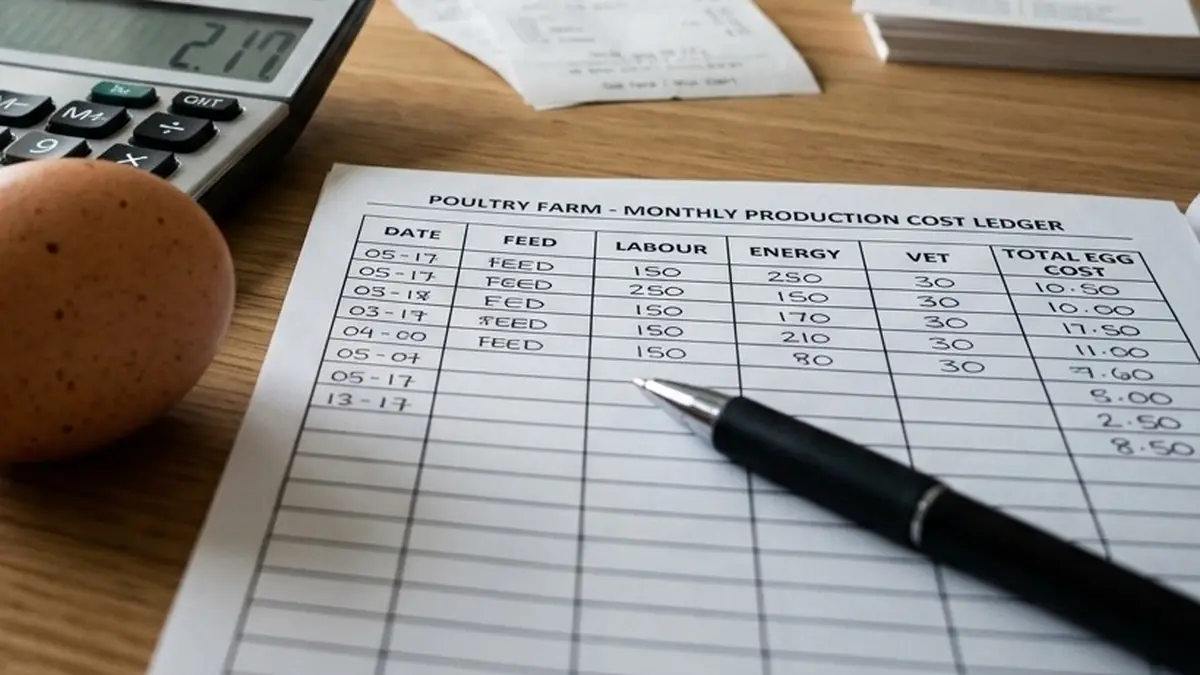
Run the numbers for your farm: oil yield (about 25–35% of seed weight for sunflower on a mini press), oil price, how much cake your hens eat in a month and what bought meal costs. A press makes sense when you can sell the oil — then the cake comes almost free. If there's no outlet for the oil, buying meal is cheaper.
Growing industrial hemp and feeding its cake is permitted differently from country to country, often only from low-THC varieties. Before feeding hemp cake to birds whose eggs and meat you sell, find out the local rules.
Putting it in the ration
Cake is protein and fat at once, and in a recipe it shifts both figures. If you add 10% sunflower cake, you can take out some oil and some meal, but lysine and methionine need checking separately — sunflower is low in lysine (synthetic amino acids). For how sunflower and rapeseed meal compare with soy, see replacing soy in poultry rations.
Cake in your records
In EggPulse, your own cake goes into the store as a separate ingredient with protein and moisture, and a batch's lab results are entered on its card, updating protein, fat and fiber. It goes into a recipe at its own share, and feed cost per egg shows which came out cheaper — your own cake or bought meal.