
The brewery gives spent grains away almost free, the bakery offers yesterday's bread, the sugar plant has pulp. The temptation is clear: free feed. Some of it really is good feed, if you know how much to give and how to store it. Some of it is a straight road to poisoning, disease and a fine.
Brewers' grains
This is the malted barley left after brewing. The starch has gone into the wort, but the protein, fat and fiber remain.
- Protein: 25–30% of dry matter.
- Fiber: 15–20% — a lot for a hen.
- Moisture: fresh grains are 75–80% water.
How much: dried grains at 5–10% of a layer ration; fresh grains in wet mash at the same rate on a dry-matter basis. Ducks and geese can take more. Spent brewer's yeast (left from fermentation) is more valuable: high in protein and B vitamins, 2–5% of the ration (yeast protein).
In summer, fresh brewers' grains go sour and moldy in 2–3 days; in winter, in about a week. Take only what birds will eat in a couple of days, or dry it, or ensile it tightly packed with no air, like silage.
Distillers' grains
What's left at an ethanol plant after the grain mash is distilled. Wet stillage spoils even faster than brewers' grains and is awkward for poultry. Dried distillers' grains with solubles (DDGS) are a normal commodity: 25–30% protein, 8–12% fat.
- Layers and broilers 5–10%, up to 15% if quality is good.
- Lysine is less digestible than in soy, especially in dark, overheated DDGS. Light golden is better.
- Mycotoxins concentrate. Distillation removes the starch, but the toxins in the grain stay — DDGS holds roughly three times more than the original grain. DDGS from bad grain is dangerous (mycotoxin binders).
Pulp
Sugar beet pulp is almost all fiber and water. Cows love it; hens digest it poorly. A little is fine for geese and ducks; for chickens it's nearly useless. Fruit and tomato pomace are a source of pigment and fiber, 2–5%, if fresh.
Bread and bakery waste
Stale bread is close to wheat in energy, but:
- it's salty — no more than 10–15% of the ration, especially for young birds;
- mold on bread means mycotoxins. Moldy bread goes to compost only;
- pastries, sweets, filled pies — no: fat, sugar and meat;
- remove packaging completely: plastic film in the crop is a common cause of blockage.
Soaked dried bread in wet mash is a reasonable extra, but not the basis of a ration.
What's banned
Since 2002 the EU has banned feeding farmed animals, poultry included, with waste from kitchens, canteens and restaurants. The reason: outbreaks of foot-and-mouth disease and swine fever spread through food scraps. Similar rules apply in many countries. Meat and fish in waste carry Salmonella, and raw poultry and eggs can also carry avian influenza.
Generally allowed are former foodstuffs without meat or fish: bread, pasta, biscuits from food factories, if not spoiled and properly separated from packaging. In the EU these are called "former foodstuffs", and specialist processors handle them. Crop and food-industry residues — spent grains, pulp, bran — are ordinary feed materials. Check the rules in your country, especially if you sell eggs or meat.
How not to spoil it
- Buy from one trusted supplier: fewer quality surprises.
- Wet material — only as much as birds eat in 1–2 days.
- By-products don't replace the main feed: keep them to 10–20% of the ration on a dry-matter basis.
- Count protein and energy: spent grains and DDGS lower the feed's energy.
On foods that are dangerous for hens, see what chickens can and can't eat; on wet mash, wet mash and fermented feed.
Cheap feed in your records
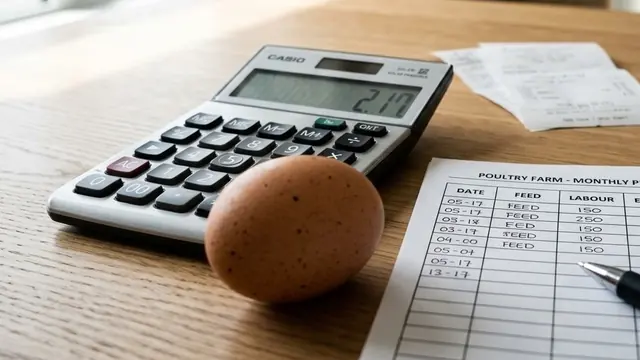
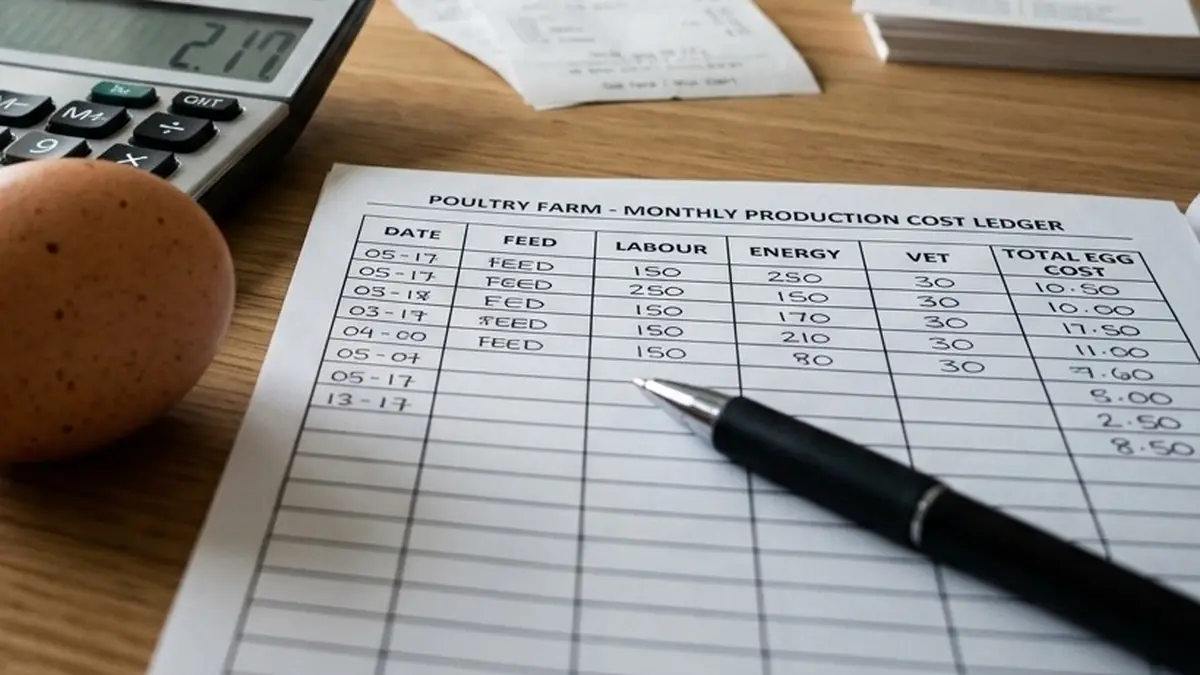
In EggPulse, spent grains and other by-products go into the store as separate ingredients — even free ones, at zero price. If you log how much went into feeding, feed cost per egg and laying show how much it really saved you.