
Online, fermented feed promises strong immunity, a third less feed and bright yolks. Sprouted grain is “free living feed.” Grandmothers made wet mash their whole lives. Where’s the truth and where’s the nice story? Let’s go through each method: what it gives you, how much work it takes, and where it does harm.
Wet mash
Compound feed or a home mix moistened with water, skim milk, broth or grated vegetables to a crumbly, not sticky, texture. Birds eat it more eagerly, especially in cold weather, in heat and during molt.
- Crumbly, not porridge. A handful squeezed into a ball should fall apart. A sticky mass clogs nostrils and beaks.
- As much as they’ll eat in 30–40 minutes. Leftover mash starts to sour within a couple of hours in warm weather.
- Wash the feeder. Residue on the walls is bacteria and mold for the next feeding.
- Careful in summer. In heat, mash spoils especially fast, and sour feed causes diarrhea and sour crop.
Mash in the morning or evening, dry feed in the feeder the rest of the time. Switching birds entirely to mash means feeding several times a day and throwing out soured leftovers.
Fermented feed
This isn’t mash — it’s feed soaked in water for several days until lactic acid bacteria multiply in it. Like making sauerkraut: the feed sours, and E. coli and salmonella survive worse in that environment.
What studies show
- lower acidity in the crop and gizzard, and in some trials less salmonella shedding;
- less spillage: wet feed doesn’t fly around;
- dry-feed use is slightly lower in some trials, but “a third less” comes from advertising;
- in broilers, results vary: weight gain improves on some farms and doesn’t change on others.
How it’s done
- Put feed in a food-grade bucket and cover with clean, unchlorinated water a couple of centimeters above the feed.
- Cover and leave at room temperature for 2–4 days, stirring once a day.
- It’s ready when it smells sour, like a sourdough starter, and has bubbles.
- Scoop out what you need and top up with fresh feed and water — that keeps the starter going.
A rotten or alcoholic smell, pink, black or fuzzy mold on the surface — dump the whole bucket and wash it. A spoiled starter is more dangerous than any benefit.
Fermented feed is convenient for 10–50 hens. For a farm with hundreds of birds, it’s barrels, daily work and the risk of spoiling a large volume at once.
Sprouted grain
Sprouting raises some vitamins in grain, birds love it, and in winter it’s fresh greens for birds with no outdoor access. But there’s a part people usually leave out:
- Dry matter goes down, not up. The grain spends its reserves growing the sprout. A kilo of sprouted grain is mostly water and, on a dry-matter basis, poorer than a kilo of the original grain.
- Protein is still low. It’s the same grain: sprouting doesn’t turn it into complete feed.
- Mold. Warmth and moisture suit more than sprouts. Rinse the grain twice a day and discard moldy trays.
Bottom line: sprouts and hydroponic fodder are a good winter vitamin source, but not a way to buy less feed.
Comparison
| Method | What it gives | Work | Main risk |
|---|---|---|---|
| Wet mash | Appetite in cold, heat and molt | Daily | Soured leftovers |
| Fermented feed | Less spillage, acidic crop | Daily, a bucket lasts several days | Spoiled starter |
| Sprouted grain | Vitamins, winter greens | Twice a day | Mold |
Test it on your own flock
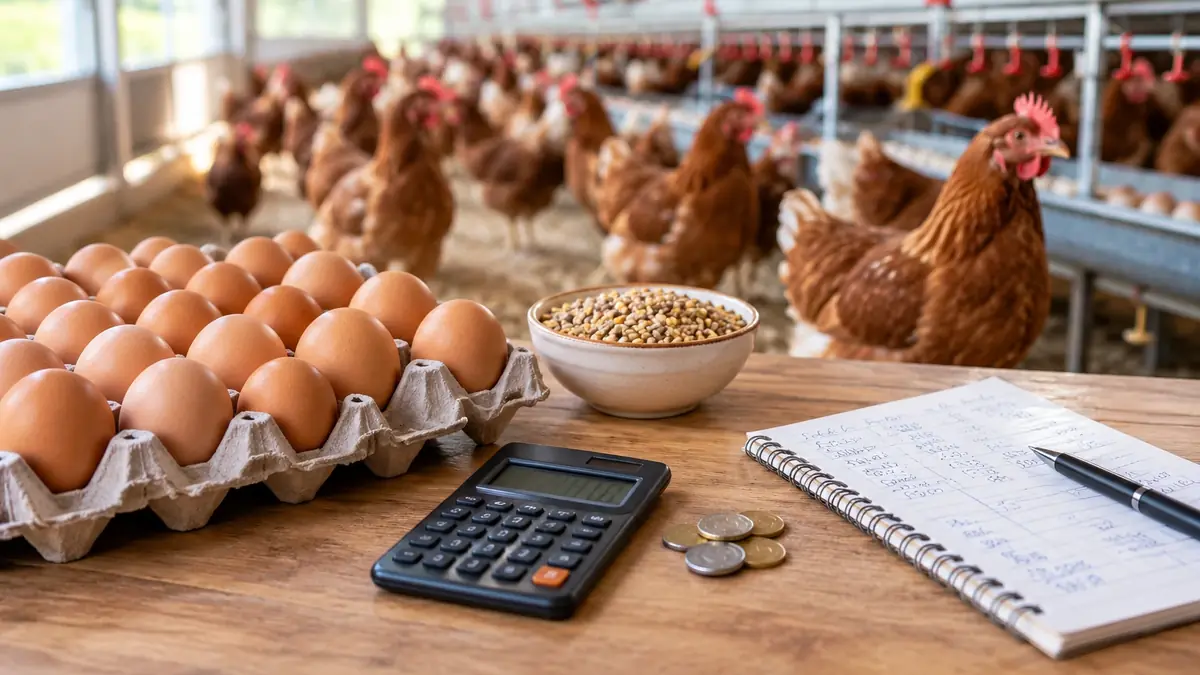
Any of these methods is worth testing with numbers, not feelings. Log feed and eggs in EggPulse for two weeks before the switch and two weeks after: feed per 10 eggs and laying percentage will show whether things got better. If not, there’s no point spending the time every day. What else hens can eat besides feed is in what chickens can and can’t eat.