
A bucket of peelings, yesterday’s porridge, a handful of weeds from the garden — hens rush at it as if they hadn’t eaten in a week. It looks like the birds are happy and you’re saving money. But a month later there are fewer eggs, the shells are thinner, and one hen is sitting hunched in the corner. Chickens will eat almost anything, which is exactly why deciding what goes into the feeder is your job.
The 90/10 rule
A laying hen eats about 120 grams a day, and that amount has to carry the protein, calcium, vitamins and energy for an egg. Every gram of porridge or bread pushes out a gram of complete feed. That’s why poultry keepers use a simple rule: at least 90% of the diet is complete feed, no more than 10% is everything else.
10% of 120 g is 12 grams per hen. For ten hens that’s a handful or two of greens and a couple of spoonfuls of porridge a day, not a bucket. A bucket of peelings for ten layers is already half their ration.
When treats go beyond that, a hen fills up before she gets what she needs. Calcium suffers first: shells get thin, and hens start eating their own eggs. Then protein drops — and egg production with it.
What’s safe and useful
| Food | Benefit | How to give it |
|---|---|---|
| Greens: nettle, clover, dandelion, alfalfa | Vitamins, carotene for yellow yolks | Fresh and finely chopped; in winter, hay or alfalfa meal |
| Pumpkin, zucchini, carrots, beets | Vitamins, succulent feed | Grated or in chunks, nothing rotten |
| Cabbage, lettuce | Winter greens | Hang a cabbage head — it doubles as something to do |
| Cooked potatoes | Energy | Cooked only, no green skin, cooking water drained |
| Berries, apples, watermelon rinds | Treats | In small amounts; not handfuls of apple seeds |
| Worms, mealworms, larvae | Protein | Good during molt, but within the same 10% |
| Your own eggshells | Calcium | Bake and crush so hens don’t recognize them as eggs |
Give grass fresh and short. Long stems and lawn clippings that have sat and started to ferment ball up in the crop — one of the common causes of an impacted crop in free-range hens.
What’s off-limits
| Food | Why it’s dangerous |
|---|---|
| Anything moldy: bread, grain, porridge | Mycotoxins hit the liver, immunity and laying, often without visible signs |
| Green potatoes, sprouts and potato leaves; tomato leaves | Solanine poisoning |
| Raw dried beans | Lectins; cooked beans are safe |
| Avocado (skin and pit) | Persin is toxic to birds |
| Chocolate, coffee, tea | Theobromine and caffeine |
| Salty foods: bacon, sausage, brine, chips | Birds handle salt poorly: diarrhea, thirst, poisoning at high doses |
| Spoiled and fermented leftovers | Digestive upset, sour crop |
| Lots of onion and garlic | Off-taste in eggs; harmful to blood in large amounts |
Bread is a story of its own. It isn’t toxic, but it’s empty calories: lots of starch, little protein, almost no calcium. A crust once a week won’t hurt; a loaf every day pushes out real feed.
Kitchen scraps and the law
In many countries, feeding kitchen waste to farmed poultry is banned outright — and that includes people with a dozen hens. That’s the rule in the European Union and the UK: animal diseases spread through meat scraps. If you sell eggs or meat, check your country’s rules. Either way, don’t feed raw meat or raw eggs — the latter teaches hens to eat their own.
If it’s five hundred hens, not ten
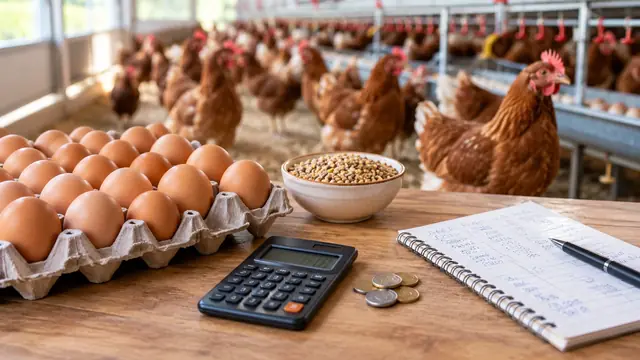
On a farm, extras are a money question, not a kindness. A steady supply of greens or produce-market waste can save feed, but only if you know how much goes in and what happened to the eggs. The rule is simple: when you change the ration, note the date and watch the laying percentage and feed per egg for two or three weeks. If the numbers drop, the savings aren’t real.
Add up the weight of everything other than complete feed your hens get in a day and divide by the number of birds. More than 12–15 grams per layer, and you’re changing the ration, not spoiling the birds.
Extras in your records
In EggPulse feeding is logged per house, with eggs and “feed per 10 eggs” right next to it. When you start giving something new, those numbers show whether it helped or hurt. How much complete feed a layer needs without extras is in the feeding norms article, and calcium is covered in the oyster shell and limestone guide.