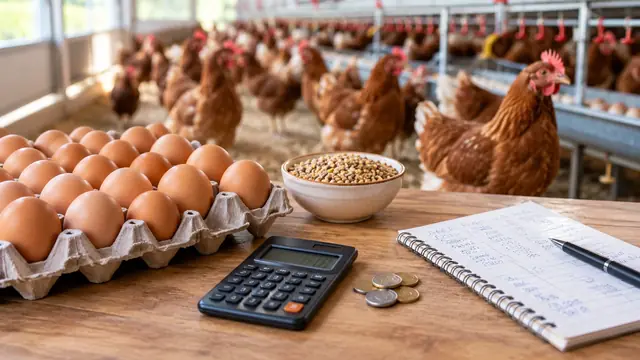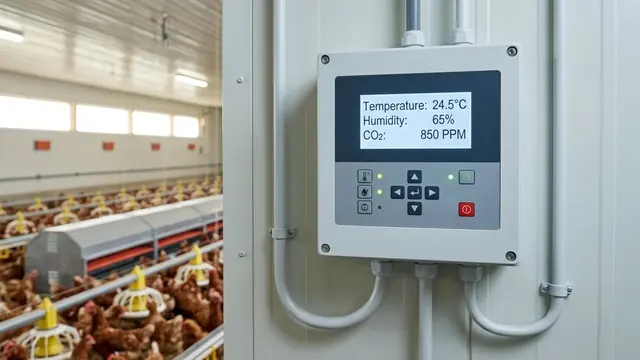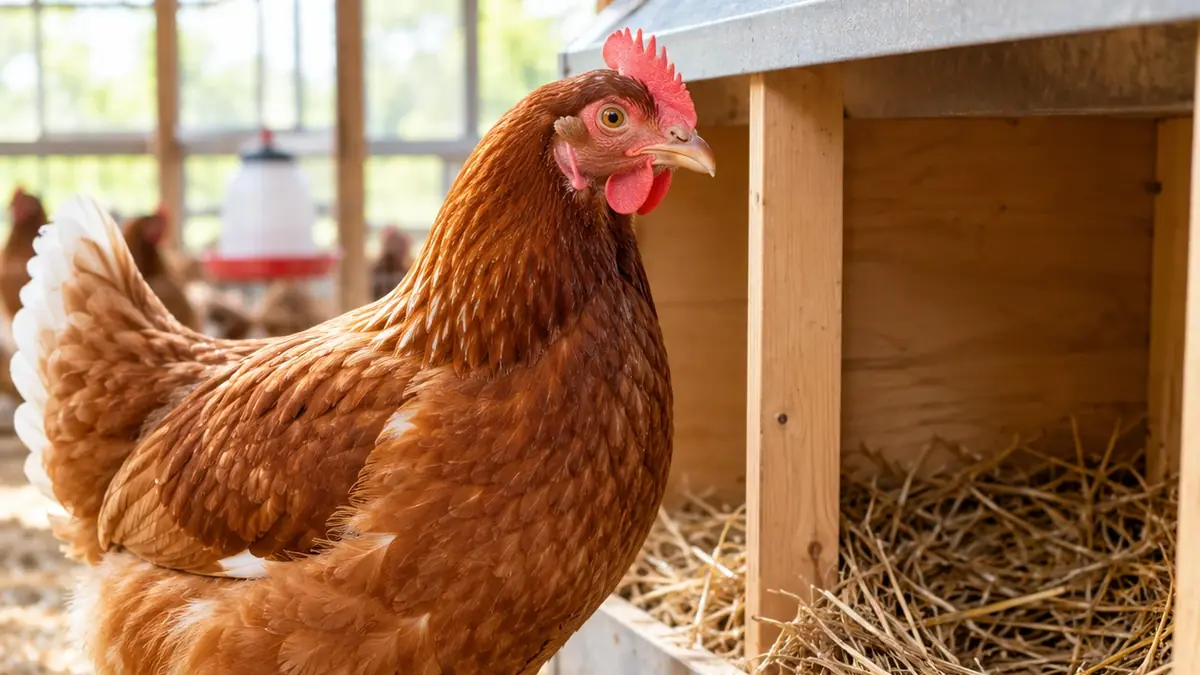

The same hen at 25 weeks and at 65 weeks is two different birds. The first is still growing, putting on weight and increasing egg size. The second lays a big egg but absorbs calcium worse, and her shells are thinner. Feed her the same feed the whole time, and you underfeed at the start of lay and get cracks and checks at the end.
Count grams, not percentages
A hen doesn’t need “17% protein,” she needs a certain amount of protein and calcium per day. The percentage in the feed is just the way to deliver it. If she eats 100 grams instead of 120, the same feed gives her a fifth less of everything. That’s why feed is formulated for what the birds actually eat.
Feed with 3.8% calcium at 115 g eaten gives 4.4 g of calcium a day. The same feed at 100 g in hot weather gives 3.8 g. The shells will notice right away.
The phases
| Phase | Age, roughly | Protein | Calcium | Main goal |
|---|---|---|---|---|
| Pre-lay | 17–19 weeks, until the first egg | 16–17% | 2–2.5% | Calcium reserve in the bones |
| Phase 1 (to and at peak) | to 45–50 weeks | 17–18% | 3.8–4.0% | Peak production and egg size |
| Phase 2 | 50–65 weeks | 16–17% | 4.0–4.3% | Hold shell quality |
| Phase 3 (late) | from 65–70 weeks | 15–16% | 4.3–4.5% | Shell and egg size |
These are averages for egg-laying strains; exact figures are in your strain’s management guide.
Pre-lay — the most underrated phase
For 10–14 days before her first egg, a hen builds a calcium reserve in her bones — she draws on it at night when the shell is forming. Grower feed with 1% calcium doesn’t build that reserve, while full layer feed too early harms the kidneys. Pre-lay feed is cheap insurance for the whole cycle. More in the pullet-rearing article.
At peak, feed ahead of the curve
Production rises faster than appetite: the hen is already laying at 90% but still eating like a pullet. If protein is short at that moment, the peak comes out lower and shorter, and you can’t make it up later. That’s why phase 1 feed is the most nutrient-dense, and the switch to the next phase happens not by calendar but when:
- the peak has passed and production has started to fall;
- egg weight has reached the strain target;
- body weight is stable.
After peak: less protein, more calcium
Eggs get bigger, while the hen absorbs less calcium for the shell. Hence the cracks, checks and “marbled” shells in older flocks.
- Calcium in coarse particles. Part of the limestone or oyster shell at 2–4 mm stays in the gizzard overnight, when the shell is formed (on oyster shell and limestone).
- Lower protein and methionine gradually: it reins in egg size, and oversized eggs crack more often.
- Afternoon feeding. Feed in the second half of the day brings calcium in at the right hour.
If you only have a few hens
No one buys four different feeds for 30 hens, and you don’t need to. Three simple steps are enough: pre-lay feed or half-strength layer feed for the last two weeks before lay, full layer feed in the first year, and after a year, oyster shell in a separate feeder.
Phases in your records
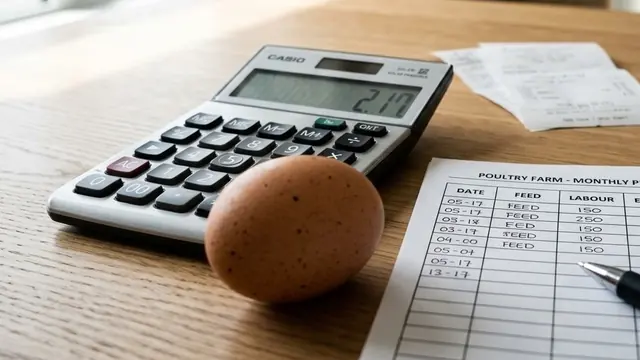
In EggPulse laying is calculated on the live head count day by day, so you can see where the flock peaks and when the peak has passed. Next to it are feed per 10 eggs and its cost: they tell you when it’s time for the next phase and what each dozen eggs costs. How much feed a hen needs by age is in the feeding norms article.