
People buy an incubator either to hatch their own chicks more cheaply than buying them or to sell young birds. Either way, an expensive incubator can turn out cheaper than a cheap one: every percent of hatchability is chicks you won’t have to buy.
Size
Start from how many chicks you need at a time. Home incubators hatch 70–80% of eggs set, so:
Capacity needed = chicks needed ÷ 0.7
For 50 chicks you need an incubator for about 70 eggs. Remember goose and duck eggs are bigger: a tray for 60 chicken eggs holds about 20 goose eggs.
What matters
| Feature | Why |
|---|---|
| Automatic turning | Without it you turn by hand 4–6 times a day for 3–4 weeks straight |
| A fan | Even temperature throughout; without one, center and edge can differ by more than a degree |
| Digital thermostat | 0.1 °C accuracy; mechanical controls drift |
| Humidity sensor and control | Humidity decides a hatch as much as temperature |
| Trays for different eggs | If you’ll hatch quail, ducks or geese |
| 12 V backup power | A day-long power cut ruins a setting |
| Good insulation | Less dependence on room temperature |
A separate hatcher
If you set eggs every week, one incubator ends up holding eggs at different stages: some need turning and normal humidity, others are hatching and need high humidity. A separate hatcher resolves the conflict and keeps hatch debris and down away from the main eggs.
Will it pay off
Compare the cost of your own chick with a bought one:
- the hatching egg (your own or bought) ÷ hatchability;
- plus electricity per setting (usually small for home units);
- plus wear: price ÷ number of settings over its life.
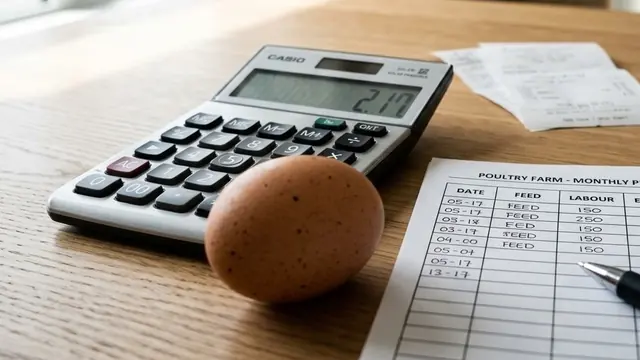
Example: an incubator for 300, used for 5 years at 6 settings a year, costs 10 per setting. With 100 eggs at 0.3 each, 75% hatchability and 3 for electricity, a chick costs (30 + 3 + 10) ÷ 75 ≈ 0.57. If a day-old chick from a supplier costs more, the incubator pays off. But bear in mind that commercial broiler and layer strains don’t breed true: you can’t get your own broilers from your own eggs (on breeds and strains).
Common buying mistakes
- buying a huge incubator “to grow into” and setting 20 eggs in it: it holds its settings worse;
- trusting the built-in thermometer without checking it against a second one;
- not thinking about where it will stand: it needs a room with steady temperature, out of the sun and drafts.
Settings for different species are in chicken incubation, quail, geese and turkeys and ducks.
Incubators in the app
In EggPulse you can add your incubators and track settings in them with presets for different species, candling reminders and the hatch result. After a few settings you see which incubator and which settings give the best hatch.