
Two bags of "Layer Feed" cost different amounts, and both promise excellent laying. What actually sets them apart is printed on the label, in small type on the back. It's worth learning to read it once: five minutes that save money on every delivery.
What's on a label
Rules differ slightly between countries, but almost every bag shows:
- Intended use: which birds and what age (layers from 18 weeks, broilers days 11–24, and so on).
- Composition: what the feed is made of, usually in descending order.
- Analytical constituents: crude protein, fat, fiber, ash, calcium, phosphorus, sodium, sometimes amino acids and energy.
- Additives: vitamins, trace minerals, enzymes, coccidiostats and so on — with doses.
- Date of manufacture, best-before date, batch number.
- Directions for use and warnings.
The nutrient figures
| Line | What it means | Typical for a layer |
|---|---|---|
| Crude protein | All the nitrogen in the feed, converted to protein | 15–17% |
| Metabolizable energy | How much energy the bird actually gets | 11.2–11.7 MJ/kg (≈ 2,700–2,800 kcal/kg) |
| Crude fiber | The coarse part, poorly digested | no more than 5–6% |
| Crude fat | Fats and oils | 3–5% |
| Crude ash | The mineral part, in layer feed mostly calcium | 11–13% |
| Calcium | The key to the shell | 3.5–4.2% |
| Phosphorus (total or available) | Bone and metabolism | available about 0.35–0.4% |
| Lysine, methionine | The key amino acids | about 0.75–0.8% and 0.36–0.4% |
These are averages; exact norms depend on the hybrid and laying phase (layer phase feeding). Broiler figures are different — see broiler starter, grower and finisher feed.
A 17% protein feed can be worse than a 15.5% one if the second has its amino acids covered by synthetic supplements. If the maker lists lysine and methionine, that's a good sign. If it lists only "protein", ask for the rest (synthetic amino acids).
The additives section
This is the most interesting part, and the one with the most puzzling units.
| What it says | Unit | How to read it |
|---|---|---|
| Vitamin A, D3 | IU/kg | International units. Layer D3 is usually 2,500–3,500 IU/kg |
| Vitamin E | mg/kg | Often 20–50 mg/kg; more in hot weather and for breeders |
| Zinc, manganese, copper, iron, iodine, selenium | mg/kg | The form is stated: sulfate, oxide, chelate (organic trace minerals) |
| Phytase | FTU/kg | About 500 is a standard dose (phytase) |
| Xylanase, glucanase | each maker's own units | Can't be compared between brands |
| Probiotic | CFU/kg | Number of live cells; usually hundreds of millions to billions per kg |
| Coccidiostat | mg/kg | Name of the substance and withdrawal period before slaughter |
| Pigments | mg/kg | Capsanthin, lutein, canthaxanthin (yolk color) |
| Antioxidants, preservatives | — | Protect fat and vitamins from spoiling |
In the EU each authorized additive has its own number, and the first digit shows the category: 1 — technological (preservatives, binders), 2 — sensory (flavors and colorants), 3 — nutritional (vitamins, trace minerals, amino acids), 4 — zootechnical (enzymes, probiotics), 5 — coccidiostats. Other countries number differently, but the grouping is similar.
Broiler feed with a coccidiostat must not go to layers, and some substances are dangerous for turkeys and waterfowl (feeding turkey poults). The bag must state how long before slaughter the feed must be withdrawn.
How to compare two feeds
- Same purpose. Compare layer feed with layer feed for the same age.
- Energy and protein. A feed 10% cheaper but lower in energy means birds eat more — and the saving disappears.
- Lysine and methionine. If one lists them and the other doesn't, ask.
- Calcium for layers. If it's low, you'll have to offer oyster shell separately (oyster shell and limestone).
- Date of manufacture. Vitamins in the bag lose strength after 2–3 months, faster when warm.
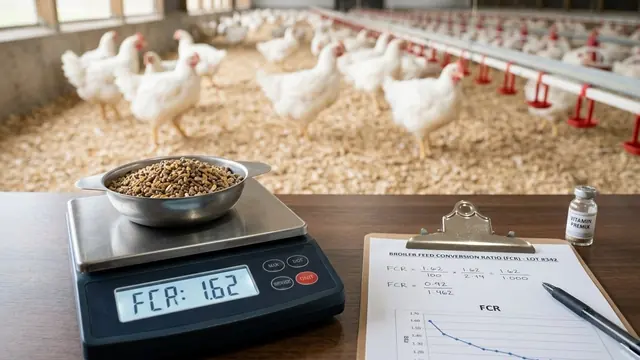
The final answer comes not from the bag but from the flock: how much feed went into a dozen eggs or a kilogram of gain. When it's cheaper to buy feed and when to mix your own is covered in buy feed or mix your own.
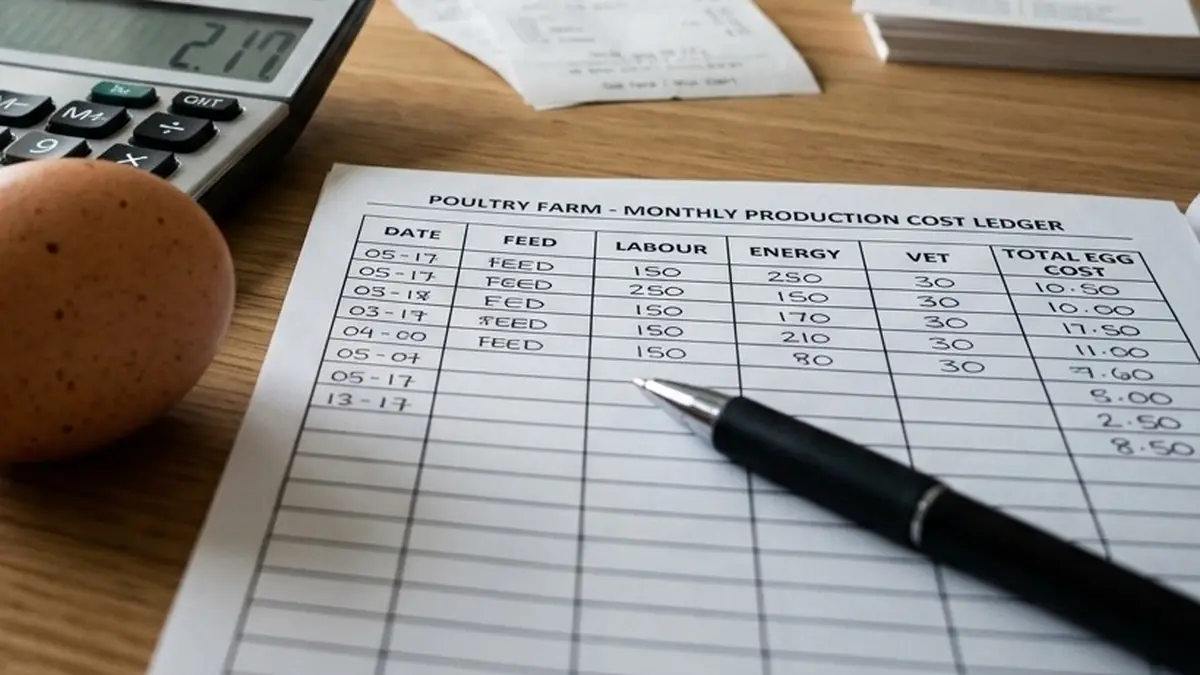
Feed in your records
In EggPulse, every feed delivery goes into the store with its price, supplier and date, and feed conversion and feed cost per egg are calculated from your logs. If you change brands, a couple of weeks later the numbers show whether it's better — not by the advertising, but by your own flock.