
A summer evening, a thunderstorm, the lights flicker and go out. In a closed broiler house the fans stop, and within half an hour the air is hot and heavy. If nobody finds out until morning, the morning starts with counting losses in the hundreds. A farm emergency isn’t a question of “if” but “when,” and what decides the outcome is a plan made in advance.
How much time you have
| What fails | How urgent |
|---|---|
| Ventilation in a closed house, hot weather, high stocking | Most urgent: birds can start dying within tens of minutes |
| Water in hot weather | A matter of hours |
| Heat for chicks in their first week | Hours: chicks pile up and smother each other |
| Incubator | A setting survives a few hours, probably not a whole day |
| Lighting for layers | Not immediately dangerous, but it upsets the light program and laying |
The more birds per square meter and the hotter it is, the less time you have. A small house with windows and a range has more margin than a closed broiler house.
What counts as the standard
The EU broiler directive (2007/43/EC) requires two things where birds depend on mechanical ventilation:
- An alarm that signals failure and works even without the main power supply.
- A back-up system that keeps enough air moving if the main one fails.
Even if your country has no such rule, that is the sensible minimum for a closed house.
What to prepare in advance
- A generator sized with headroom for the starting current of fans and pumps, with a transfer switch. Test it monthly under load, not just “it started.”
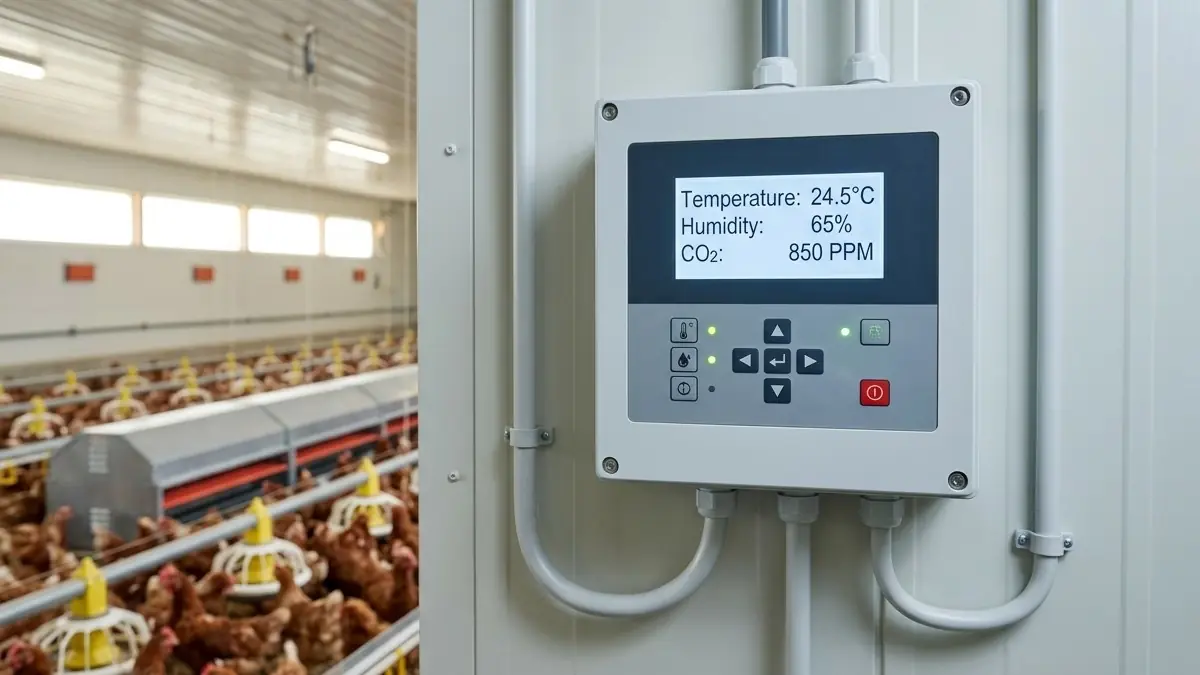
- A sensor and phone alert: power lost, temperature rising.
- Water in reserve: a tank for a day, manual drinkers.
- Emergency openings: windows and doors you can open to get air moving — with predator mesh.
- Flashlights and battery lights, phone numbers for an electrician and a neighbor with a generator.
- A printed plan on the door: who does what, in what order.
When everything stops: what to do
- Open the emergency openings and doors to get air moving — first, even before the generator.
- Start the generator and connect ventilation first, water second, heating or the incubator third.
- In hot weather, pull feed from broilers: a full bird produces more heat (on feeding in the heat).
- Check the drinkers: after an outage the pump may not have refilled the line.
- Don’t open the incubator unless you must: a closed cabinet holds heat longer.
- Note when the outage began and ended, and the day’s mortality.
A generator that sits for years without a test won’t start on the day you need it. A monthly test run under load is the cheapest insurance on the farm.
After the emergency
After overheating or thirst, birds eat less and lay worse for several days, and broilers fall behind on weight. Give water with electrolytes, check the litter around the drinkers and work out what failed while the details are fresh. Cooling birds in the heat is covered in the heat stress article.
The emergency in numbers
In EggPulse house temperature, water and mortality are logged by day, and the app warns you when water use changes sharply or temperature leaves the normal range. After an emergency those records show what it cost — an argument for buying a generator before the next storm.