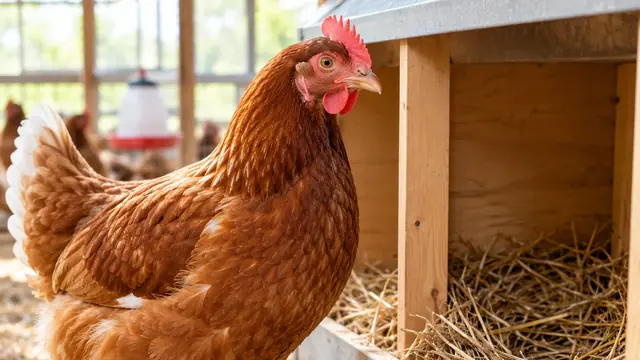

In the evening there were forty hens in the house; in the morning there are thirty-two, and five of them are dead but barely eaten. That’s the signature of a weasel or a marten: they kill more than they can carry off. A fox takes one or two birds and leaves. Predators almost always come back where it worked once, so after the first loss it matters not only to patch the hole but to work out who came.
Who came: the signs
| What you see | Likely predator |
|---|---|
| One or two birds missing, feathers at the hole, digging under the wall | Fox |
| Several dead birds, bites to the neck and head, bodies nearly intact | Weasel, marten, polecat |
| Eggs and chicks disappearing, burrows in the floor, rodent droppings | Rats |
| Daytime attacks on range, a plucked carcass in the open | Hawk or other raptor |
| Torn fencing, lots of feathers, scattered over a wide area | Dog |
Mesh that works
Chain-link and thin chicken wire keep birds in, not predators out: weasels and polecats get through large openings, and foxes and raccoons tear thin wire. For the house and a covered run, use galvanized welded mesh with openings of about 12–13 mm (½ inch).
- Every opening — windows, vents, gaps under the roof — covered with the same mesh.
- An anti-dig apron. Bury the mesh 30 cm (12 inches) deep, or lay a 50–60 cm (about 2 ft) strip flat on the ground outward from the wall and pin it down. The animal starts digging at the wall, hits the mesh and gives up.
- A run roof — mesh or stretched lines against hawks.
Night is the main danger
Most attacks by ground predators happen at night and at dawn.
- Shut all the birds in the house at night rather than leaving them in the run.
- Close the pop hole as soon as the birds are in — an automatic door on a light sensor makes this easy.
- Use latches a raccoon’s or marten’s paw can’t open: a carabiner or a bolt with a lock.
Rats: the quiet predator
Rats take eggs and chicks, spoil feed and spread salmonella. You rarely see them by day, but you see the signs: droppings, burrows, gnawed bags.
- a concrete floor or fine mesh under the floorboards;
- feed in closed containers overnight, spills cleaned up;
- bait only in closed stations that birds and dogs can’t reach.
More on protecting feed in the feeders and feed waste article.
After an attack
- Walk around the outside of the house: look for digging, bent mesh, a gap under the door.
- Block the hole temporarily with anything solid — the predator will be back the next night.
- Remove the dead birds: the smell attracts other animals. How to do it properly is in the article on disposing of dead poultry.
- Check the rest of the flock: injured and frightened hens lay worse for a few days.
Trapping and shooting predators is regulated by hunting law in many countries. Before setting traps, check the local rules: mesh is legal everywhere, unauthorized trapping isn’t.
Losses in your records
In EggPulse losses to a predator are logged as mortality on the day they happened. After a season the log shows what the night visits cost and whether new mesh paid for itself.