
People get quail because they are small, quick and undemanding: eggs start at six or seven weeks, and a cage of ten birds fits on a balcony. All true. But fairly soon the question comes up: if an egg weighs 10–12 grams, how many do you have to sell for this to be worth the effort?
What to know about the bird before doing the math
- Japanese quail start laying at about 6–7 weeks and, well kept, give 250–300 eggs a year.
- They eat around 25–30 g of feed per bird per day. You need a high-protein feed, about 20–24%. Chicken feed is only a stopgap.
- In a cage battery, plan on roughly 150–200 cm² of floor per bird. You can go tighter, but laying drops and pecking rises.
- Table eggs need no male at all. You only need one if you plan to incubate: one male per three or four females.
- Production holds for about 8–10 months, after which layers usually go for meat.
Working it out for a hundred birds
Take 100 layers at 85% production. Put in your own prices: the units below are made up, and it’s the structure that matters, not the numbers.
| Item | Per day | Per month |
|---|---|---|
| Eggs | 85 | ≈ 2,550 |
| Feed (28 g per bird) | 2.8 kg | ≈ 84 kg |
| Feed per egg | ≈ 33 g | |
If a kilogram of feed costs 40 units, feed comes to 3,360 a month, or about 1.3 units per egg. That is not yet your cost of production. Add bedding, lighting, vet costs, packaging, your own labor, cage depreciation and mortality. How to roll it all into one number is covered in hidden costs in egg production.
Where the money leaks
- The first purchase. Cheap chicks of unknown origin give 60–70% instead of 85%, and you find out two months later.
- Feed. It takes the largest share of costs. A 10-gram difference per bird per day across a hundred birds is 30 kg of extra feed a month.
- Cracked eggs. A quail shell is thin. Cages with a sloped floor and gentle collection cut losses, and a lack of calcium raises them. See thin and soft eggshells.
- Selling. Find buyers before the cages are full, not after. The egg is small, and not every shop takes it gladly.
- Time. Daily collecting, watering, cleaning. A hundred birds eat up an hour or an hour and a half a day.
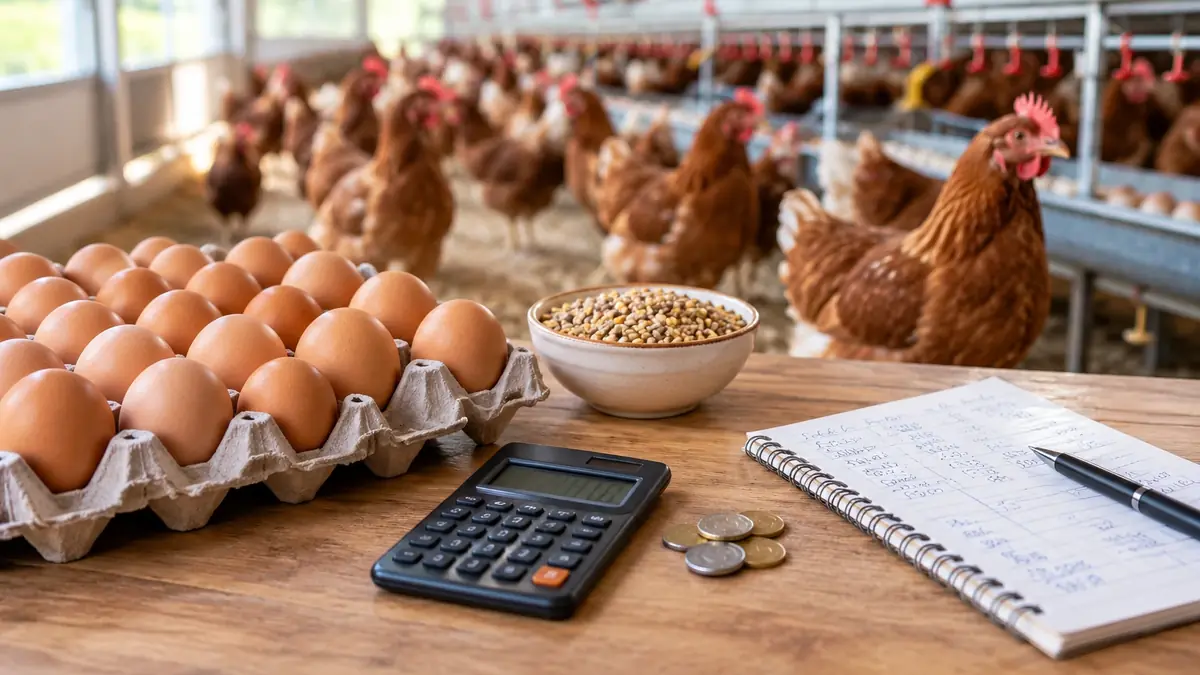
Multiply the monthly egg count by the price you will actually get (not the one on classified ads), then subtract feed, bedding and everything else. If what is left is less than you would earn in the same hours at another job, it’s a hobby, and it’s more honest to call it one.
What about meat
A meat-type carcass weighs around 150–250 g at 6–7 weeks. The cycle is short, but it takes more feed per kilogram of gain than a broiler, and dressing small birds is labor-intensive. Work it out the way you would for broilers, with the formula from broiler feed conversion.
Keep records from day one
EggPulse handles quail as a separate type of bird: eggs, feed, mortality and money are counted per flock, and feed norms come from a table made specifically for quail. It’s better to have numbers for the first two weeks than to try to remember them later.