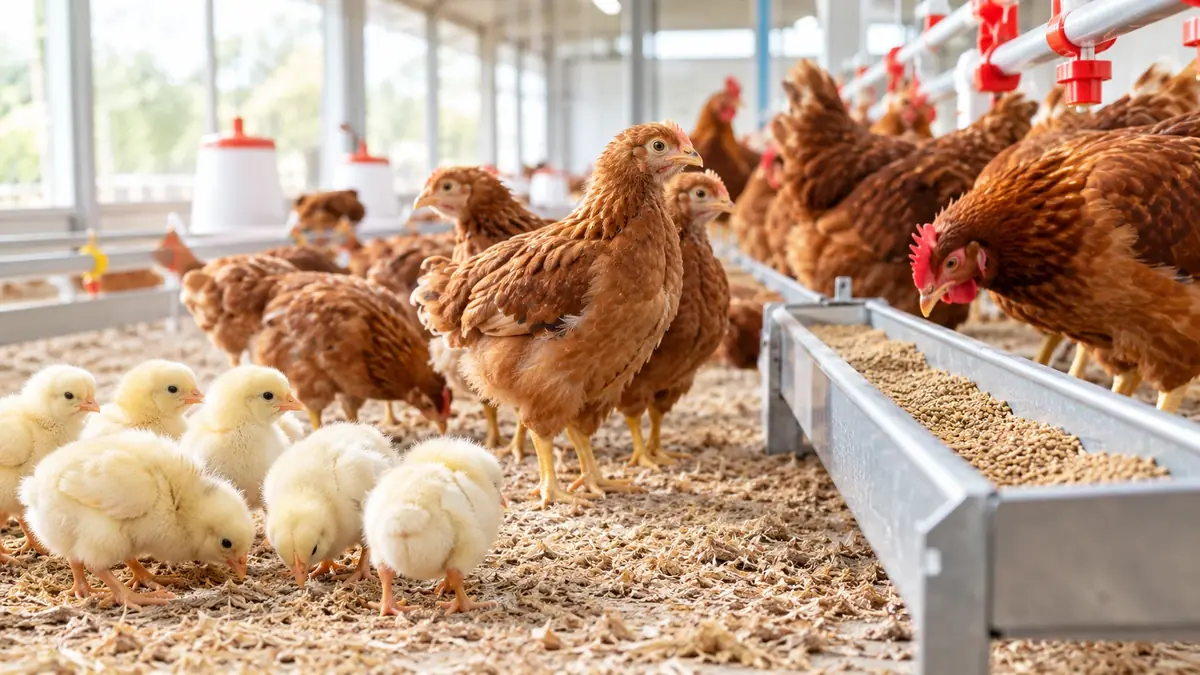

For people raising turkeys for the first time, week one often ends the same way: some of the poults are dead with no obvious disease. The poult is healthy — it just understands where food is much worse than a chick does. Most early losses come from conditions, not infections.
They don’t find feed and water
This is the number one cause. Poults struggle to see feed on dark litter or in tall feeders, and in a new place they take a long time to start drinking. After two or three days without food they are too weak to get up to the feeder.
- For the first 2–3 days, scatter feed on paper, flat trays or box lids across the whole brooder area.
- Put drinkers next to the feed and under the lamp. Dip each poult’s beak in water at placement.
- Keep lights bright and on around the clock for the first two days: poults eat when they can see.
- A few hours after placement, check crops: poults that have eaten have full, soft crops.
Chilling and piling
Cold poults climb on top of each other, and the ones underneath suffocate. Nights and corners are the riskiest. Use a round brooder ring with no corners and keep 35–37 °C under the lamp. If birds crowd the heat source, add heat there rather than another lamp somewhere else.
Wet litter and drafts
Wet litter around drinkers chills poults from below and grows mold. Mold causes aspergillosis: birds gasp with open beaks and lose weight. Replace wet patches straight away and never use musty straw for bedding (on bedding).
Dehydration after transport
If the poults traveled a long way, give water first and feed an hour or two later. For weak batches, warm water with glucose or electrolytes according to the label helps — but it’s support, not treatment.
When it really is disease
Call the vet if:
- deaths continue after 7–10 days, once conditions are right;
- there’s diarrhea, especially bloody or yellow;
- you hear rattling, sneezing, or see swelling around the eyes;
- many birds go lame at once.
A danger specific to turkeys is blackhead, which they catch from chickens. See our article on blackhead.
What mortality is normal
A good flock loses 2–3% in the first two weeks. Above 5%, look for the cause in conditions; above 10%, get a vet in urgently. More on the limits in poultry mortality rates.
Track losses daily
In the first weeks what matters is not the monthly total but how losses change day to day. In EggPulse you log deaths during the daily check and see the percentage of the placed flock. A rise over a couple of days stands out immediately.