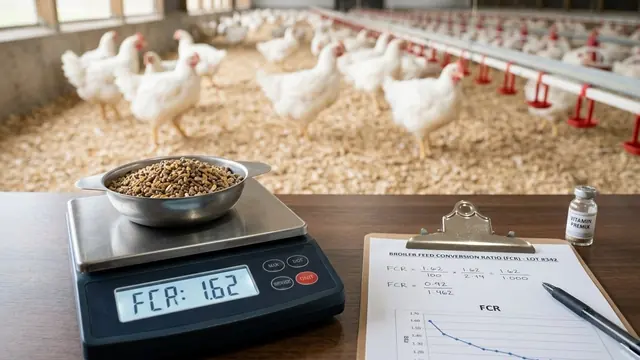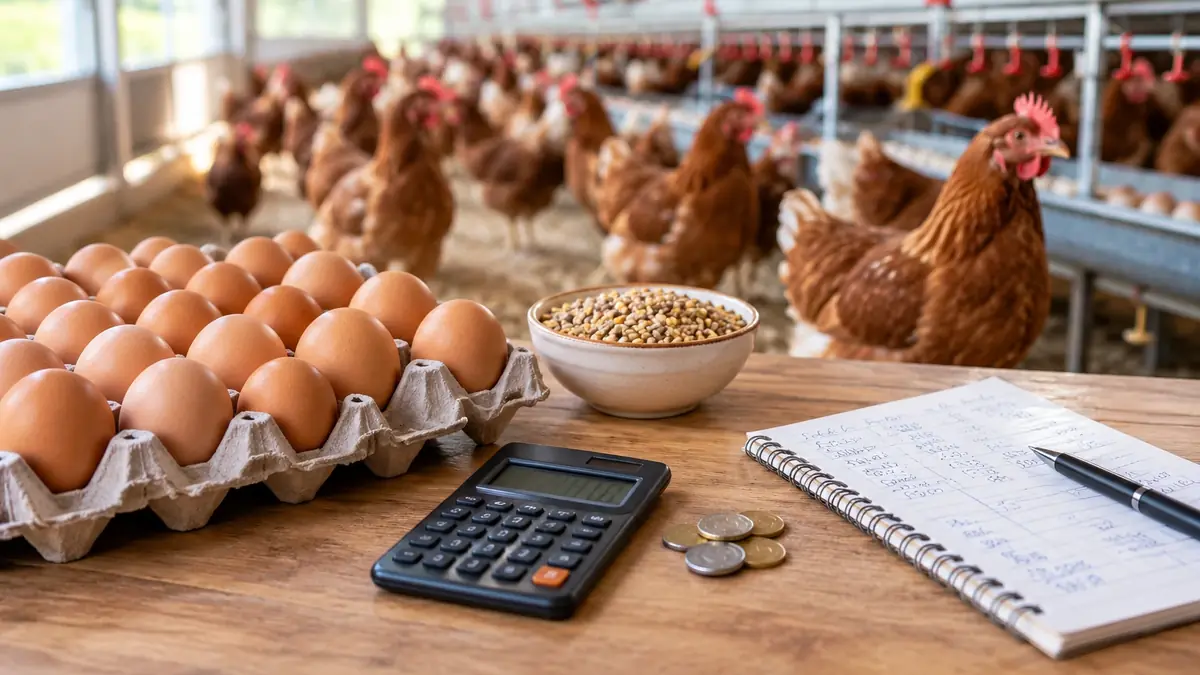

One autumn a farmer switched their hens from corn to home-grown barley. Within a week the litter by the feeders was wet, the eggs were dirty, and the hens were eating more and laying less. No disease was involved. Barley, wheat, rye and oats have a quirk you need to allow for — and an inexpensive enzyme takes care of it.
What gets in the way
The cell walls of these cereals are rich in non-starch polysaccharides, or NSP. In wheat and rye they're arabinoxylans; in barley and oats, beta-glucans. In the gut they swell and turn the contents into a thick paste.
- The bird's own enzymes struggle to reach the feed, and energy and protein end up in the droppings.
- Droppings turn sticky and wet: damp litter, dirty eggs, footpad burns.
- Harmful bacteria thrive in the viscous contents, including those behind necrotic enteritis.
Young broilers suffer most: their gut is shorter and still learning to work. Adult layers cope better, but a large share of barley without enzyme still means wet litter.
What the enzymes do
Xylanase cuts the arabinoxylans in wheat, rye and triticale. Beta-glucanase cuts the beta-glucans in barley and oats. They're usually sold as a blend, sometimes with other enzymes added. The paste thins out, feed moves through the gut normally, and the bird gets more energy from the grain.
What the enzyme gives you in practice:
- dry, crumbly droppings and dry litter;
- a few percent more energy from the grain — wheat with enzyme comes closer to corn;
- a more even flock and better feed conversion, especially in broilers;
- the confidence to raise the share of wheat and barley in the recipe.
When you need it
| Ration | Add NSP enzymes? |
|---|---|
| Corn and soy | Usually not: little NSP |
| Wheat above 25–30% for broilers | Yes, xylanase |
| Barley or oats above 10–15% | Yes, beta-glucanase |
| Rye | Only with enzyme and only a little: even then no more than 5–10% for young birds |
| Sunflower meal, rapeseed meal, bran | Enzymes with cellulase and pectinase help, but less |
These are common practice; the manufacturer gives the exact dose. Activity units differ from one enzyme to another and can't be compared between products — compare on recommended dose and cost per tonne of feed.
Freshly harvested wheat and barley are stickier than grain that has been stored for 1–2 months. When you switch to a new crop, do it gradually over a week, and don't skimp on enzyme in the first months.
Common mistakes
- The wrong enzyme. Xylanase does little for barley, and beta-glucanase little for wheat. Check what's in it.
- Double dosing. A commercial wheat-based feed already contains enzyme. If you mix your own grain into it, dose enzyme only for your part.
- Hot pelleting. Like phytase, many enzymes die above 80–85 °C. Heat-stable forms are used for pellets.
- Not all wet litter comes from grain. Drinkers, salt, coccidiosis and ventilation give the same picture. Check them before changing the recipe.
Wet mash and sprouted grain also break down some NSP, but they don't fully replace an enzyme — see wet mash, fermented feed and sprouted grain.
Did the enzyme pay off?
NSP enzymes are cheap — usually a few hundred grams per tonne of feed. They pay back in two ways: cheap grain in place of corn, and less feed per kilogram of gain or per dozen eggs. Compare two batches before and after, on the same grain. If feed conversion improves by even 2–3%, the enzyme has paid for itself.
Wheat and barley in your records
In EggPulse, wheat, barley, oats and sorghum come with reference nutrient values, and recipe formulation uses them to build a mix that meets the norm for the species and age. The enzyme goes into the additives section with its dose per tonne, and feed conversion shows whether it did anything for your flock. For choosing a grain to replace corn, see sorghum, triticale and barley instead of corn.