
Twenty years ago, many countries added antibiotics to feed "for growth" — small doses, every day. The EU banned this in 2006, and more and more countries are following, because constant antibiotics breed resistant bacteria. Their place has been taken by additives that support the gut rather than treat it. First among them are probiotics and prebiotics.
What's the difference
- Probiotic — live beneficial microbes. They settle in the gut and crowd out harmful ones.
- Prebiotic — food for your own beneficial bacteria: special sugars the bird can't digest but the bacteria can.
- Synbiotic — both together.
Which bacteria are used
| Group | Features |
|---|---|
| Bacilli (Bacillus subtilis, B. licheniformis, B. amyloliquefaciens) | Form spores, so they survive pelleting and storage. The most common in commercial feeds. |
| Lactic acid bacteria (lactobacilli, enterococci, bifidobacteria) | Good at acidifying the gut, but sensitive to heat and moisture. More often used in water or mash. |
| Yeasts (Saccharomyces) | Live yeast and yeast cell walls; the walls also act as a prebiotic. |
| Competitive exclusion (mixed cultures from the gut of healthy hens) | Given to day-old chicks; proven to reduce Salmonella colonization. |
Prebiotics are most often mannan-oligosaccharides (MOS) and beta-glucans from yeast cell walls, plus fructo-oligosaccharides and inulin. MOS bind some bacteria to themselves — Salmonella and E. coli, for example — and carry them out with the droppings.
When they do the most good
A probiotic works best when the gut is being colonized for the first time or its flora has been disturbed:
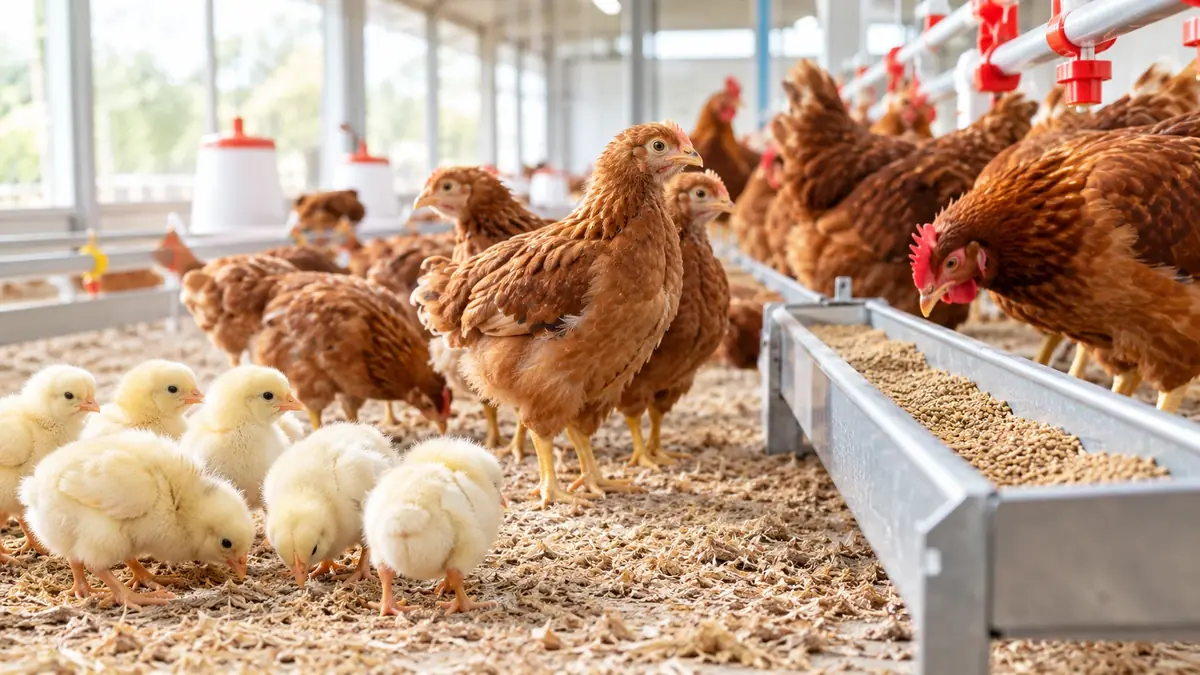
- The first days of life. A chick leaves the hatchery almost sterile, and whoever settles in the gut first tends to stay. A probiotic or competitive exclusion culture in the first hours is the best moment.
- Feed changes. Starter to grower, a new batch of grain, a switch to wheat.
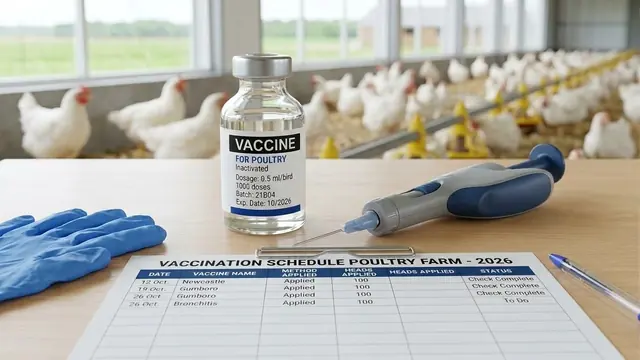
- Stress. Transport, moving houses, vaccination, heat.
- After a course of antibiotics. Antibiotics kill the good bacteria too. Give the probiotic after the course ends, not during it — otherwise the antibiotic kills it as well.
Lactic acid bacteria are killed by antibiotics and chlorinated water. If you're giving a probiotic in the water, switch off the chlorine for that period or let the water stand. Spore-forming bacilli tolerate this better, but they're still better off without an antibiotic alongside.
What they deliver — and what they don't
Trials show a modest but consistent benefit: slightly better feed conversion, a more even flock, less diarrhea, and fewer Salmonella and clostridia in the gut. Results are best where there's something to improve: on a farm with good ventilation, dry litter and clean water, the effect is smaller.
What not to expect:
- a probiotic doesn't cure a disease that's already started — it's prevention;
- it doesn't replace vaccination or coccidiostats (coccidiosis in poultry);
- it won't fix dirty litter, damp or overcrowding.
How to choose a product
- The strain is named, not just "bacilli". Different strains of the same species do different things.
- The count is stated — live cells in CFU per gram or kilogram — along with the dose per tonne of feed or liter of water.
- Shelf life and storage. Live bacteria die off over time, especially when warm.
- Registered as a feed additive in your country — meaning it has been tested.
What about kefir and whey?
Kefir, soured milk and whey are sources of lactic acid bacteria too, and birds love them. But nobody knows how many live bacteria they contain, and in hot weather dairy spoils fast in the drinker. A little, fresh, is fine — but it's no substitute for a tested product. On home fermentation of feed, see wet mash and fermented feed.
Probiotics in your records
In EggPulse, a probiotic goes into the additives section with its dose, batch number, expiry date and purpose. The app warns you as the expiry approaches. And the mortality log and feed conversion show whether a batch that got the probiotic in its first days does better than earlier batches.