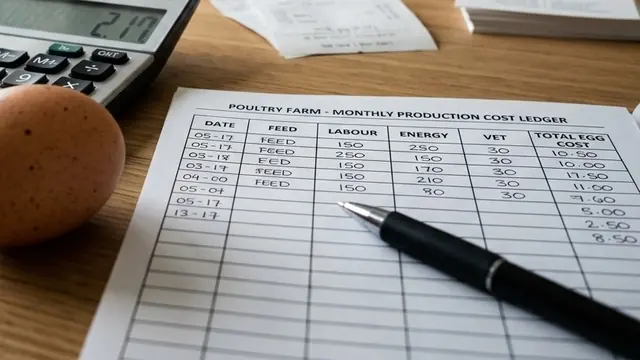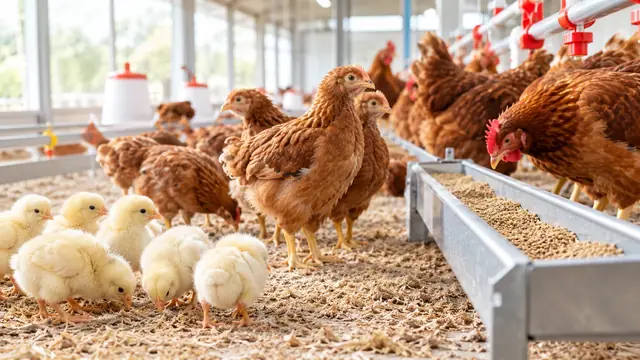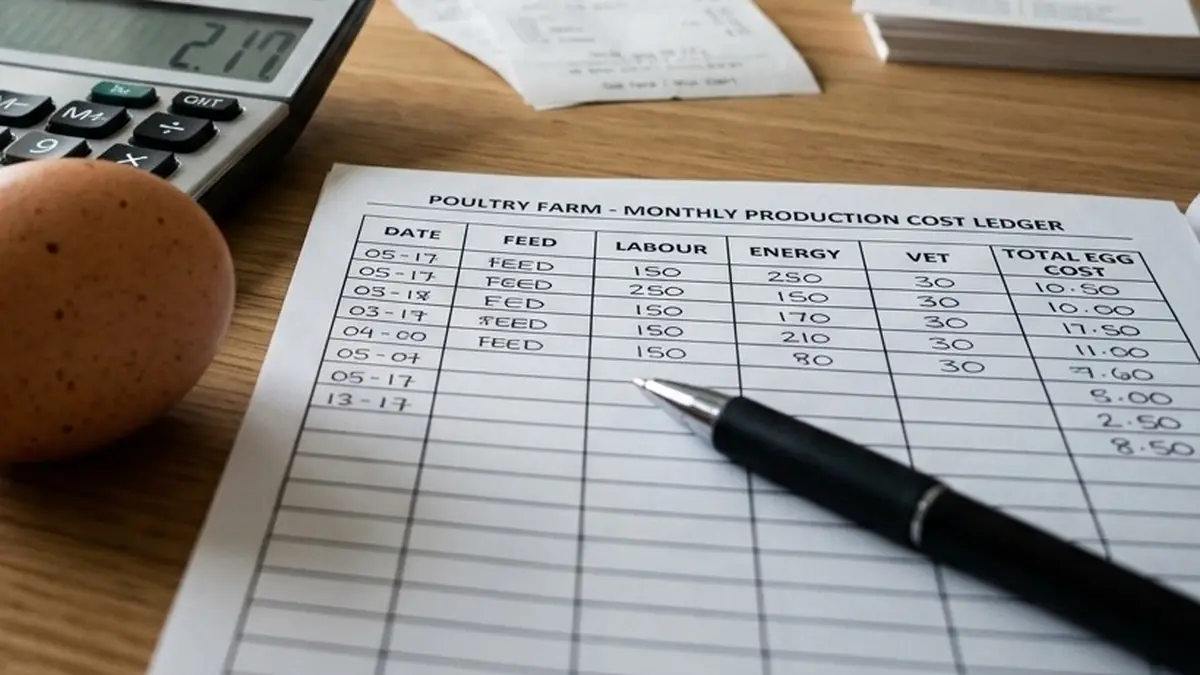

Feed is the biggest expense, and it’s the thing that most often “disappears.” Not because someone steals it, but because nobody knows how much there should be. Simple stock records answer two questions: will the feed last until the next delivery, and is any of it going somewhere other than the birds?
The core equation
Opening stock + delivered − fed to birds = closing stock
If the actual stock in the shed is less than the calculated figure, the difference is loss. If it’s more, a feeding was recorded that didn’t happen.
What to record
- Deliveries: date, feed or ingredient, weight, price, supplier, batch number.
- Feedings: date, house, kilograms. For mixes — by recipe, so each ingredient is deducted.
- Write-offs: spoiled, damp or spilled feed — with the reason.
- Actual stock at each count.
Reconciliation
Once a week, or at least once a month, weigh or count the bags and compare with the books. A difference up to 1–2% is weighing error. More than that, look for the cause:
| Cause | How to check |
|---|---|
| Spillage from feeders | Feed on the litter, feeders overfilled or hung low |
| Rodents and wild birds | Droppings and gnaw marks by the bags, sparrows in the house |
| Spoilage | Caking, moldy smell, wet floor in the store |
| Recording errors | A feeding entered twice, or a delivery never entered |
| Inaccurate scales | Check with a known weight or a bag of known weight |
Days of cover
Days of cover = stock on hand ÷ average daily use
Order feed when the stock covers the delivery time plus a few days in reserve. But don’t keep more than 3–4 weeks’ worth: feed loses vitamins and can get damp. Use grows as the birds grow, especially broilers, so calculate from the last week, not the monthly average.
Storage
- Bags on pallets, not on concrete and not against the wall.
- Use what arrived first, first.
- Closed bins or a rodent-proof room.
- Dry and cool: heat and moisture destroy vitamins and breed mold.
Stock and money
Feed in the store is money that hasn’t yet turned into eggs or meat. Cost per egg is based on the feed the birds ate, not the feed you bought (on cost). If you cost by purchases, a month with a big delivery looks like a loss and the next one like a windfall.
Stock in the app
In EggPulse deliveries and feedings update the stock automatically, and feeding by recipe deducts each ingredient by its share of the mix. The app shows how many days the stock will last at the current rate, and warns when stock falls below the minimum or it’s time to order more.