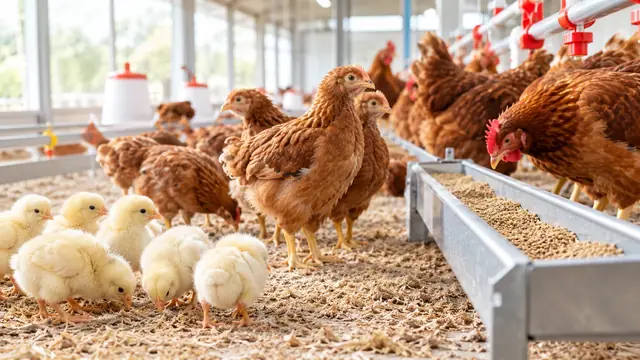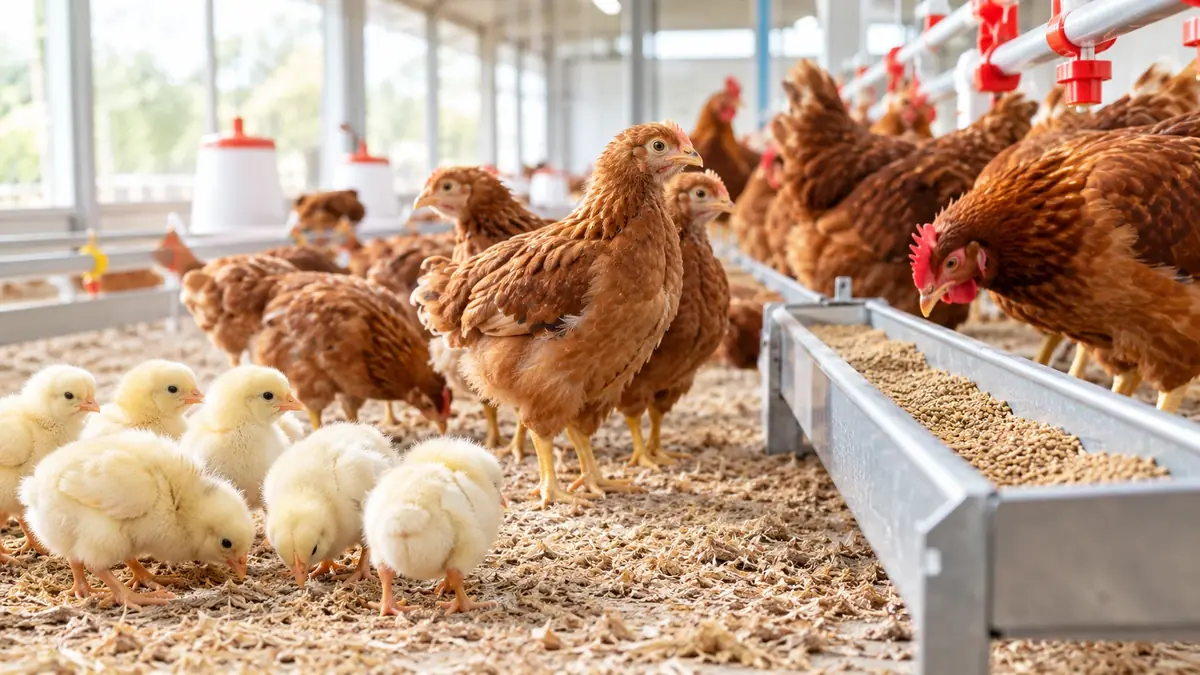

A white broiler reaches 2.5 kg in six weeks, but it needs ideal conditions and complete feed. Colored broilers — red, grey and speckled slow-growing strains — take two to four weeks longer, yet they cope with free range, changeable weather and homemade rations. On a small farm selling “farm chicken,” they often pay better.
Comparison
| White broiler | Colored broiler | |
|---|---|---|
| 2.5 kg live weight | at 5–6 weeks | at 8–10 weeks |
| Feed conversion | 1.6–1.8 | 2.2–2.6 |
| Ranging | Barely uses it | Forages actively |
| Legs, heart | Frequent problems from fast growth | Less often |
| Carcass | White skin, very tender meat | Yellow skin, firmer, more flavorful meat |
| Price to the buyer | Like the supermarket | Higher, if sold as farm chicken |
Strain names and exact figures depend on the supplier. Go by your strain’s growth table.
Why they’re hardier
Slower growth takes the load off the heart, lungs and joints. Sudden death and leg problems are noticeably rarer in colored strains. They handle heat and cold better, and on range they pick up part of their ration as grass and insects.
What to feed
- first 3–4 weeks — broiler starter, same as for white birds: the start decides everything;
- then grower feed; some of your own grain with a protein supplement is fine (rations from your own grain);
- on range, greens and insects reduce feed use but don’t replace feed.
When it pays
They take more feed per kilogram of meat, so the gain can only come from price or lower losses. Compare for your own flock:
- how much feed each option takes per kilogram of live weight;
- what livability you actually get with white birds in your conditions;
- how much more buyers will pay for farm chicken.
If your white birds die from leg problems and heat, and buyers pay 15–25% more for a colored carcass, a colored strain almost certainly pays. If you sell at supermarket prices to a wholesaler, it doesn’t. The general calculation is in the business plan.
Tips
- Don’t keep colored broilers “while they’re still growing”: after 10–12 weeks conversion gets much worse.
- Weigh weekly, just as with white birds (how to weigh).
- Explain the difference to buyers: firmer meat and yellow skin are a feature, not a flaw.
Compare two flocks
The fairest way to choose is to raise one flock of white birds and one of colored. In EggPulse each flock has its own weights, feed conversion, livability and costs, and the cost per kilogram sits side by side.