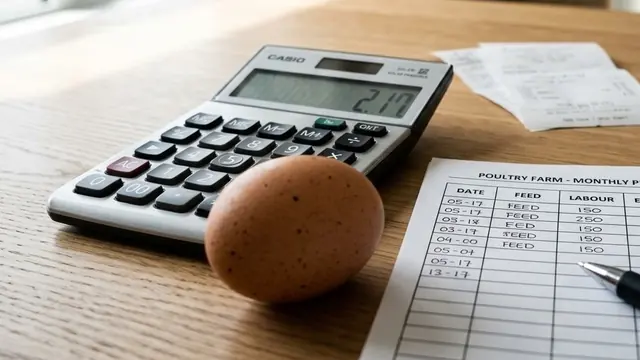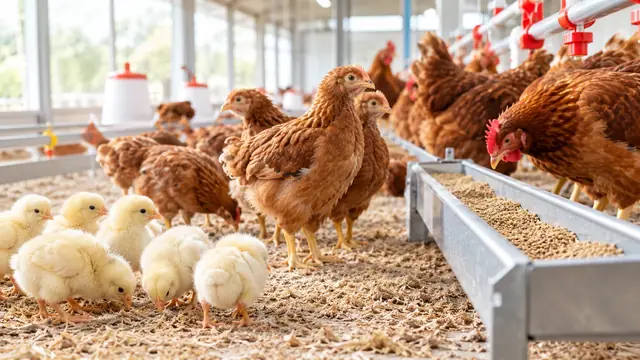

A good egg can be spoiled in a couple of days: left in a warm house, washed in cold water, stored next to onions. The buyer won’t see it, but will taste it — and won’t come back. The storage rules are simple and cost next to nothing.
Collection
- Collect eggs 2–3 times a day, more often in the heat. An egg that sits a day in the nest at 30 °C ages as much as a week in the fridge.
- Set aside dirty and cracked eggs at once so they don’t soil the rest.
- Clean nests with dry nest material are the best defense against dirty eggs.
To wash or not
The shell has a thin protective coating, the bloom, that seals the pores against bacteria. Washing removes it. So:
- lightly soiled eggs are best dry-cleaned — with a brush or fine sandpaper;
- if you do wash, use only warm water, warmer than the egg itself, and dry immediately. Cold water draws dirt inside;
- washed eggs keep less well, so sell them sooner.
Rules on washing eggs for sale differ by country: in some it’s required, in others forbidden. Check your local requirements.
Storage
- Cool and steady: 5–15 °C without sharp swings is best.
- No condensation: don’t move cold eggs into a warm room for long — droplets on the shell open the way for bacteria.
- Pointed end down: the air cell stays on top and the yolk centered.
- Away from smells: the shell is porous, and eggs absorb onion, fish and chemical odors.
Grading by weight
Graded eggs sell better and for more: buyers see what they’re paying for. Common systems:
| EU size | Egg weight | US size | Weight per dozen |
|---|---|---|---|
| XL | 73 g and over | Jumbo / Extra large | 30 oz / 27 oz |
| L | 63–73 g | Large | 24 oz |
| M | 53–63 g | Medium | 21 oz |
| S | under 53 g | Small | 18 oz |
Other countries have their own grades. Even without official labeling, sorting into “large” and “medium” at different prices raises revenue.
Freshness
- Shelf life depends on temperature and local rules; in the EU, for example, eggs carry a best-before date of 28 days from laying.
- The water test: a fresh egg lies on the bottom, an older one stands on its point, a bad one floats — the air cell grows with age.
- A candler shows air cell height, cracks and blood spots.
Packing
Clean cartons, the collection or packing date on the box, and your name or farm name. The date helps the buyer and you: you can see which eggs went first. More on selling in selling eggs and meat, and on breakage in thin and soft eggshells.
Breakage and sales in your records
In EggPulse egg collection is logged together with breakage and rejects, and sales with the buyer and price. You see what share of eggs never makes it to sale, and that shows in your cost per egg.