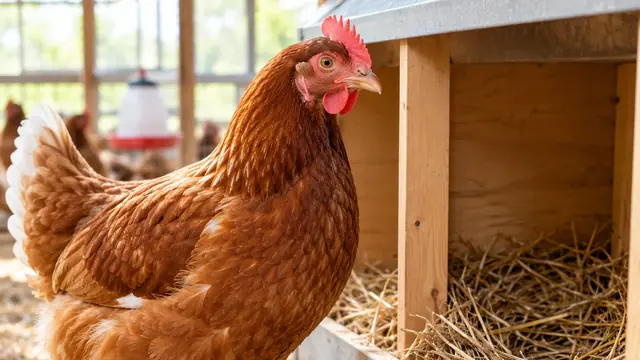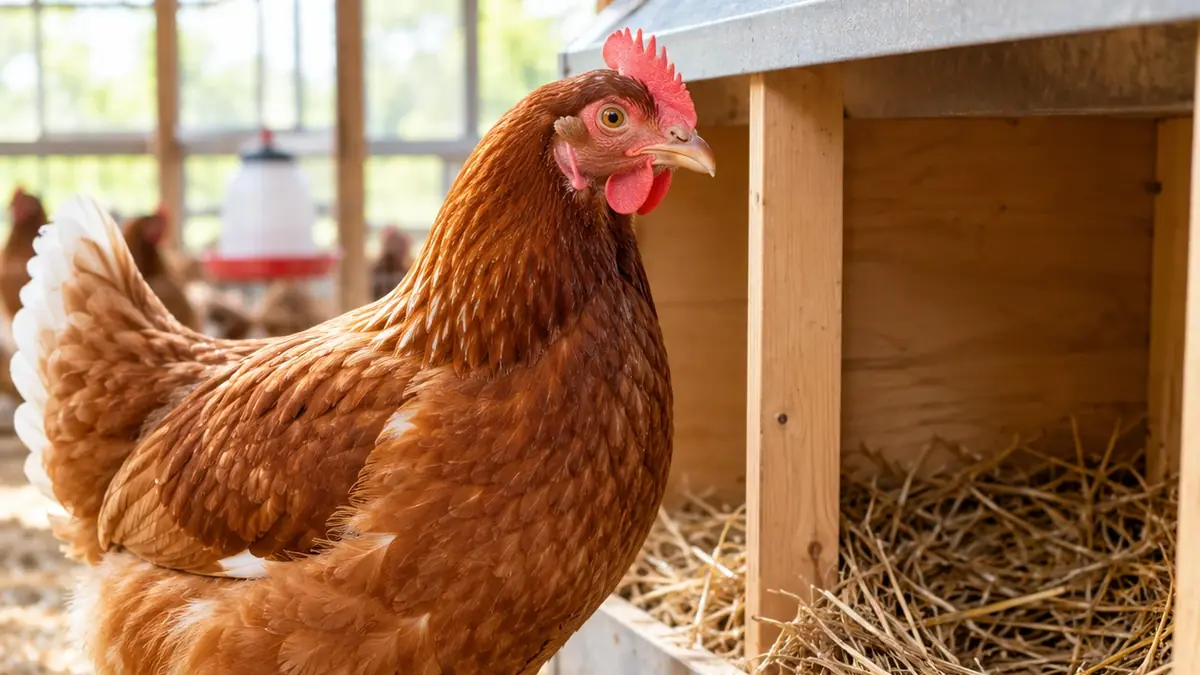

A hen stands in the corner like a penguin, tail down, straining, and the nest is empty. Or she walks around with a swollen, tight crop although she hasn’t eaten since morning. On a small farm a vet isn’t always close by, and the first hours count. Below are four common situations: what you can do yourself and when you can’t wait.
Move a sick or injured bird to a warm, quiet place. Hens peck at red and at weak birds: within an hour a wound or prolapsed tissue can become a serious injury.
Egg binding
Signs: frequent straining, upright stance, tail down, waddling, lethargy; sometimes the egg can be felt near the vent.
Causes: calcium shortage, obesity, an oversized egg, a pullet’s first eggs, stress.
- A warm bath: lower the back half of her body into water at about 38 °C (100 °F) for 15–20 minutes to relax the muscles.
- Dry her and put her in a warm, dark crate.
- Calcium — on your vet’s advice: the oviduct muscles need it to contract.
- Don’t try to squeeze the egg out: if it breaks inside, the shards injure the oviduct.
Her condition can deteriorate quickly, within 12–24 hours. If the egg hasn’t passed within a few hours of the bath, she needs a vet.
Vent prolapse
Signs: pink or red tissue protruding from the vent.
- Separate her immediately: other hens will peck the exposed tissue.
- Gently rinse the tissue with warm clean water and keep it moist.
- Call a vet. Prolapse often recurs, and the decision about keeping such a hen is best made with the vet.
Prevention is the same as for egg binding: calcium, normal body weight, and not pushing undersized pullets into lay with light (on lighting).
Crop: impaction and sour crop
| Impacted crop | Sour crop | |
|---|---|---|
| What it looks like | Crop hard and large, not empty by morning | Crop soft and squishy, sour smell from the beak |
| Common cause | Long grass, straw, coarse fibers | Fermentation in the crop, yeast, soured feed |
| What to do | Remove feed overnight, give water, check in the morning | Remove feed, see a vet for treatment |
In the morning before feeding, a healthy hen’s crop is almost empty. If it isn’t, take a closer look. How to prevent it is in what chickens can and can’t eat.
Bumblefoot
Signs: a swollen footpad with a dark scab in the middle, limping. Inside is a pus-filled infection, most often staphylococcal.
- caught early, a vet will prescribe treatment and a dressing;
- left too long, the infection reaches the joint;
- causes: hard, high perches, sharp edges, wet dirty litter, excess weight.
The poultry first-aid kit
- a separate crate or box for isolation, a heat lamp;
- wound antiseptic and a spray that masks the red color of a wound;
- disposable gloves, bandage, scissors, droppers;
- electrolytes for the water;
- the phone number of a vet who works with poultry.
Don’t keep antibiotics “just in case”: a vet prescribes them, and they come with a withdrawal period (on withdrawal periods).
When not to wait
If several birds are sick at once, mortality is rising, or birds are suddenly drinking much less, it’s no longer first aid but a possible infection. Call a vet — more in the mortality article.
Cases in your records
In EggPulse flock inspections and treatments go into the log, and the disease guide suggests what other signs to look for. Repeated cases in one group of hens show up by date — making it easier to find a common cause.