
A neighbor keeps thirty local hens on free range. They cost almost nothing, but they give little: a hen lays a dozen eggs, sits on them and stops laying for two months. A broiler grows fast, but on free range and “whatever’s around” it sickens and dies. There is a third way between them — improved “village” chickens: Kuroiler, Sasso, Noiler, Kadaknath, improved kampung. Let’s see what these birds are and who they suit.
What these birds are
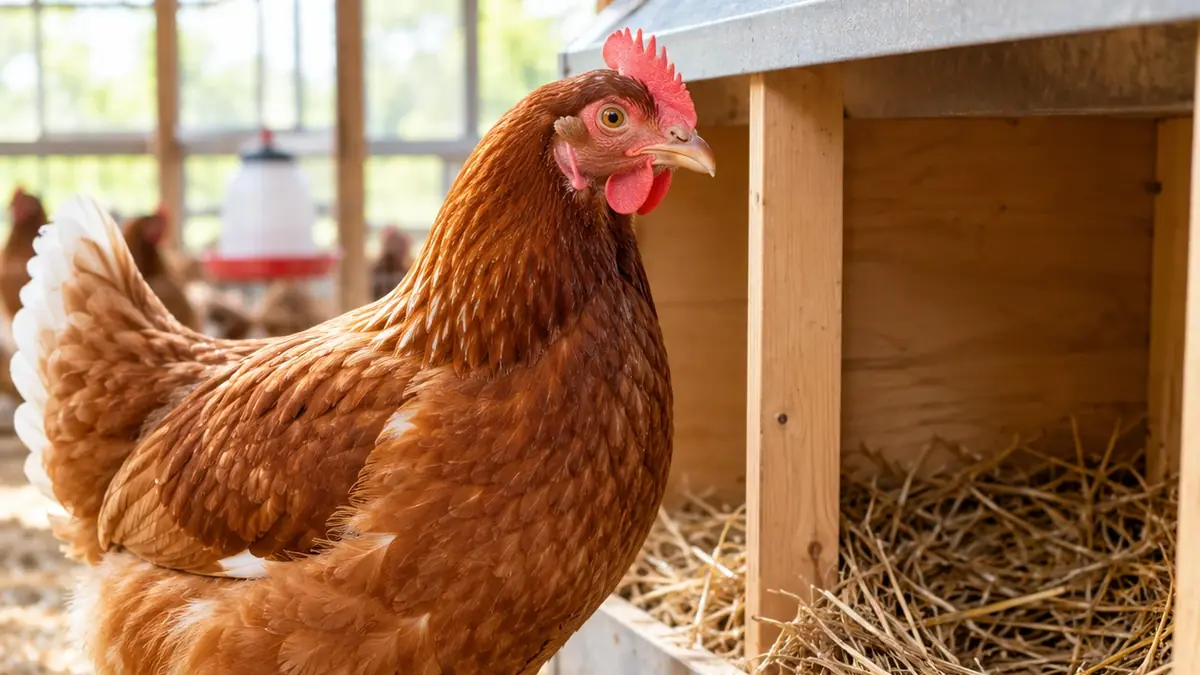
They are chickens bred for free range and simple housing. They grow and lay better than local birds, but slower and less than commercial hybrids. The plumage is usually mixed or red, like backyard hens: buyers recognize a “village chicken,” and hawks find them harder to spot.
- Local hen. On free range she lays about 40–60 eggs a year: much of her time goes to sitting on eggs and raising chicks.
- Improved dual-purpose bird. Gives both meat and eggs. In studies on small farms such breeds weigh about 1.6 kg at 180 days and lay about 180 eggs a year.
- Commercial hybrid. A Ross 308 broiler weighs about 3 kg by day 42 on the breed standard; a laying hybrid gives more than 250 eggs. But both need complete feed and steady conditions.
Well-known breeds and crosses
| Bird | Origin | Known for |
|---|---|---|
| Kuroiler | India, since the 1990s | Dual-purpose, for free range. In a village trial in Uganda, cockerels weighed 2.6 kg at 25 weeks against 1.6 kg for local birds |
| Sasso | Colored slow-growing cross | In a large study on Ethiopian farms, it gave the best weight at 180 days in every zone, along with Kuroiler |
| Noiler | Nigeria | A cross of the local hen and Plymouth Rock. The producer gives 2–2.5 kg for cockerels at 14 weeks |
| Kadaknath | India, local breed | Black meat and skin from the pigment melanin. Grows slowly: about 0.9 kg at 20 weeks; 80 to 120 eggs a year depending on the source |
| Kampung (KUB) | Indonesia | Local hen selected for laying: 160–180 eggs a year under good management, only about 10% go broody |
Figures are guides from trials and breeder materials, not a promise. For better numbers, use your chick supplier’s data and your own weighings.
Who they suit
- You have range but no expensive feed. An improved bird picks up part of its ration as grass, insects and kitchen scraps, and still grows noticeably faster than a local one.
- Buyers pay for a “village” chicken. Firmer meat and colored feathers are a strength on the local market, not a flaw.
- You need both eggs and meat. Pullets are kept for laying, cockerels are grown for meat.
- No steady light and heat. These birds cope with outages more calmly than a broiler, which needs an exact routine.
If you sell carcasses wholesale at supermarket prices or eggs to a chain, a commercial hybrid pays better. Slow growth only pays off through price or lower losses (a similar choice is covered in colored broilers).
How to feed them
- The first 6–8 weeks — indoors on starter feed. In the Uganda trial, chicks were vaccinated and kept indoors for 11 weeks before going out to households. A small chick on range is prey for both disease and predators.
- Then range plus extra feed. On grass and scraps alone an improved bird won’t show its growth. A handful of grain or feed once or twice a day is the minimum; complete feed if you need fast weight.
- Calcium for layers. Oyster shell or limestone in a separate feeder, or shells turn thin.
- Water — always. In heat without water, both growth and laying drop.
An improved village chicken grows one and a half to three times slower than a broiler. Comparing its weight with a Ross or Cobb table is pointless: it will always “lag.” Compare it with your supplier’s data and with the previous batch.
Health and vaccination
Free range means meeting wild birds and the neighbors’ hens. Buy chicks vaccinated against Marek’s disease at the hatchery, and vaccinate the flock against Newcastle disease on your vet’s schedule (on Newcastle, Marek’s and Gumboro). Keep the improved birds apart from the old backyard flock: other hens often carry disease without signs. When buying, check day-old chicks as strictly as broiler chicks (on receiving chicks).
Can you breed them yourself
Many of these birds are hybrids. Their offspring won’t repeat the parents: chicks grow up uneven, and some are no better than local birds. So new chicks are usually bought from the supplier. Pure local breeds such as Kadaknath can be bred on the farm, but their productivity is lower too. More on choosing between a breed and a hybrid — in breeds for a family farm.
Village chickens in your records
In EggPulse you can choose “Local cross” when setting up a house. For such birds the app uses a separate growth guide — about 2.4 kg by the ninth week — rather than the commercial broiler table. It is a guide for colored crosses; Kuroiler or Kadaknath may grow even slower, so your own weighings matter most.
Log feed, eggs, mortality and weighings per house. Past batches show the cost per kilogram and eggs per hen housed, and “Compare houses” in Finance shows which earns more: the improved village chicken or the commercial hybrid next door.