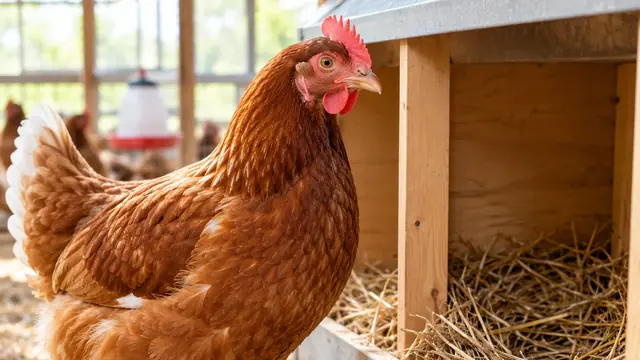

In autumn hens suddenly drop their feathers, the yard looks like the aftermath of a fight, and there are hardly any eggs. That’s molt, not disease. It can’t be avoided; the question is how to get through it faster and with smaller losses.
Natural molt
Once a year, usually as days get shorter, a hen sheds her old feathers and grows new ones. Feathers take a lot of protein, so laying almost stops during this time. Feathers are replaced in a set order: head and neck, then body, wings and tail.
| Fast molt | Slow molt | |
|---|---|---|
| Duration | 6–8 weeks | 3–4 months |
| Laying | Stops completely, then comes back quickly | Limps along the whole time |
| What it suggests | Usually a good layer | Often a weak hen or poor feed |
Induced molt
Commercial farms induce molt in the whole flock at once to get a second laying cycle instead of replacing the hens. After molt, eggs are larger and shells stronger than at the end of the first cycle.
It used to be done by withholding feed for one to two weeks. In many countries that method is banned or condemned as cruel, and molt is now induced differently:
- day length is cut to 8–10 hours;
- the flock goes onto a low-energy ration with little calcium and sodium (for example, high in bran or oats);
- after 2–4 weeks, once laying has stopped, normal feed and light are restored.
The scheme for a particular flock is worth agreeing with a vet or nutritionist. On a small family farm induced molt usually isn’t needed: the flock will go through it on its own, and whether to keep hens for a second year is a money question (when to replace the flock).
Feeding during molt
- More protein. Feathers are almost pure protein. Feed with 18–20% protein works well, or add peas, oilseed meal or fish meal.
- Sulfur amino acids. Methionine and cystine are needed for feathers; a good complete feed already has them balanced.
- Calcium as usual. There’s no need to overload hens with calcium while they aren’t laying (on calcium).
Care
- Don’t handle hens unnecessarily: growing feathers hurt, and the shafts are full of blood.
- Watch for pecking: blood on pin feathers attracts other hens (on feather pecking).
- Without feathers hens get cold. Remove drafts and don’t keep the flock in the cold.
- Avoid vaccinations and regrouping during this time if you can.
After molt
Laying returns 2–4 weeks after the new feathers have grown in. The peak will be lower than in the first year, but eggs are larger. If hens still aren’t laying after 3–4 months, look for another cause: why hens stopped laying.
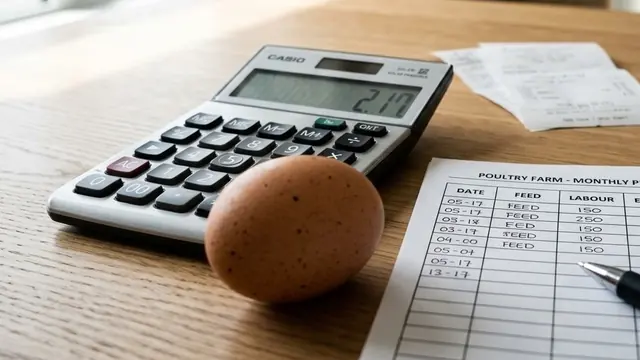
Mark the molt in your records
In EggPulse you can mark a flock as molting. The dip during those weeks doesn’t skew your averages or get mistaken for disease, and comparing with last year shows whether the flock returned to lay quickly.