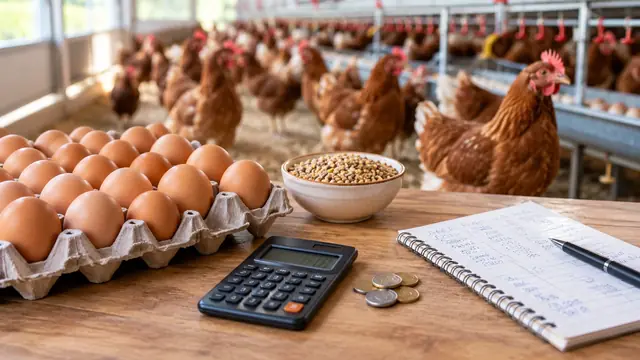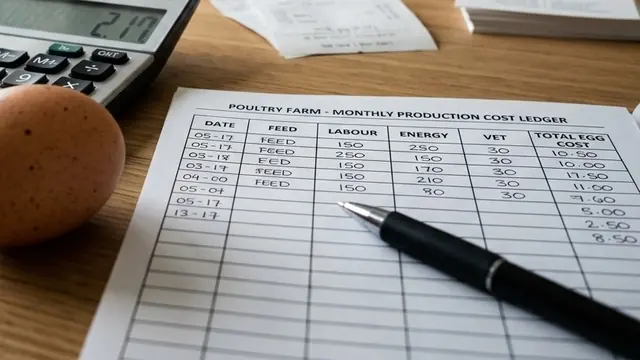

Almost every farm keeps records, just in different ways: a notebook on a nail in the house, a spreadsheet on the computer at home, an app on the phone. Each works — up to a certain farm size and number of people. Let’s be honest about where those limits are.
Comparison
| Notebook | Spreadsheet | App | |
|---|---|---|---|
| Record in the house | Yes, if you remember a pen | No, later at the computer | Yes, from the phone, even offline |
| Calculations | By hand | Formulas you have to write | Automatic: laying rate, FCR, cost |
| Several people | One notebook for all | One person has the file, others have copies | Shared data, each on their own phone |
| Reminders | No | No | Vaccinations, tasks, low feed stock |
| Safety | Gets wet, gets lost | As long as the computer lives | Copy in the cloud |
| Cost | Next to nothing | Free, but setup takes time | Free plan or subscription |
When a notebook is enough
A dozen hens for the family, one house, one person. Write down collection and feed, add it up once a month — a notebook will cope. The key is to write every day, not “remember at the end of the week.”
When a spreadsheet is better
If you like numbers, work at a computer and are ready to build the formulas yourself. A spreadsheet is good at costing and charts. The weak spots: data has to be carried in from the house, formulas break when rows are copied, and a second person usually edits their own copy of the file.
When going without an app starts costing you
- Several houses or flocks of different ages. Vaccination, weighing and slaughter dates no longer fit in your head.
- More than one person. Double entries and gaps — more in running a farm with staff.
- You need the picture now. Not at month’s end, but on the day laying dropped or mortality rose.
- No signal in the house. You need to record where you work, not where the network reaches.
What to record whichever way you choose
- Flock size, mortality and culls — daily.
- Egg collection and breakage — daily.
- Feed: how much was given and how much was delivered.
- Weight — weekly.
- Vaccinations and treatments with dates and products.
- Money: expenses and sales.
All the key figures come from these records: which ones to calculate and how often is in weekly farm KPIs.
How to switch without losing anything
Don’t move all your history across. Start the new records on a Monday and leave old totals in the notebook or spreadsheet. A month of new records is enough for charts and comparisons.
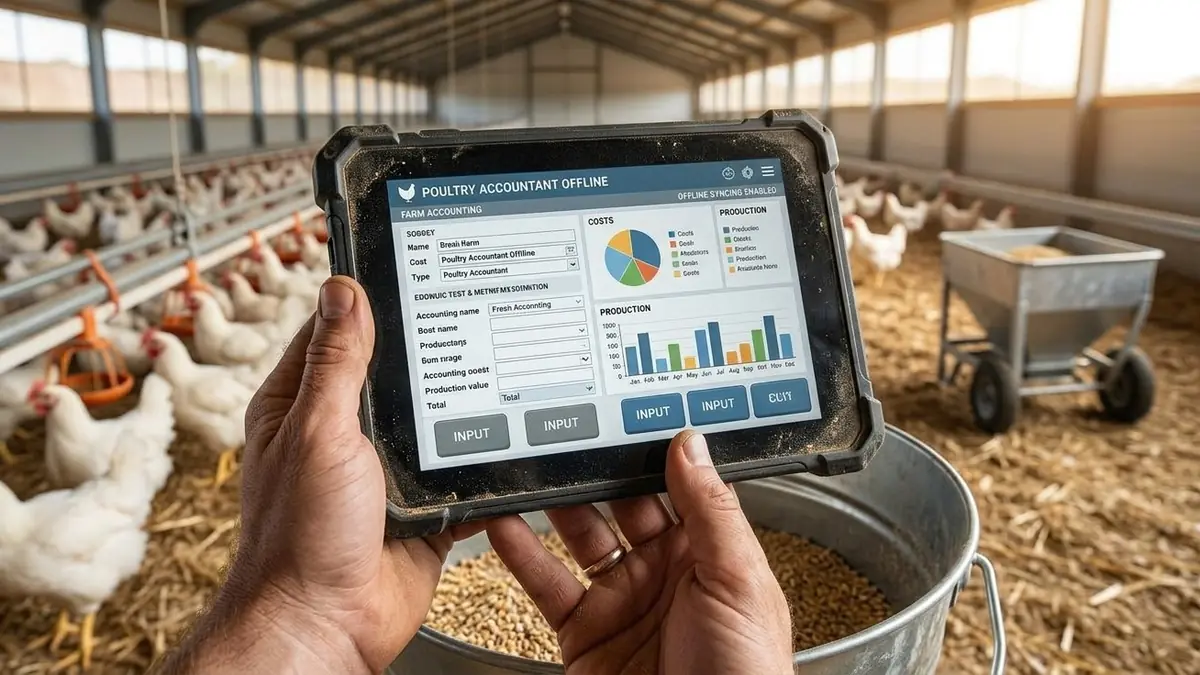
How it works in EggPulse
Entries are made from the phone right in the house, with no internet: data goes to the cloud when a connection appears. Laying rate, feed conversion and cost are calculated automatically, and each record shows which team member made it. Reports can be exported to PDF and CSV — for example, to keep working with them in a spreadsheet.