
While one person runs the farm, everything lives in their head and notebook. As soon as a second person joins — a spouse, a son, a hired hand — it starts: who recorded collection and who didn’t, why the notebook says 850 and the message says 870, who gave the medicine and when. A month later nobody trusts the numbers.
What usually breaks
- Double entries. Two people recorded collection, and the eggs “doubled.”
- Gaps. Each thought the other would record it.
- Too many places. A notebook in the house, notes on a phone, messages in a chat.
- Unclear who did what. Was the vaccine given, and who’s responsible for the mistake?
Rules that work
- One place for records. Everything about the farm goes in one place. Not “the notebook plus a message” — one.
- One task, one owner. Morning collection is one person, feed another. If both can do it, whoever did it records it.
- Record right away. “Later, in the evening” gets lost or becomes an estimate.
- Know who recorded. Not to punish, but so there’s someone to ask.
- A daily checklist. Collection, water, feed, inspection, mortality — items that can’t be skipped, even when the owner is away.
Who can see what
A worker who collects eggs and feeds birds doesn’t need to see the farm’s finances or change prices. A co-owner or manager, on the other hand, needs full access. Splitting permissions removes needless questions and protects against accidental mistakes.
When the owner is away
Checking on the farm remotely isn’t a call asking “how’s it going?” — it’s the day’s numbers: how many collected, how many died, how much feed went. If they’re there and look normal, all is well. If something’s missing, you know what to ask.
Trust, but reconcile
Once a week, check records against reality: feed in store by the books versus in the shed, eggs sold versus collected. Everyone has discrepancies; what matters is catching them straight away, not at the end of the season. How to keep records in a house with no signal — see farm record keeping offline.
A shared farm on everyone’s phone
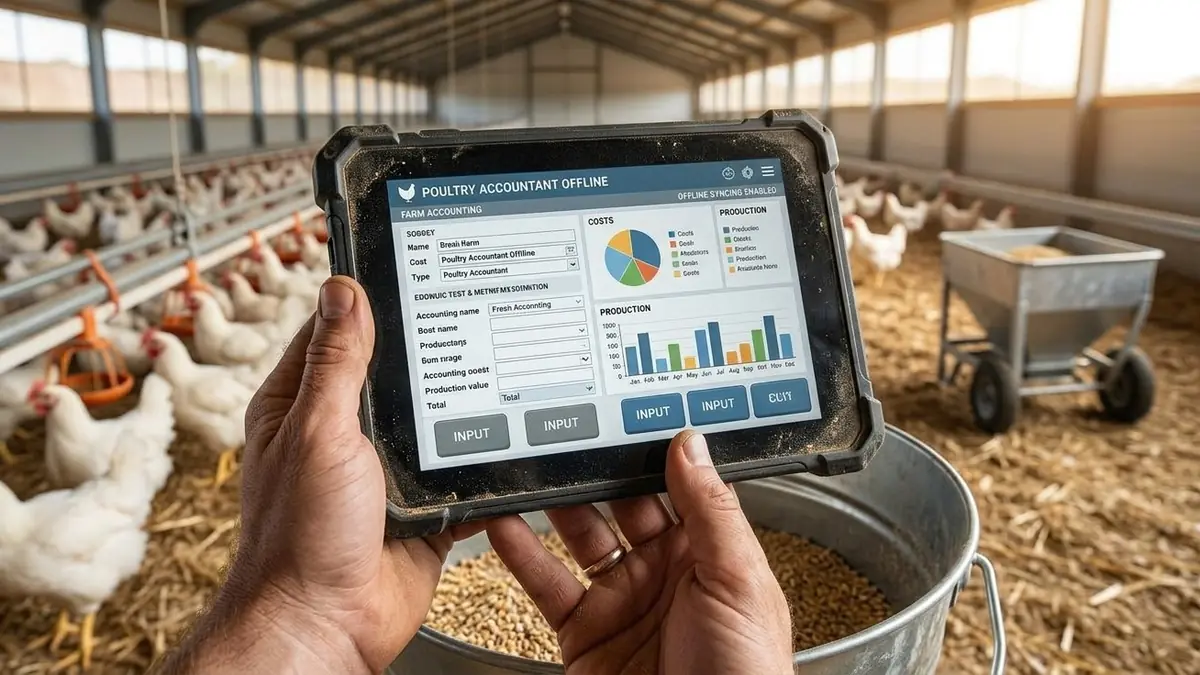
In EggPulse the owner invites staff to the farm, and each person logs entries from their own phone. The data comes together in one place, and access depends on role: a worker doesn’t have to see the finances. The owner sees the day’s collection, feed and mortality wherever they are.