
Every spring it's the same: neighbours call and ask whether you have any chicks. You have a 500-egg incubator and your hatches turn out well. Why not sell? Many people start this way. But selling chicks is a business of its own, with its own risks. The buyer then raises your birds for months, and any mistake in the egg, the hatch or the vaccines comes back to you along with their review.
Three ways to earn
| What you sell | Pros | Cons |
|---|---|---|
| Day-old chicks | Fast turnover: about three weeks from setting to cash | Strongly seasonal, everything hinges on hatchability, a chick can't wait for a buyer |
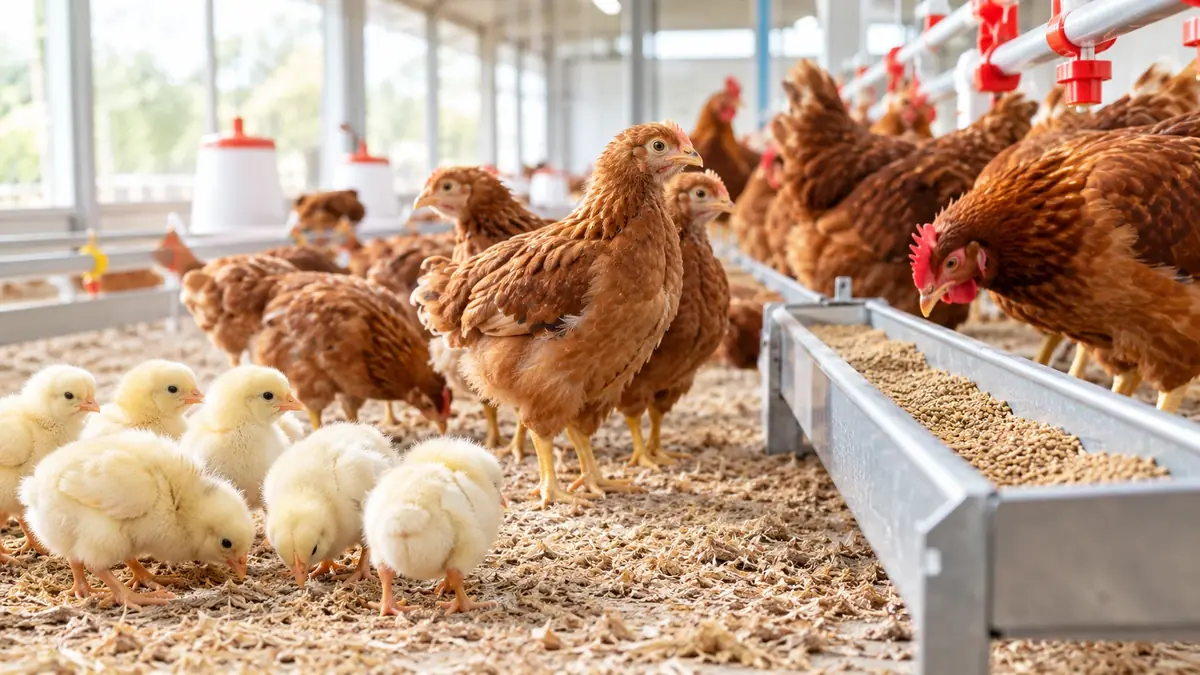
| Started chicks, 2–4 weeks | The chick is sturdier and the buyer loses fewer — you can charge more | You need a brooder, heat, feed and space |
| Pullets at 16–17 weeks | High ticket; the buyer gets an almost ready layer | Four months of feed and work before any money |
Many combine them: sell day-olds in spring and raise what's left to sell later.
The egg decides everything
- Source. Hatching eggs only from a healthy flock you know: your own or a trusted supplier. Diseases passed through the egg get sold along with the chicks.
- Freshness. It's best to set eggs 2–3 days after laying and not store them longer than 7 days. After a week, hatchability falls by about 1% for each extra day, and by some accounts faster.
- Hybrids don't breed true. Eggs from a commercial layer or broiler hybrid give offspring unlike the parents in both growth and laying. Selling them under the hybrid's name isn't honest.
If your hatches are uneven, sort that out first: how to break out unhatched eggs and find the cause is covered in why eggs didn't hatch.
What a saleable chick looks like
- Dry and fluffy, with bright, open eyes.
- Navel closed and clean, no scab or string.
- Stands firmly, straight legs, no redness at the joints.
- Active: turned on its back it gets up at once, and reacts to sound.
Pick out weak and defective chicks before sale and don't sell them mixed in. The breeding company Lohmann calls the share of second-grade chicks the first indicator of hatch quality. A good day-old chick weighs about two thirds of the egg's weight. What the buyer checks on arrival is covered in buying and receiving day-old chicks.
Vaccination and hygiene
Marek's disease vaccine is given only at the hatchery: into the egg on day 18 of incubation or by injection on the first day of life. Later it's pointless: the chick has already met the virus. The buyer has every right to ask whether the chicks are vaccinated and with what. Other vaccines follow your vet's schedule for your area.
- Wash and disinfect the incubator and hatcher after every hatch.
- Don't mix chicks from different sources or keep them near adult birds.
- Record the hatch date, egg source and vaccines for every batch. If a buyer has problems, you'll quickly know which batch it was.
Timing and transport
The yolk inside a chick feeds and waters it for about three days. But that's an emergency reserve, not a reason to wait. The European Food Safety Authority recommends no more than 48 hours from hatch to first feed and water, travel included. Sell on hatch day or the next. Boxes should be warm but not stuffy, without draughts. Overheating in a vehicle kills chicks faster than cold.
What to do with cockerels
In egg breeds, half the hatch is cockerels, and buyers of layers don't want them. Options: sell pullet chicks separately and cockerels cheaper for meat; choose hybrids whose sex shows by colour or feathering on day one; bring in a chick-sexing specialist. How to tell cockerels apart is covered in roosters in the flock. Price a pullet chick so it covers the cockerel too.
Pullets
Pullets are usually moved to the laying house at about 16 weeks, roughly a month before the first egg, so they have time to settle. The buyer looks above all at weight and flock uniformity, not age. For example, Hy-Line advises starting to lengthen the day for its brown layer no earlier than 15 weeks and not before the hen reaches 1,350 g. How to raise an even flock is covered in raising pullets to 18 weeks.
Demand and price
Demand for chicks swings hard: in spring there aren't enough, in autumn nobody wants them. Plan settings around orders and deposits, not "hatch first, sell later".
The cost of a chick is everything spent on the setting: eggs, electricity, vaccines, boxes, delivery. Divide it not by eggs set and not by chicks hatched, but by healthy chicks sold. If 350 are sold out of 500 eggs, each sold chick carries the 150 unsold ones too. For pullets, add feed, heat and mortality for every week. How to build a price from this is covered in how to price eggs and meat.
Chick sales in your records
In EggPulse, keep your settings in the Incubation section: how many eggs were set, how many fertile after candling, when to move them to the hatcher — the app will remind you. After the hatch, enter the results: how many hatched and how many of them were healthy. Hatchability is calculated automatically, and all past hatches stay in the history, so you can see which eggs and which settings work best.
Record sales in Finance as Bird sales, and costs under their own categories: Birds, Veterinary, Electricity, Packaging. Vaccines go in Vaccinations. If you raise pullets, enter the average weight every 2–4 weeks to show the buyer how the flock grew.