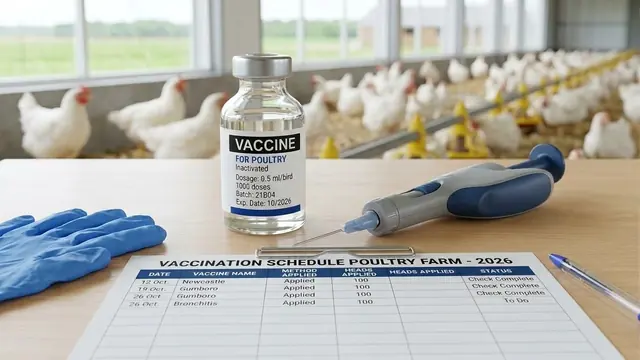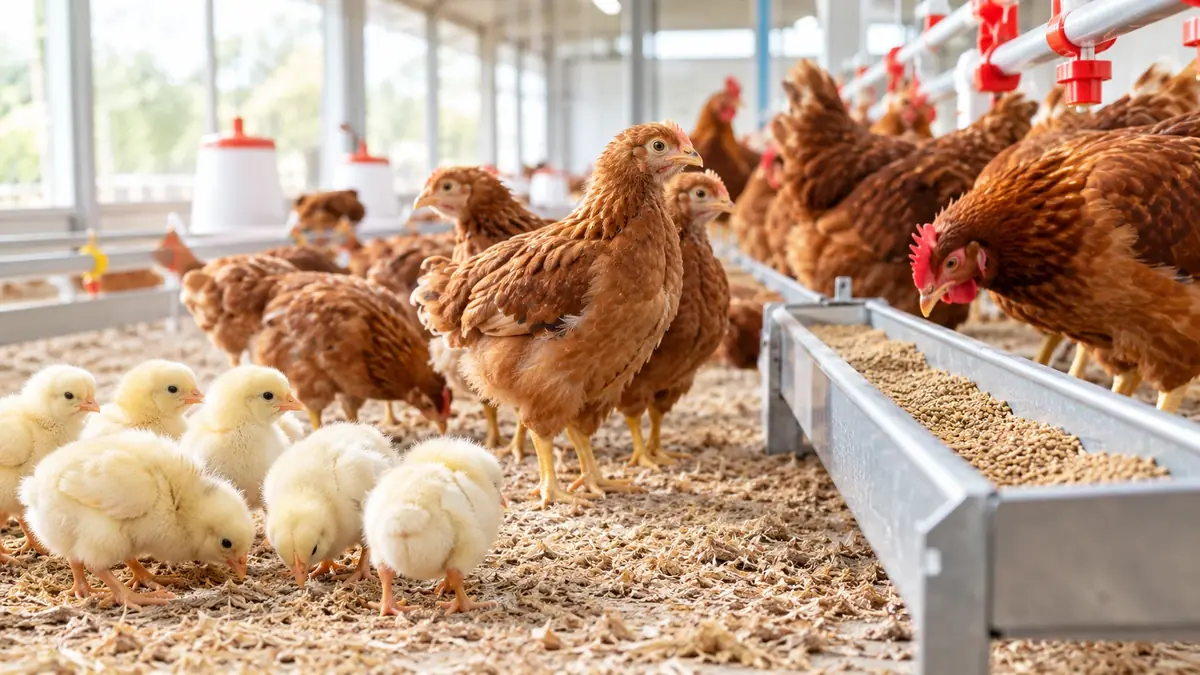

Online you can find dozens of chick “water programs”: glucose on day one, an antibiotic from day two for five days, then vitamins, then the antibiotic again. People pass them around, and it starts to feel as if chicks will surely die without one. In reality, healthy chicks from a good hatchery need a warm brooder, clean water and starter feed. Everything else is given when there’s a reason, not by the calendar.
The first water
- Fill drinkers ahead of time, a few hours before arrival, so the water is at room temperature, about 20 °C (68 °F). Cold tap water chills a chick from the inside.
- Drinkers at the edge of the warm zone, not under the lamp: warm water spoils fast.
- Show them the water. Dip the beaks of a few chicks at placement; the rest will copy.
- Feed right away. “Water first, feed after a day” is outdated advice. Broiler guides call for feed and water from the first hour: at 24 hours, 95% of chicks should have full, soft crops (how to check).
- Change the water daily and wash the drinkers: in a warm brooder bacteria multiply within hours.
What goes into the water, and is it needed
| Additive | What it does | When it makes sense |
|---|---|---|
| Glucose or sugar (3–5%) | Quick energy | Only in the first hours and only if chicks traveled long or are weak. Sweet water feeds bacteria — wash the drinker afterwards |
| Water-soluble vitamins | Short support under stress | 3–5 days after long transport, vaccination, overheating. With a starter feed containing premix, they aren’t needed daily (on vitamins) |
| Probiotics | Colonize the gut with “good” bacteria | A sensible addition in the first days: they reduce salmonella colonization. Not together with an antibiotic |
| Electrolytes | Replace salts | In heat and after transport in hot weather |
| Potassium permanganate | — | Not needed. A weak solution treats nothing, a strong one burns the mucous membranes |
| Antibiotics “for prevention” | — | No. Only on a vet’s diagnosis |
Why not antibiotics “on schedule”
The habit of “five days of antibiotic for every batch” is common, but it has three problems.
- It doesn’t fix the cause. Chicks die in week one most often from cold, overheating, hunger and bad water. An antibiotic won’t warm or feed them, and the losses get blamed on “a weak hatchery.”
- Resistance. Bacteria that survive the course stay on the farm, and next time the same drug won’t help the birds or people. The World Health Organization’s 2017 guidelines recommend against preventive antibiotic use in healthy animals, and the EU has banned routine prophylactic use since 2022.
- Withdrawal period. Every drug has a period during which meat and eggs can’t be sold (on withdrawal periods).
If chicks fall ill — listless, diarrhea, rising mortality — you need a diagnosis: a vet’s necropsy of dead birds shows what it is and how to treat it. Signs by dropping color are covered in diarrhea in chicks.
A brooder warmed a day ahead, bright light in the first days, drinkers at the edge of the warm spot, fresh water every day and feed from the first hour. This cuts first-week mortality more than any bottle.
How to give additives properly
- mix a day’s worth, not a week’s;
- one additive in the drinker at a time: vitamins and probiotics aren’t mixed with an antibiotic, and a live vaccine can’t go in with sanitizers (on water and vaccines);
- flush the drinkers after a course;
- watch how much they drink: with medication, the dose depends on how much water the batch takes in.
Additives in your records
In EggPulse additives and drugs go into the treatment log with dates and withdrawal periods, and water use is logged by day. If chicks drink less after an additive, you see it right away, not at the end of the week.