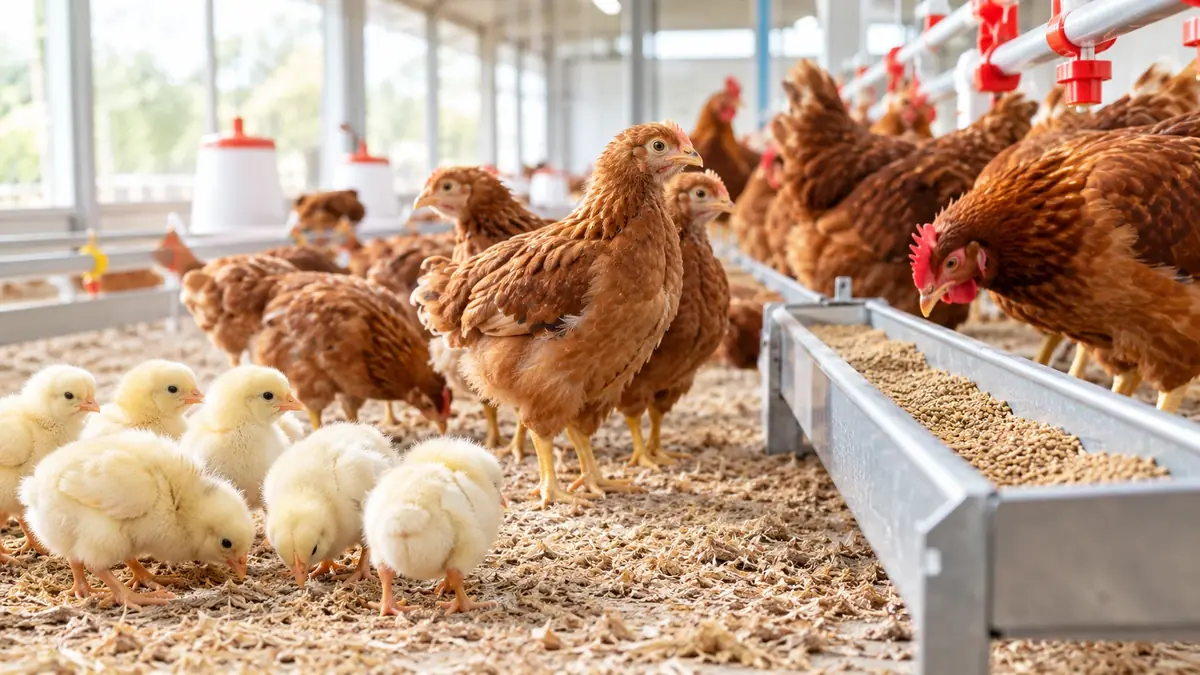

In the morning there are runny puddles in the brooder, and a couple of chicks have down pasted under their tails. Your hand reaches for an antibiotic, but first look at the droppings themselves: color, consistency and the chicks’ age say a lot about the cause. And some “diarrhea” is perfectly normal droppings that alarm beginners.
What normal droppings look like
- Regular — formed, brown or greenish-brown, with a white cap. The white isn’t diarrhea but uric acid: in birds urine comes out with the droppings.
- Cecal — once or twice a day, thick, sticky, mustard or brown, with a strong smell. It’s the ceca emptying, and it’s normal.
- A bit looser than usual in hot weather, after transport or a feed change — not a disease either, if chicks are lively and eating.
What the color means
| Droppings | Age | What it may mean |
|---|---|---|
| White, chalky, sticky, down pasted under the tail | First 2–3 weeks | Pullorum (salmonella) with heavy losses; in single chicks, dehydration or chilling |
| Pasted down, vent blocked, droppings themselves normal | Week one | “Pasty butt” from temperature swings and stress |
| Green, runny | Any | The chick isn’t eating and bile is passing; find out why it’s going hungry |
| Yellow, foamy | Any | Digestive upset: spoiled feed, a sudden feed change, infection |
| Watery, clear | Any | Overheating and lots of drinking, salt in the feed, too many greens; sometimes kidney damage from moldy feed |
| Brown or red with mucus and blood | Mostly 2–6 weeks | Coccidiosis — the most common cause in growing chicks |
| With undigested feed | Broilers at 2–5 weeks | Disturbed gut flora, sometimes early necrotic enteritis |
The table is a hint, not a diagnosis: different diseases produce similar droppings. If more than a few chicks are sick, you need a vet and a necropsy of the dead birds.
Coccidiosis: the main suspect from week two
Coccidia live in the litter, and nearly all chicks raised on the floor encounter them. Signs: chicks fluffed up and listless, eating less, droppings with blood and mucus, mortality rising over a couple of days. Most often at 3–6 weeks. Treatment is with anticoccidial drugs prescribed by a vet; prevention is dry litter, a coccidiostat in the starter feed or a vaccine on day one (more on coccidiosis).
What to do in the first hours
- Separate listless and sick chicks into a warm box of their own.
- Check the heat. A chilled chick with diarrhea dies faster; keep it in the warm zone.
- Water with electrolytes — a chick with diarrhea quickly loses water and salts.
- Check feed and water: a new feed batch, mold, dirty drinkers, warm water under the lamp (on moldy feed).
- Replace wet litter: coccidia and bacteria multiply in it.
- Pasted down: soak gently with warm water, remove it and dry the chick.
- Call a vet if more than a few are sick or there’s blood in the droppings.
An antibiotic doesn’t work against coccidiosis, and an anticoccidial doesn’t treat salmonella. A course “just in case” costs money, comes with a withdrawal period and hides the real cause. Take 2–3 fresh dead chicks for necropsy — it’s cheaper than a week of treating the wrong thing.
How to prevent it
- steady warmth without swings, especially at night (on brooder heating);
- dry litter, with wet litter by the drinkers changed every day;
- fresh water and clean drinkers (on water for chicks);
- feed changes made gradually over 2–3 days;
- the brooder washed and disinfected before every batch (how).
Diarrhea in your records
In EggPulse a batch inspection is logged with its signs, and the Disease guide suggests what else to check. Mortality and water use by day sit alongside: if chicks started drinking more or less a day before the diarrhea, you’ll see it, and next time the problem gets noticed sooner.