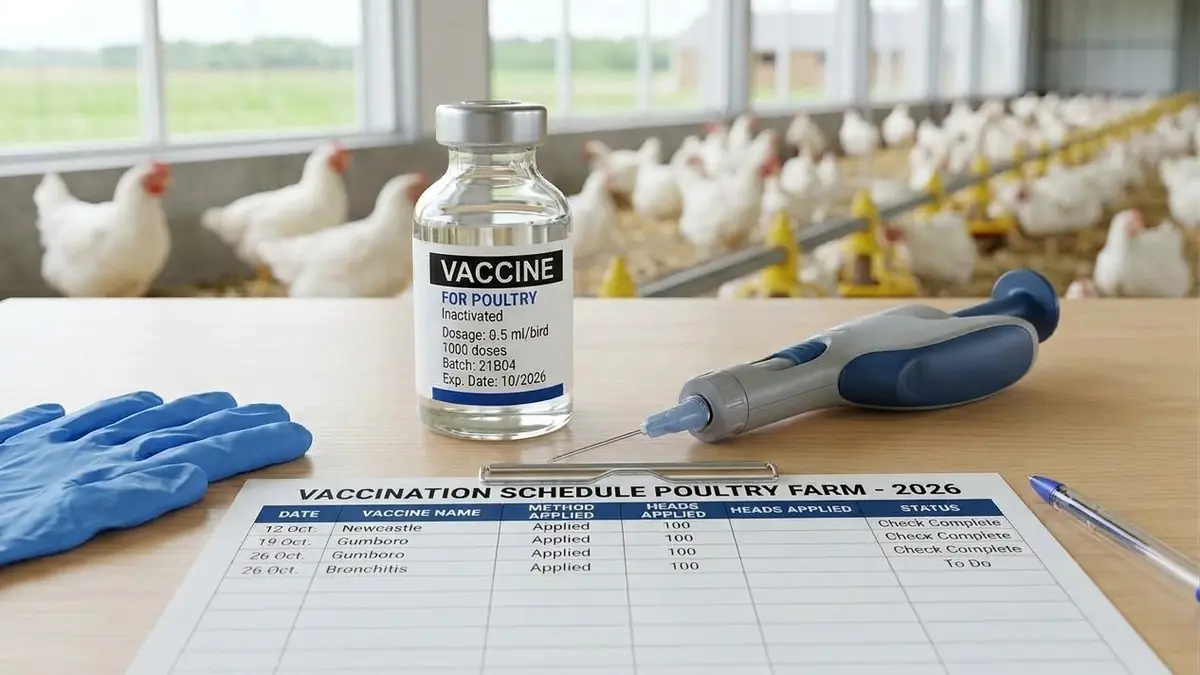

In the evening the house is quiet, and then you hear it: here and there a bird sneezes, another rattles, another shakes its head. The first thought is infection and an antibiotic right away. But in broilers, wheezing usually starts not with microbes but with the air: ammonia and dust irritate the airways, and bacteria take hold on top of that. Here’s how to tell one from the other.
Possible causes
| Cause | What it looks like | Mortality |
|---|---|---|
| Ammonia and dust | Sneezing, watery eyes, worse by morning; a sharp smell from the litter | Low on its own, but opens the door to infections |
| Cold, drafts | Birds huddle, part of the batch sneezes | Rises if not fixed |
| Live vaccine reaction | Mild sneezing 3–7 days after Newcastle and bronchitis vaccination | None or minimal, passes by itself |
| Infectious bronchitis | Rattling, sneezing; in young birds across the whole batch within 1–2 days | Moderate, higher with secondary infection |
| Mycoplasma with E. coli | Rattling, swollen sinuses, poor growth; at necropsy, films in the air sacs | Rises gradually, worse conversion |
| Aspergillosis | Young chicks, open-beak breathing, lethargy | High in young birds |
| Newcastle disease, avian influenza | Sharp rise in deaths, bluish combs, nervous signs, feed and water intake drop | High — call a vet at once |
What to check at once
- The air at bird level. Crouch to broiler height. If it stings your eyes and you smell ammonia, it’s already above 20 ppm — the limit EU directive 2007/43/EC sets for higher-density broiler houses. You need more air and dry litter (on house climate).
- Litter. Damp and caked around drinkers — the source of ammonia. Remove the wet patches and add dry bedding.
- Drafts and temperature at night, at bird level.
- Date of the last vaccination. Sneezing a few days after a live vaccine is an expected reaction; if it lasts more than a week or mortality rises, an infection has joined in.
- Feed and water: how much was drunk and eaten in recent days. A sharp drop is a warning sign (on water use).
Deaths have multiplied in a day, combs are bluish, birds throw their heads back or twist their necks, feed and water have dropped sharply. These are signs of diseases that must be reported to the veterinary authority in many countries. Don’t move the birds or treat them yourself until it decides (on avian flu).
Diagnosis comes from a necropsy
You can’t tell bronchitis from mycoplasma by ear. Take 3–5 sick or freshly dead birds to a vet: necropsy and tests will show whether it’s a virus, bacteria or mold (on mycoplasma and respiratory disease). An antibiotic only works against bacteria, and only one they’re sensitive to; it does nothing against a virus. The vet chooses the drug, and a withdrawal period follows the course (on withdrawal periods).
How to prevent it
- dry litter and ventilation even in winter: slightly cooler is better than damp;
- drinkers without leaks, height matched to bird size;
- stocking density within the norm: the denser the birds, the more moisture and ammonia;
- vaccinations on schedule, vaccine in the right water (on vaccinations);
- “all in, all out” and disinfection between batches: mycoplasma and bronchitis carry over from batch to batch (on disinfection).
Breathing in your records
In EggPulse a batch inspection is logged with its signs, alongside temperature, water and mortality by day. You can see whether the wheezing lined up with a vaccination, a cold snap or wet litter, and the Disease guide suggests what else to check.