
Hens on range don't eat grass out of hunger. Greens give them pigment for the yolk, vitamins and a little protein. Dry and grind the leaves and you have leaf meal you can feed all year round. And the leaves of some trees, such as moringa, are a match for sunflower meal on protein.
What's in the leaves
| Leaf meal | Protein, % | Fiber, % | Notes |
|---|---|---|---|
| Moringa | 25–30 | 8–12 | High protein and carotenoids, low fiber for a leaf |
| Alfalfa (lucerne) | 15–20 | 20–30 | The classic, rich in xanthophylls (yolk) |
| Clover, sainfoin | 14–18 | 20–28 | Similar to alfalfa |
| Nettle | 20–25 | 10–15 | Rich in vitamins and pigments |
| Cassava leaves | 20–25 | 10–15 | Dried only: cyanide |
| Leucaena | 20–25 | 12–18 | Mimosine is toxic; up to 5% |
Figures are for well-dried meal from young leaves. Meal from stems and over-mature grass is mostly fiber.
Why no more than 5–10%
A hen isn't a cow: she digests fiber poorly. The more leaf meal in the ration, the less energy it carries — birds start eating more and laying or growing less. Leaves also contain tannins and saponins that, in large amounts, hinder protein digestion.
| Bird | Alfalfa, clover | Moringa |
|---|---|---|
| Layers | 3–5% | 5–10% |
| Broilers | up to 3% | up to 5% |
| Pullets | 5–7% | up to 10% |
| Geese, ducks | 10–15% and more | 10–15% |
Geese digest fiber best of all domestic poultry and grow on grass with almost no grain (geese on pasture). A little fiber is even good for pullets: the crop and gizzard develop larger, and the hen eats better at peak lay later (raising pullets to 18 weeks).
Yolk color
The most visible benefit of leaf meal is the yolk. 3–5% alfalfa or moringa in a wheat ration lifts color by 2–4 points on the fan. That's cheaper than bought pigments, though less predictable (egg yolk color).
Moringa is a special case
Moringa is a fast-growing tree of hot countries that can be cut several times a year. In India, Africa and Southeast Asia it's increasingly planted specifically as feed. In trials, 5–10% moringa leaf meal in layer diets didn't lower laying and noticeably improved yolk color. Above 10–15%, performance usually drops.
How to make it
- Cut young. Alfalfa and clover at early bud; moringa every 6–8 weeks.
- Dry in the shade. In direct sun up to half the carotenoids are lost. Thin layer, under cover, turned regularly.
- Separate the leaves. Dry leaves fall off the stems — they're the valuable part. Stems go to bedding.
- Grind and store in the dark. In light and warmth, pigments and vitamins in the meal are lost within 2–3 months.
If you have fresh grass, nettles or vegetable tops, you can feed them without drying, alongside complete feed. Chop them finely and don't let them crowd out the feed: a hen with a crop full of grass is short on energy. On what hens can and can't eat, see what chickens can and can't eat.
Leaf meal in your records
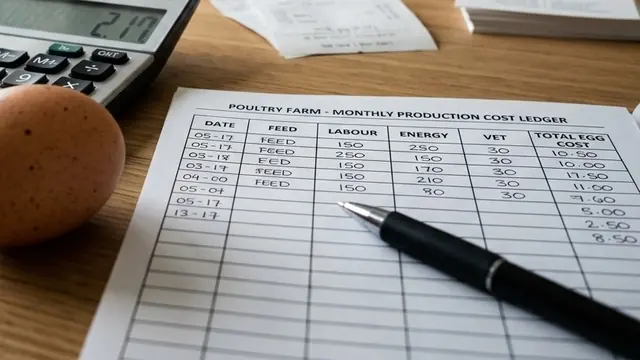
In EggPulse, leaf meal goes into the store as a separate ingredient with moisture and protein, and into a recipe at its own share. The egg log and feed cost per egg show whether laying dipped after you added it.