
The first farm is next to the house; the second is in the next village, in an old cowshed you managed to rent. In the morning you collect eggs at one, after lunch you drive feed to the other. Six months later you can't say which of them makes money: feed came on one truck, the worker drives back and forth, and mortality goes into one shared notebook. Two farms are not one big farm. Here's how to run them so that each one is visible on its own and disease doesn't travel with the owner.
Each farm keeps its own records
The main rule: anything that belongs to a particular farm is recorded against it. One notebook for two sites turns into a mess within a month.
- Its own houses and flocks. A house belongs to one farm. A flock that is moved is closed on one farm and opened on the other, with the date and head count.
- Its own feed store. If one truck delivers to both farms, split it right away: so many tonnes unloaded here, so many there. Otherwise neither stock count will add up.
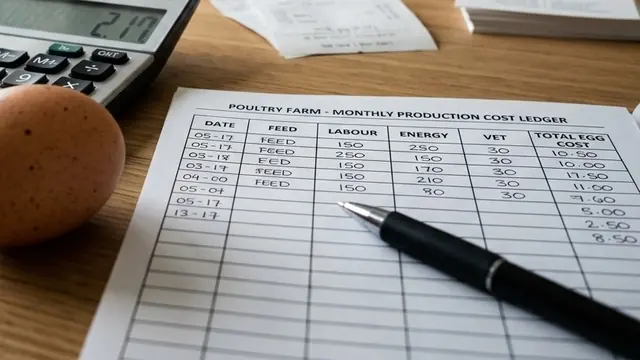
- Its own money. Egg and meat sales, feed, medicines, electricity, rent — on the farm where they arose.
- Split shared costs by a rule. Your fuel, the bookkeeper, a shared truck — split them by bird numbers or by revenue, and don't change the rule every month.
Who works where
With two farms the owner can no longer see everything personally. Only a clear division works:
- One person in charge on each farm. They are responsible for the day's records: eggs, feed, water, mortality. If a record is missing, the question goes to them, not to "everyone".
- The same people on the same farm. A worker who travels between sites every day means extra driving and extra risk of carrying disease.
- Access by role. An operator on the farm needs the logs. They don't need to see both farms' finances. We covered how to split duties and keep records straight in running a farm with staff.
Biosecurity between farms
The more sites you have, the higher the chance that disease reaches at least one. The goal is to stop it going further. Most often it travels on people, boots, egg trays and vehicles.
- A gap between farms. University extension services in the US and Ireland advise 72 hours between visits to different flocks. The Cobb breeder guide extends this to 7 days for someone coming from an area with disease. For an owner of two farms, 72 hours is usually impossible. Then at least within one day go to the young stock and the healthy farm first, then the older birds, and the farm with problems last.
- Separate clothes and boots on each farm. Boots and coveralls stay on site and don't ride in the car.
- A boundary around the house. US biosecurity rules use a "line of separation" — a boundary around the poultry house that you only cross in clean gear. It's easy to set one up yourself: change boots and put on that house's coat at the door.
- Trays and vehicles. Don't move trays and crates between farms, or if you must, wash and disinfect them. The feed truck doesn't drive right up to the houses.
- A visitor log. Who came, when, and where they had been before. You'll need it if you ever have to work out where a disease came from.
The other rules — quarantine for new birds, rodents, dead birds — are in small farm biosecurity.
If one farm has an outbreak, the other must carry on as if the first didn't exist. No people, no trays, no feed from bags opened on the sick farm. Tell your vet straight away that there are two farms and what links them.
How to compare farms
Compare not "how much we earned" but figures per bird and per unit of product. A farm with 3,000 hens always has more revenue than one with 800, but that doesn't make it better.
| Figure | How to calculate | What it shows |
|---|---|---|
| Rate of lay | Eggs per day ÷ hens at the start of the day × 100% | How a flock of a given age is laying |
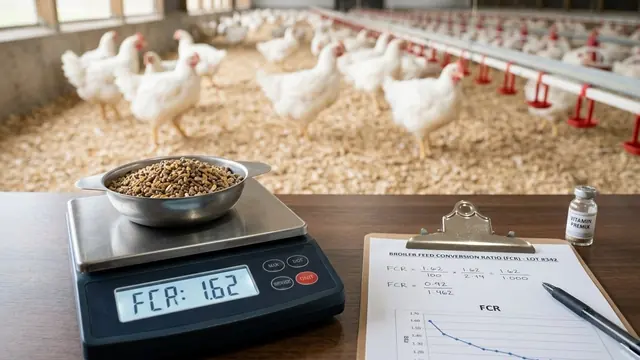
| Feed per dozen eggs | Feed for the period ÷ (eggs ÷ 12) | Feed waste, ration quality |
| Livability | Alive at the end ÷ placed × 100% | Health and conditions |
| Cost per egg or per kg of meat | All farm costs ÷ output | Where it's cheaper to produce |
| Cost per bird per month | Expenses ÷ average bird numbers | Rent, power, labour — what drags you down |
Compare flocks of the same hybrid and age. Hens at 30 weeks and at 70 weeks lay differently, and the difference will be the age, not the farm. Which figures to check every week is covered in weekly farm KPIs.
Money and shared costs
The most common mistake is to load all shared costs onto the "main" farm. Then the second farm looks profitable and the first looks like a loss, when it's really the other way round. Decide once how to split shared costs: by bird numbers, by revenue, or by the time each farm takes. Write the rule down and stick to it.
- Feed on one truck — split by how much was unloaded at each farm.
- A worker on two farms — by days or hours.
- The owner's travel and the bookkeeper — by bird numbers.
A report for each farm
Once a month, make the same summary for each farm: birds, output, feed, mortality, money. The same layout lets you lay the sheets side by side and see the difference. These summaries are also useful for the bank and the vet: see farm records for the bank, vet and buyers.
Several farms in your records
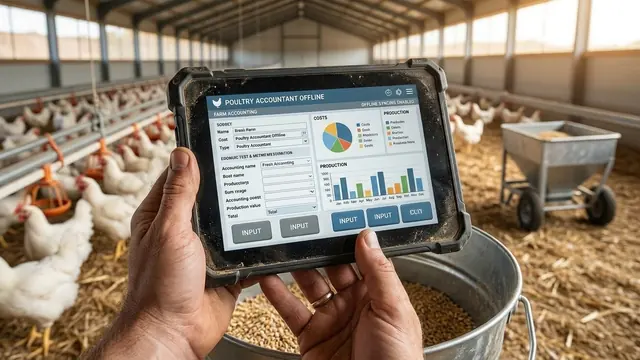
In EggPulse each farm is set up separately under "My farms", and the farm switcher shows the houses, logs, stores and finances of the selected one. A new farm can be created with the first farm's catalogs — recipes, ingredients, medicines — while stock and debts start from zero. Each farm has its own team: the owner invites people as "Administrator", "Operator" or "Veterinarian", and an operator doesn't see finances. Currency and electricity and water rates are set per farm.
To compare farms, export each farm's logs and finances for the same period to Excel and put them side by side. The free plan includes one farm of your own; a second needs a paid plan.