
Soybean meal is the best plant protein there is, but for a chick in its first days of life it's heavy going. It still holds substances that interfere with digestion, and a young gut hasn't learned to cope with them. Fermented soybean meal is soy that microbes have "pre-digested" before it's sold. It costs one and a half to two times more, so asking whether you need it is fair.
What gets in the way in ordinary soy
- Residual trypsin inhibitors. Heating during meal production removes most, but not all. They interfere with protein digestion.
- Oligosaccharides (raffinose, stachyose). Birds can't digest them; they ferment in the gut, causing gas and loose droppings.
- Allergenic proteins (glycinin, beta-conglycinin). They irritate the gut lining in young birds.
- Phytate — binds phosphorus and minerals (phytase).
To an adult hen or a broiler past 2–3 weeks, this hardly matters. But a day-old chick has a short gut and few enzymes, and every one of these hurdles shows.
What fermentation does
The meal is inoculated with beneficial microbes — bacilli, lactic acid bacteria or the fungus Aspergillus — and kept warm and moist for 1–3 days. The microbes eat the oligosaccharides, cut large proteins into small ones and break down part of the inhibitors and allergens. Then the meal is dried.
| Measure | Ordinary soybean meal | Fermented |
|---|---|---|
| Crude protein | 44–48% | 50–55% (the microbes ate some carbohydrate) |
| Oligosaccharides | 5–7% | almost none |
| Trypsin inhibitors | some | several times lower |
| Allergenic proteins | present | mostly broken down |
| Price | 1 | 1.5–2× higher |
Figures are generalized from trials; results vary between manufacturers and fermentation methods.
Where it pays off
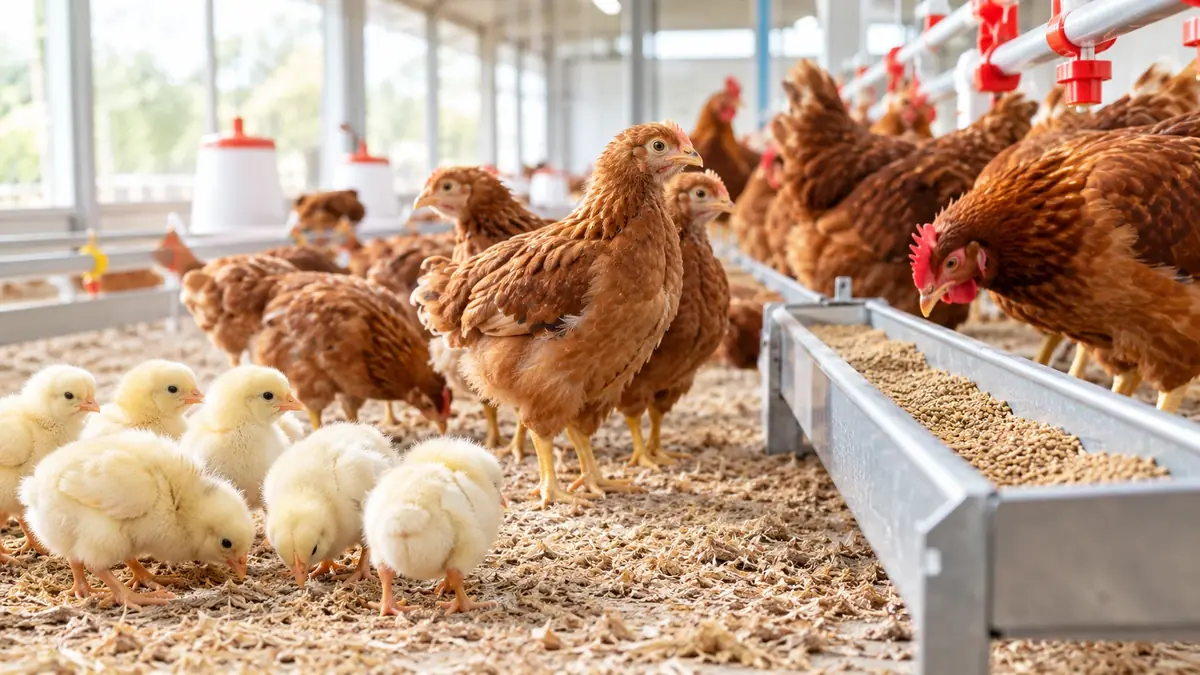
- Chick pre-starter — the first 7–10 days. Usually 3–8% of the ration in place of part of the ordinary meal. A more even flock, less diarrhea, better 7-day weight.
- Antibiotic-free programs — where the young gut must be protected by every means.
- Turkey poults, ducklings, quail chicks — birds that need especially digestible protein at the start (feeding turkey poults).
For adult layers and finishing broilers, fermented meal does almost nothing for its price. There, adding enzymes to ordinary meal is cheaper (feed enzymes).
Industrial fermentation uses a chosen microbe under control. At home, everything gets into wet meal, mold included — and mold means mycotoxins (mold and mycotoxins). If you want to give your birds fermented feed, ferment a grain mix by a proven method and feed it right away (fermented feed).
Not only soy
Rapeseed meal is fermented too: microbes break down part of the glucosinolates, so more of it can be fed. Sunflower and cottonseed meals as well. These products are cheaper than fermented soy, but less studied.
How to choose
- The fermenting microbe is named, along with oligosaccharide or trypsin inhibitor content.
- Protein of at least 50%: lower means the fermentation was weak.
- Smell — slightly sour, bready, never musty.
The start in your records
In EggPulse, the weighing log shows a batch's 7-day weight against the breed standard, and the mortality log shows losses in the first weeks. If you're trying an expensive starter, compare two batches: the difference in weight and livability quickly shows whether the money paid off (the first two weeks of chicks).