
Birds start sneezing in the house, and the owner goes to the shed for medicine. On the shelf: an opened bag of powder with no label, a bottle that expired last spring, and a vaccine that spent a week on the windowsill. What was used last time and how long to wait before selling eggs — nobody remembers. A farm medicine cabinet isn't a box of drugs; it's order: what's there, where, until when, and where it went.
What to keep at all times
A first-aid kit for a single hen — antiseptic, gloves, bandage, an isolation crate — is covered in first aid for laying hens. For the farm, add:
- Disinfectant. For footbaths and boots, drinkers and equipment — following your biosecurity plan.
- Electrolytes and vitamins for water. Needed in hot weather, during transport and after vaccination.
- Tools. Disposable syringes and needles, measuring jugs for water treatments, a fridge thermometer, a marker and labels.
- For lab samples. Bags and gloves to take dead birds or samples to the lab.
- Phone numbers. A vet who works with poultry, the lab, the vet pharmacy.
What not to keep "just in case"
Antibiotics and other prescription drugs are bought when a vet prescribes them, not in reserve. In many countries they aren't sold without a prescription anyway: in the US, for example, since June 2023 all medically important antibiotics for animals require a veterinarian's authorization. Leftovers from a course aren't given "from memory" next time: the disease may be different, and so may the dose. Vaccines aren't stockpiled either: buy them for the date set in your vaccination schedule.
How to store
The medicine cupboard should be dry, dark and lockable — not in the poultry house itself. There's dust, ammonia and temperature swings there. Keep it away from feed and out of children's reach. The storage temperature is on the label, and the label beats any advice.
| What | How to store | What to watch |
|---|---|---|
| Vaccines | In the fridge at 2–8 °C, never frozen | Thermometer in the fridge, not in the door |
| Water-soluble powders | Dry, bag tightly closed | Lumps and odor mean it got damp |
| Liquid products | As on the label | Shelf life after opening is often shorter |
| Disinfectants | In their own containers, apart from medicines and feed | Never decant into drink bottles |
Keeping vaccines cold
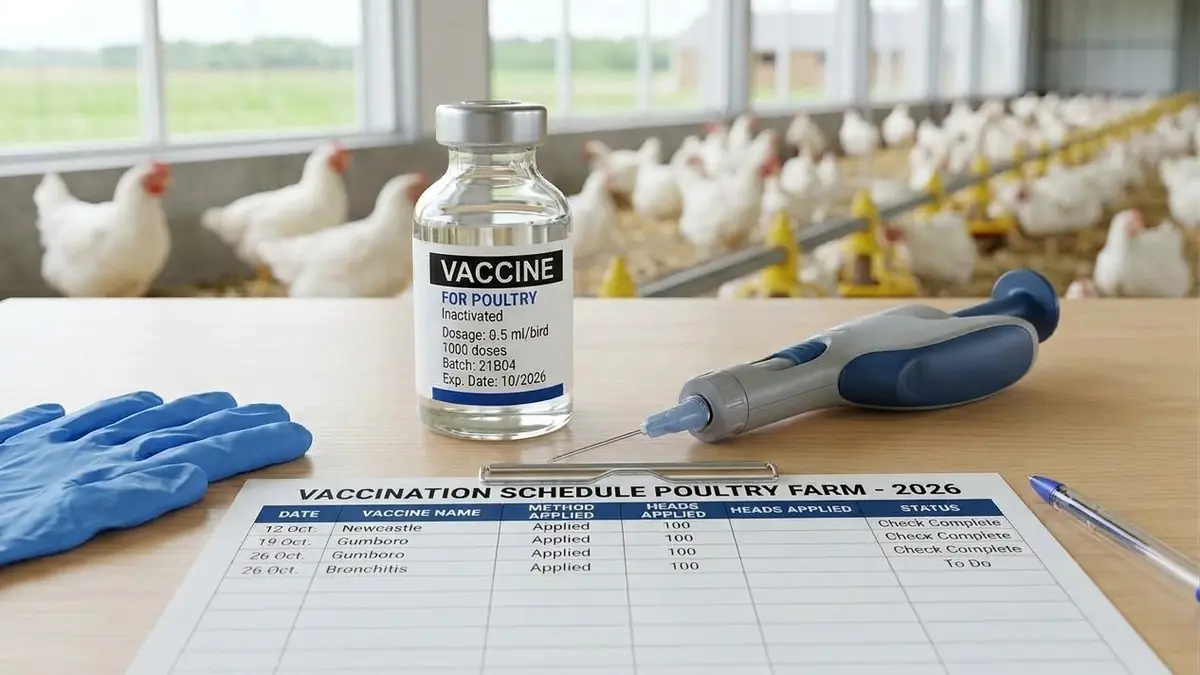
A live vaccine is a live virus or bacterium. Heat and freezing kill it, and you can't tell from the vial. The vaccination goes ahead, but there's no protection.
- From the pharmacy to the farm — in a cool bag with ice packs. Don't put vials directly on ice, or they'll freeze.
- The fridge — with a thermometer, checked every day.
- After mixing a live vaccine is used quickly — usually within 1–2 hours; the exact time is on the label.
How to prepare a vaccine and give it by different routes is covered in how to vaccinate in practice.
Expiry dates
- First out — what expires first. Put a new delivery at the back, the older stock at the front.
- Opening date on the bottle. Write with a marker when you opened it.
- Don't use anything expired. Even if it "looks fine."
- Don't throw it just anywhere. Not in a ditch, on the manure heap or down the drain. Your vet or vet pharmacy can tell you how to return expired products under local rules.
Every bottle on the shelf should have a label, an expiry date and a record of where it came from and how much is left. A product without a label isn't a medicine — it's a mystery.
Tracking use
For every delivery, record the name, batch number, expiry date, quantity, price and supplier. For every use — the date, the house, the dose as prescribed and who gave it. The batch number matters if there's a strong reaction to a vaccination: the vet and the manufacturer will ask for exactly that. The price matters so that vet costs go honestly into your cost of production.
Every product has a withdrawal period for meat and for eggs. It's counted from the last dose, and until it ends the produce isn't sold — see withdrawal periods.
The medicine cabinet in your records
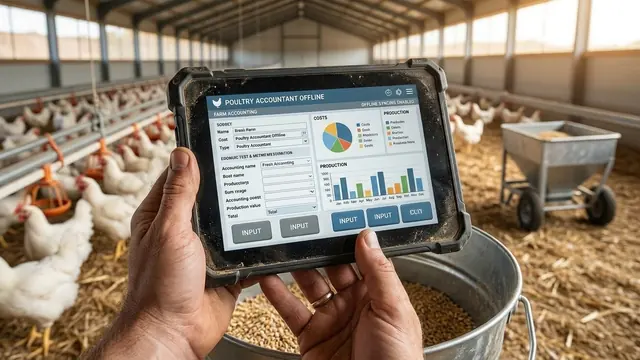
In EggPulse the veterinary section has a "Stock" tab. Each product has a category, quantity on hand, minimum stock, expiry date, batch, price, supplier and withdrawal periods for meat and eggs. When you record a vaccination, a water treatment or a treatment course, the product is written off the stock and its cost goes into Finance.
The app warns you when a product falls below its minimum, when its expiry date is within 7 days, and when something in stock has already expired.