
“Replace hens every two years,” say some. “Keep them as long as they lay,” say others. Neither rule works: money decides, not age. An old flock is worth keeping while each hen brings in more per day than her feed costs — and until a new flock would earn more, once you count what it costs to buy and raise.
What happens to a flock with age
- Laying rate slowly declines after the peak at 25–30 weeks: by 70–80 weeks a good hybrid flock lays about 80–85%, by 90–100 weeks less.
- Eggs get bigger and shells thinner: more cracks and breakage (on thin shells).
- Feed per hen barely changes — about 115–120 g for brown hybrids — so feed per dozen eggs rises.
- Mortality is usually higher toward the end of the laying period.
Working out a hen’s daily income
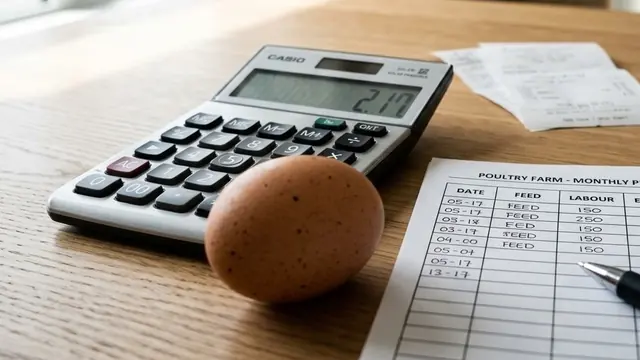
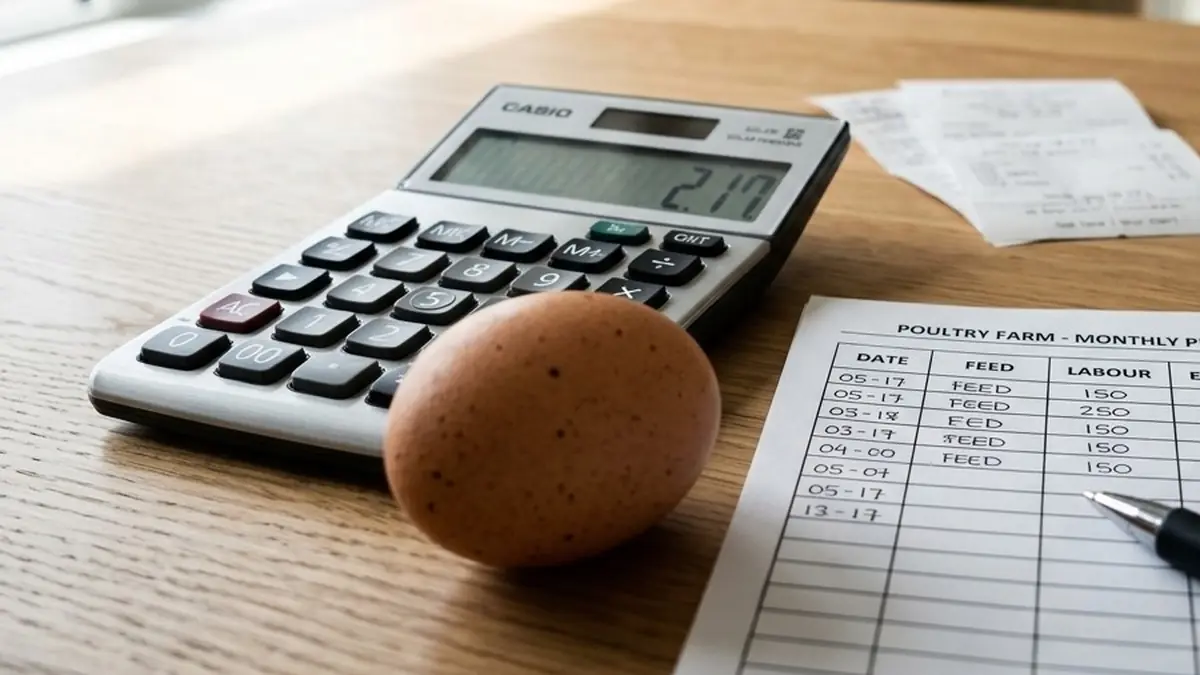
Daily income per hen = laying rate × egg price − daily feed × feed price − other costs per hen per day
Example in currency units: an egg sells for 0.12, feed costs 0.40 per kg, other costs are 0.01 per hen per day.
| New flock at peak | Old flock, 80 weeks | |
|---|---|---|
| Laying rate | 95% | 80% |
| Egg revenue per day | 0.95 × 0.12 = 0.114 | 0.80 × 0.12 = 0.096 |
| Feed per day | 0.118 kg × 0.40 = 0.047 | 0.047 |
| Other | 0.010 | 0.010 |
| Income per hen per day | 0.057 | 0.039 |
The old flock still makes money. The new one makes more, by 0.018 per hen per day, but it has to be bought. If an 18-week pullet costs 6.0 and a spent hen sells for 2.0, replacement costs 4.0 per bird. A difference of 0.018 a day pays that back in about 220 days — and that’s before counting the first weeks while the pullets are just coming into lay.
The decision rule
- While the old flock’s income is clearly above zero and replacement takes more than half a year to pay back, keeping it pays better.
- When income approaches zero — eggs get cheaper, feed gets dearer or laying drops below 65–70% — it’s time to replace.
- Plan pullets ahead. Raising or ordering them takes 4–5 months; without a plan, flocks are kept “for now” because there’s no replacement.
- Season. Eggs get dearer in autumn and winter: it pays to have a new flock reach peak by then.
What about molting
An induced molt gives a flock a second laying cycle: after a pause the hens lay again, 5–10 points below the first peak but with large eggs and better shells. Instead of new pullets — 6–8 weeks without eggs. In several countries (including the EU) molting by feed withdrawal is banned; only methods using diet and light changes are allowed. More in the molting article.
What to do with old hens
Spent hens are sold for meat — for soup and stewing. Brown hybrids have a heavier carcass than whites and sell better (hybrids compared). How to pick which hens to cull during lay is in how to spot a hen that isn’t laying, and how long hens live in general in how long chickens live.
Deciding by the numbers
In EggPulse each house shows laying rate on the live head count, feed per 10 eggs and its cost, and finances show egg revenue. Those are exactly the figures in the calculation above — only yours, not the example’s.