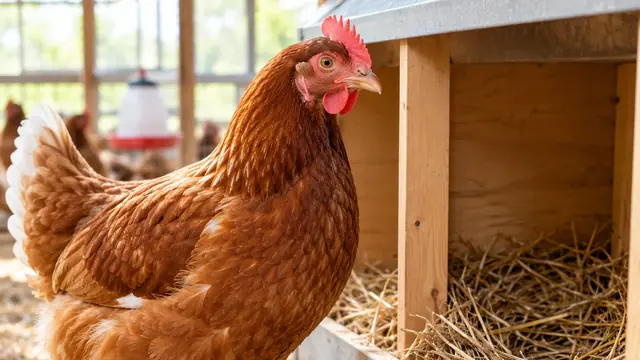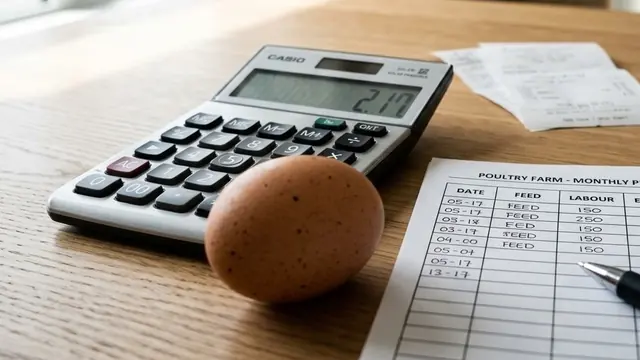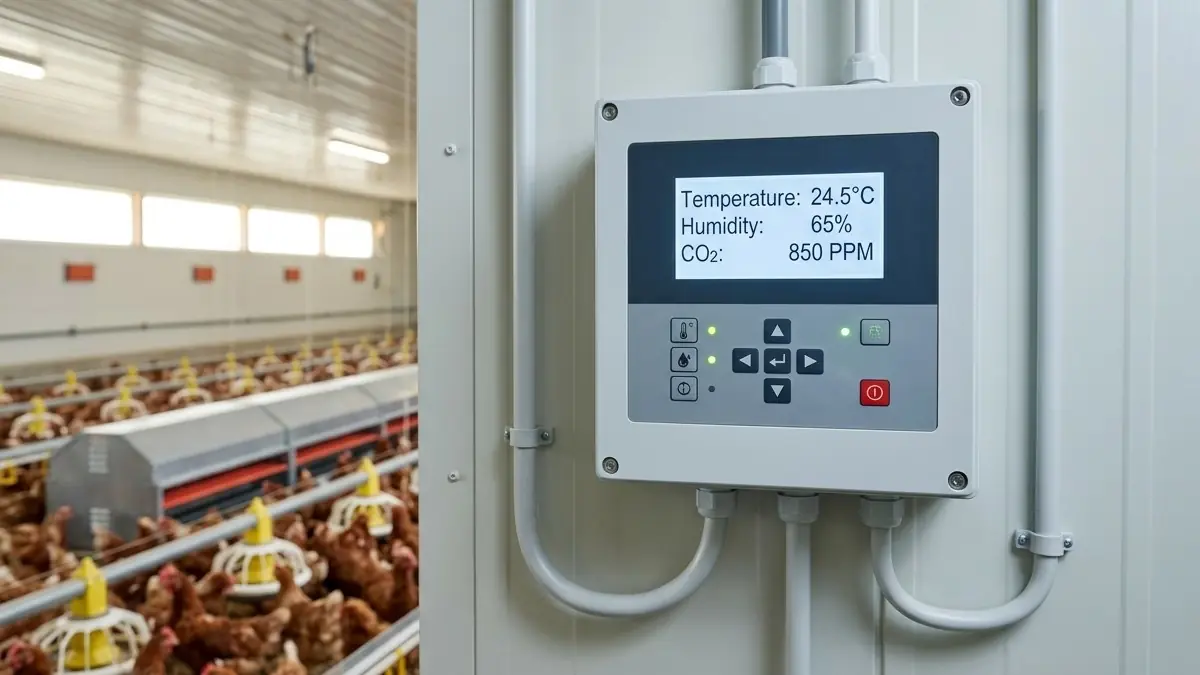

In December the farmer notices more feed going out than in autumn, and fewer eggs coming in. The first thought is to cut the ration, since it seems to be going to waste anyway. That’s a mistake. In winter a hen spends part of her feed on keeping warm, and if she’s underfed, the first thing she saves on is eggs.
Birds eat more in winter — and they should
An adult hen is comfortable at roughly 18–22 °C. Below that she burns feed energy to stay warm. A rule of thumb: for every degree below comfort, a layer eats about 1–1.5% more feed. At +5 °C in the coop that’s already 15–20% more than in summer.
| Temperature in the coop | Feed per layer per day, guideline |
|---|---|
| 18–22 °C | 110–120 g |
| 10 °C | about 125–135 g |
| 0–5 °C | about 135–145 g |
These are approximate: a lot depends on the cross, feathering and drafts. The main point is not to restrict feed in winter and not to panic when use goes up. If more feed is going out but eggs are holding, all is well: the birds are just keeping warm. How to keep the warmth in without big costs is in the article on chickens in an unheated coop.
“Warming” grain: how much is fine
The old advice is to give a handful of whole grain in the evening so the hens are warmer at night. There’s sense in it: grain digests slowly, and the heat from digestion comes during the night. But keep it in proportion.
- No more than 10% of the ration. About 10–15 g per hen in the evening, an hour or an hour and a half before dark.
- Grain doesn’t replace complete feed. It has little protein and almost no calcium. If grain is unlimited, the hen fills up on it and eats less complete feed. The result is thin shells and fewer eggs.
- Corn warms more than wheat or barley, but hens get fat on it faster.
Why feed shouldn’t be diluted with grain is covered in detail in the article on how much feed a hen needs.
Water is the main winter problem
A hen drinks about twice as much water as she eats feed. If the drinker freezes, she stops drinking, and then stops eating. After a day or two without water, laying can stop, and recovery takes weeks.
- Heated drinkers or a heater base under the drinker are the most reliable solution.
- Without heating, change the water two or three times a day: morning, midday and before dark.
- Warm, not hot. Room-temperature water at 15–20 °C is just right. Birds drink hot water poorly.
- Nipple lines in a cold coop freeze first. Check them every morning.
How much water is normal is in the article on poultry water consumption.
No grass means vitamins
In summer, hens on range top up vitamin A and carotene from greens, and make vitamin D themselves in the sun. In winter there’s neither. Vitamin D matters most: without it calcium is poorly absorbed, and shells get thin even on good feed.
- A complete feed with premix already has everything needed. If that’s what you feed, extra vitamins aren’t required.
- If you feed your own grain, you can’t get through winter without a premix. How to choose one is in the article on vitamins and premix.
- Greens in winter: hay or grass meal up to 5% of the ration, sprouted grain, grated carrot, cabbage, a little beet. These are additions, not the base of the ration. More in the article on leaf meal.
Oyster shell and limestone in a separate feeder
A layer still needs calcium in winter, and she won’t pick it up on a short outing. Keep oyster shell or coarse limestone free-choice in a separate feeder. The hen eats as much as she needs — especially in the evening, since the shell forms overnight. More in the article on calcium for hens.
Light and feeding times
Winter days are short, and without extra light laying drops on its own — no feed will help. Layers need 14–16 hours of light. It’s easier to add light in the morning: lamps on at 5 a.m., and by dawn the hens have already eaten. How to set up lighting without stress is in the article on lighting for laying hens.
Give the first feed as soon as the lights come on. The last one — 1–2 hours before dark: the crop should be full when the birds go up to roost.
Feed spoils in winter too
Frost doesn’t spoil feed, but damp does. In an unheated shed, bags sit on a cold floor, moisture condenses on them during a thaw, and a couple of weeks later there’s mold inside. Put bags on pallets, away from walls, and don’t buy more than a month’s feed. How to spot mold is in the article on mold and mycotoxins.
Common winter mistakes
- Cutting feed because use went up. The birds answer with a drop in lay.
- Feeding only grain “for warmth.” Not enough protein and calcium.
- A warm wet mash for the whole day. In a cold coop it freezes within an hour. Give only as much wet feed as they eat in 20–30 minutes.
- Forgetting the water at weekends and in hard frost.
- Sealing every gap. Without ventilation, humidity and ammonia rise, and a damp coop is colder than a dry one. About ventilation — in the article on poultry house climate.
Winter in your records
In EggPulse, the Climate section lets you record temperature and humidity in the house, and feed use and egg collection sit alongside. After a month you’ll see at what frost the flock starts eating more and laying less, and whether insulation or a heater will pay for itself.