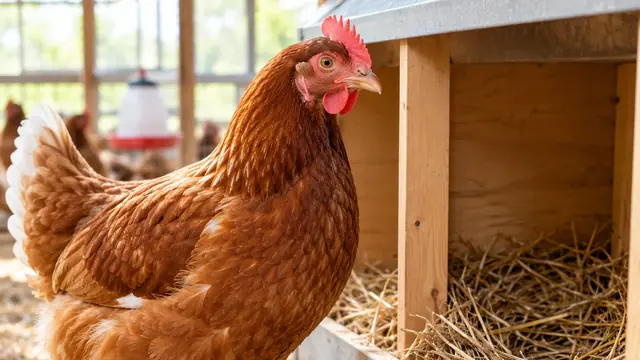

In the pullet house the birds all start wheezing at once; some shake their heads, some sit with open beaks. A week later it’s over, and the farmer breathes out. Three months later, when the flock should be reaching peak, half the hens look like real layers — red combs, round bellies — but there are no eggs. That’s infectious bronchitis too; its bill just arrived later.
What the disease is
Infectious bronchitis, or IB, is caused by a chicken coronavirus. It’s not dangerous to people. It’s highly contagious: it sweeps through a house in 1–2 days and spreads through the air, on boots, crates and with birds. The first signs appear a day or two after infection.
The virus doesn’t only hit breathing. It attacks the oviduct, and some variants attack the kidneys. So the same disease looks quite different depending on the age of the birds.
How it shows at different ages
| Who gets sick | What you see | Why it’s dangerous |
|---|---|---|
| Chicks up to 3–4 weeks | Wheezing, sneezing, watery eyes, huddling by the heat | Deaths from complications; lifelong damage to the oviduct |
| Broilers | Wheezing, lagging weight, poorer feed conversion | E. coli complications, condemnations at slaughter |
| Layers | Breathing often near normal, but laying drops | Thin, rough, misshapen shells; watery whites |
| Kidney form | Birds drink a lot, droppings are runny and white, litter is wet | Losses can be significant, especially in young birds |
“False layers”
If a chick is infected in its first two weeks of life, the virus can damage its still-developing oviduct. The hen grows up, looks healthy, her ovary works — but the oviduct doesn’t take up the yolk. Such a bird doesn’t lay, or lays very poorly. Yolks drop into the body cavity, and the belly slowly swells.
This can’t be cured. These hens are found and culled, or they eat feed for nothing for years. How to find a hen that isn’t laying is in the article on spotting a hen that isn’t laying.
What bronchitis does to eggs
In layers the main sign isn’t wheezing but eggs. Laying can fall by 10–50% and takes weeks to come back — not always to the previous level. Eggs become:
- thin-, soft- or rough-shelled;
- misshapen, with ridges;
- paler than usual in brown breeds;
- watery-whited, spreading out on a plate.
If such eggs appear from many hens at once rather than one or two, think disease, not feed. How to tell egg defects apart is in the article on egg defects.
What it can be confused with
| Disease | How it differs from bronchitis |
|---|---|
| Newcastle disease | Nervous signs — twisted neck, paralysis — and very high losses |
| Laryngotracheitis | Severe coughing, blood and mucus from the beak |
| Mycoplasmosis | Moves slowly, over weeks; swollen sinuses under the eyes |
| Egg drop syndrome | Poor shells and a drop in lay without wheezing |
Only lab tests tell them apart for sure: tracheal swabs for PCR or blood for antibodies. More on respiratory diseases is in the article on mycoplasma and respiratory disease.
How to help a sick flock
There’s no medicine against the virus itself. The goal is to help the birds get through it without complications.
- Warmth without drafts. For chicks, raise the temperature by 2–3 degrees.
- Ventilation. Ammonia and dust finish off damaged airways. Don’t shut the vents — adjust them.
- Water. Clean and unlimited; electrolytes and vitamins as a vet advises.
- Antibiotics — only as prescribed by a vet and only against secondary infection, most often E. coli. They don’t act on the virus.
Vaccination
The main protection is vaccination. The virus has many variants, and a vaccine against one doesn’t always protect against another. That’s why the program is set by a vet who knows which variants circulate in your area.
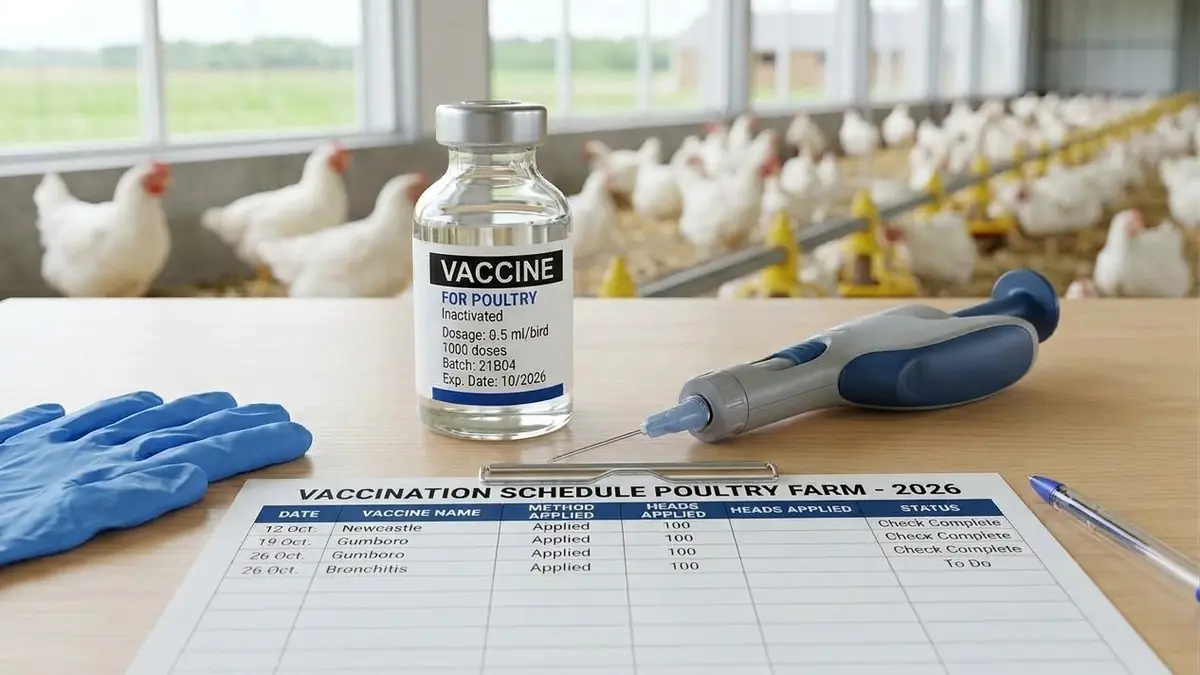
A typical program: a live vaccine in the first days of life (often in the hatchery), a live booster a few weeks later, and for pullets before lay an inactivated vaccine given by injection. More in the articles on the vaccination schedule and how to vaccinate in practice.
Ask the seller what they were vaccinated against bronchitis with and when, and ask for the records. A hen infected in her first weeks looks no different from a healthy one, but she won’t lay.
And as with any infection — biosecurity: one batch per house, clean boots, no outside crates and no outside birds.
Bronchitis in your records
EggPulse’s Disease guide includes infectious bronchitis with signs, treatment and prevention. Vaccinations are entered on a schedule, and rejects are noted at every egg collection. If laying drops while the share of rejects rises across the whole house, you see it in the first days and call the vet before you lose a month of eggs.