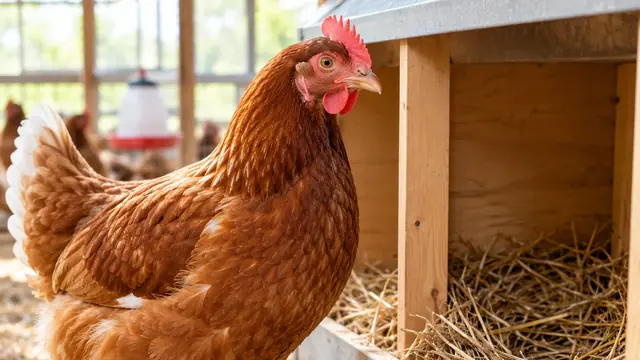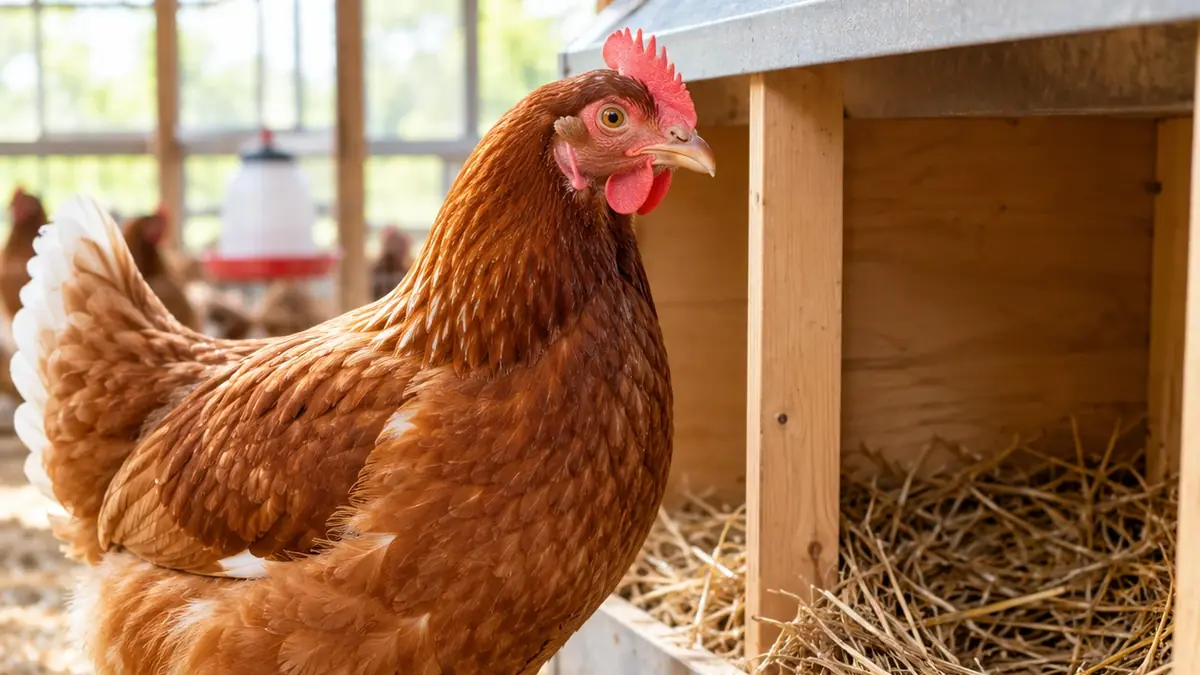

The pullets are five months old, their combs have reddened, and the nest boxes are empty. The owner waits a week, then another, and starts suspecting the feed or a disease. Usually everything is fine: lay depends on age, weight and day length, and if any one of them lags, the first egg is delayed. Let’s see when to expect it and what you can do without harming the flock.
At what age
| Bird | First eggs | 50% lay |
|---|---|---|
| Commercial hybrids (Hy-Line, Lohmann, Hisex, Dekalb) | 18–19 weeks | about 20–21 weeks |
| Light laying breeds (Leghorn) | 20–22 weeks | 22–24 weeks |
| Dual-purpose breeds (Rhode Island Red, Sussex) | 22–26 weeks | 25–28 weeks |
| Heavy breeds (Brahma, Cochin, Orpington) | 26–32 weeks | later, often not until spring |
Hybrid figures come from the breeders’ guides (Hy-Line Brown reaches 50% lay at 144 days); breed figures are breeders’ usual benchmarks. After 50%, a flock reaches peak in 6–8 weeks (hybrids compared).
What it depends on
- Weight. A pullet starts laying once she reaches adult body weight. An underfed flock is delayed, and if it’s pushed with light it lays small eggs and suffers more prolapses (on raising pullets).
- Day length. Lay is triggered by lengthening days. Pullets hatched in spring mature in autumn, when days are shortening — and often wait until late winter. Autumn-hatched chicks mature in spring and start on time.
- Feed. On grain alone without protein and calcium, pullets grow slower and start later (on phase feeding).
- Stress. A move, a feed change, a predator, cold — each pushes the start back 1–3 weeks.
Signs that lay is near
- comb and wattles become large, bright red and soft;
- the hen squats and spreads her wings when you put a hand on her back;
- the pubic bones spread to two fingers or more (how to check);
- hens inspect the nest boxes, “try them out” and cackle loudly;
- appetite rises: the pullet starts eating more feed.
What the first eggs look like
For the first two or three weeks eggs are small, sometimes double-yolked, shell-less, with blood spots, sometimes dropped from the perch onto the floor. That’s the oviduct “settling in,” not disease (on double yolks, on egg defects). If after a month there are still many such eggs, check calcium and vitamin D₃.
How to prepare the flock
- Nest boxes 2–3 weeks before lay, in a dark spot, with clean bedding. A dummy egg in the nest helps: a hen that starts laying on the floor takes a long time to retrain.
- Pre-lay feed 10–14 days before the first egg: it builds a calcium reserve in the bones. Full layer feed with the first eggs (on calcium).
- Light only once pullets have reached weight. Then day length goes up by an hour, followed by 15–30 minutes a week up to 14–16 hours (on lighting).
- Perches higher than nest boxes, or hens will sleep in the nests.
Light can bring pullets into lay 2–3 weeks earlier, but the price is small eggs at first, a lower peak and more prolapses. A week of waiting almost always pays better.
The start of lay in your records
In EggPulse eggs are logged by house from day one, and the laying rate is calculated on the live head count. You see when the flock passed 50% and how fast it climbs to peak compared with the hybrid’s table.