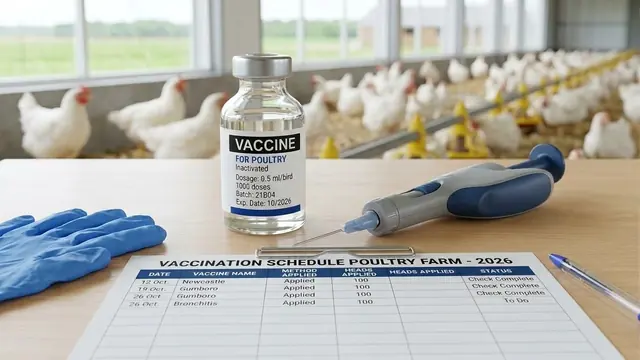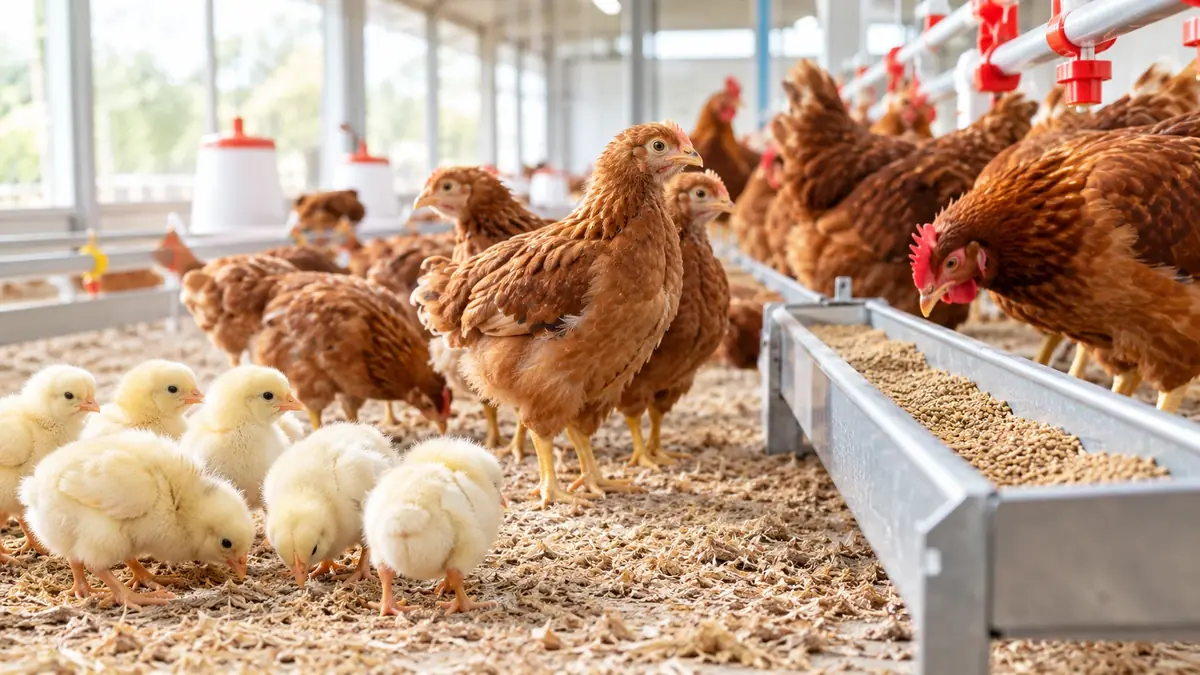

The broilers are three weeks old and growing well. In the morning there are five dead in the house, by evening seven more — no visible reason, all lively yesterday. Droppings are dark, frothy in places, and the house has a heavy smell. The vet opens a couple of birds and shows the gut: the wall is thin, bloated with gas, with a grey-yellow film inside. This is necrotic enteritis.
What the disease is
The culprit is the bacterium Clostridium perfringens. It’s in the gut of almost every chicken, in soil and in litter. Usually it lives quietly. But if the gut is damaged and there’s a lot of undigested protein in it, the bacterium multiplies fast and releases toxins. They destroy the gut wall from the inside.
Broilers aged 2–6 weeks are hit most, with a peak around 3–4 weeks. But turkey poults, pullets and floor-kept layers get it too.
Two forms: obvious and hidden
| Acute form | Hidden form | |
|---|---|---|
| What you see | Sudden deaths; birds dull, ruffled; dark runny droppings | Almost nothing: no deaths, birds look normal |
| Mortality | Up to 1% of the flock a day, several days running | Normal |
| The damage | Lost birds | Poorer weight gain and feed conversion, wet litter, condemnations at slaughter |
The hidden form costs more than it seems. Birds don’t die, but they eat more feed per kilogram of gain. In a flock of a thousand it’s invisible to the eye but clear in the numbers.
What triggers it
Necrotic enteritis almost never comes alone. It’s set off by something that damages the gut or feeds the bacterium.
- Coccidiosis. Its main companion. Coccidia tear the gut wall, and clostridia move into the damaged spots. Even hidden coccidiosis raises the risk many times over. How to control it is in the article on coccidiosis.
- A lot of wheat, barley or rye without enzymes. These grains contain “sticky” substances that thicken the gut contents. Feed digests more slowly, and more is left for the bacteria. More in the article on enzymes for wheat and barley.
- A lot of animal protein. Fish meal and meat-and-bone meal, especially poor-quality ones, are a favorite food of clostridia.
- A sudden feed change. Especially from starter to grower. How to change feed gently is in the article on switching to a new feed.
- Wet litter and crowding. Birds peck at litter and pick up bacteria and coccidia oocysts with it.
- Weakened immunity. After Gumboro disease, with poor vaccination, under stress.
How to notice before birds die
Before the deaths begin, quiet signs appear:
- birds drink and eat less than yesterday;
- weight at weighing falls behind the norm;
- litter by the feeders and drinkers gets wet faster than usual;
- droppings show undigested feed particles or orange mucus.
If two or three of these line up in weeks 2–5, call a vet. Diagnosis is only by post-mortem and lab tests: by outward signs, necrotic enteritis is easily confused with coccidiosis, salmonellosis and poisoning. When to call a vet is in the article on normal mortality.
If it has already started
The acute form is treated with antibiotics in the water — only as prescribed by a vet, who picks the product and dose. Coccidiosis is often treated at the same time: leave it, and the enteritis comes back.
- Start at once. The disease moves fast, and every day of delay is another percent of the flock.
- Remove wet litter and add dry.
- Dead birds are removed several times a day — following the rules in the article on disposing of dead poultry.
- Withdrawal period. After antibiotics, meat is sold only once it’s over. Enough days must remain before slaughter. More in the article on withdrawal periods.
How to prevent it
Coccidiosis control. Feed with enzymes if it’s high in wheat or barley. Dry litter. Gradual feed changes. Good biosecurity and clean-out between batches.
Many farms that dropped in-feed antibiotics keep enteritis in check with additives: acidifiers and butyrate, probiotics, plant-based additives. They don’t cure, but they help the gut stay healthy. Details are in the articles on acidifiers and butyrate and probiotics. Just as important is cleaning the house between batches: clostridia spores live in old litter and dust.
Enteritis in your records
EggPulse’s Disease guide includes necrotic enteritis — signs, treatment and prevention. And the house logs keep water and feed use, weighings and mortality side by side. A dip in water and a lag in weight show up several days before obvious losses. Treatment goes into the veterinary log with the withdrawal period, and the app tells you when the meat can be sold again.